Ambient Folk 1995-2010: The Network Before the Scene
Ambient folk, CD-R culture, free-folk networks and the rise of circulation
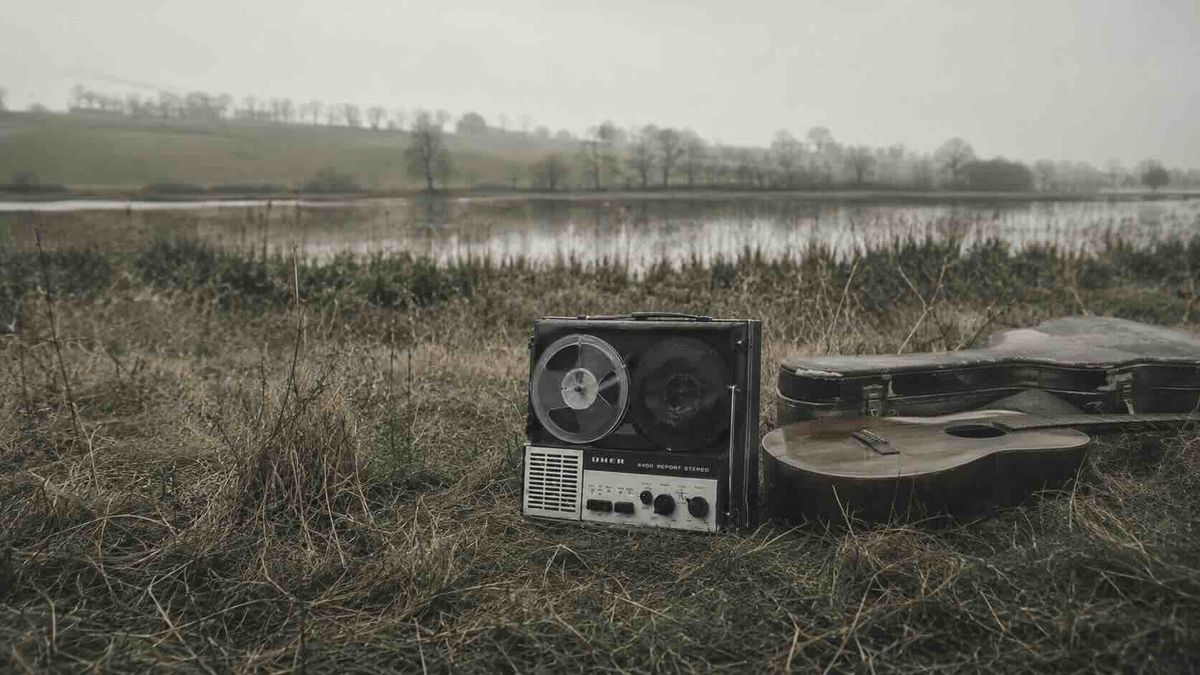
In 1999 or 2000, Loren Chasse bought a CD-R burner. That small domestic machine belongs in the history of ambient folk as securely as any guitar tuning, field microphone or effects pedal.
In 1999 or 2000 Loren Chasse bought a CD-R burner and asked Glenn Donaldson whether he wanted to start a label around it. Donaldson later described the proposal as almost embarrassing in its modesty: a CD-R label needed very little money, put no real constraint on what the music sounded like, and could exist for four listeners or four hundred without much practical difference. He had come to feel that independent labels had grown conservative, and a burner offered a way past them. The label they started was Jewelled Antler.
It didn't need a club night or a manifesto behind it. Two people in San Francisco had access to cheap recordable discs, and for the moment that was enough.
Similar decisions had already been made in isolation, by people who mostly knew nothing of one another: John Martyn recording across a Berkshire lake, Emmanuelle Parrenin letting French traditional music drift into electroacoustic space, Virginia Astley carrying microphones through Moulsford, Woo working quietly in London, private records surfacing in California, Japan, Czechoslovakia, each arrival standing on its own.
By the end of the 1990s a different kind of relationship had become possible between such recordings. Influence needs some plausible act of transmission: a record heard, a musician met. Recurrence does not; similar solutions can emerge separately from similar materials, limitations or habits of listening. Correspondence begins when circulation puts those recurrences into relation: a CD-R sent across an ocean, a review setting two distant records side by side, a file uploaded years after its release, an old pressing entering a collection next to music its maker could never have known. The contact could happen while the music was being made, long after it was finished, or nowhere either side would ever notice.
The music still had no single centre. What changed was its archive: a tape from 1978 could turn up reissued beside a record from 1996 it had never been within a thousand miles of, or surface in a review that set two continents in the same paragraph without pausing to explain why that made sense.
I. Four people or four hundred
Jewelled Antler is normally filed somewhere inside free folk, psychedelic folk, or what would shortly be called New Weird America. The filing isn't wrong, though it leaves out most of how the music actually got made. Donaldson and Chasse had previously played together in Mirza, a band loud enough that Thuja grew partly out of exhaustion with it: acoustic instruments, stranger objects and environmental sound all needed room simply to stay audible. Around Thuja came an almost indecent number of related projects — The Blithe Sons, The Skygreen Leopards, The Birdtree, The Ivytree, The Child Readers, The Franciscan Hobbies, Hala Strana, Of, Steven R. Smith's various work under his own name and under several others — with enough shifting membership between them that even people buying the records as they came out had trouble keeping the personnel straight.
That wasn't an accident of poor documentation so much as how the group actually worked: less a label with a roster than a rotating set of people who had microphones, instruments and a CD burner and kept finding reasons to use them. The terms Nature Psych and Outdoor Folk eventually attached themselves to part of this activity — useful terms, because what they're naming is a way of working rather than a finished sound. Whole recordings could happen outdoors, with the field recording as the piece itself rather than something pasted underneath a finished one for atmosphere. Branches, stones, pine cones, water and whatever had been built for the occasion could sit at the same level as a guitar; a creek got a vote in how a piece balanced. Loren Chasse pushed this furthest on The Air in the Sand, where location recording and the act of paying attention became more or less the composition.
The method was simple to describe if not to repeat: turn up somewhere, listen, and record whatever the listening turned up. What makes it interesting is that the somewhere doesn't cooperate the way a studio does — it interrupts, rustles at the wrong moment, swallows an instrument whole, hands back far more information than anyone asked for. Jewelled Antler's contribution to the vocabulary ambient folk was building was, in part, a willingness to let the world outside the musician stay disobedient on the recording. A CD-R was cheap enough to let that disorder go out under a catalogue number instead of staying a private tape in someone's drawer.
United Bible Studies pushed the same rotating-cast arithmetic even further, across enough releases that the lineup stopped being something anyone outside the group could really follow.
II. Nobody calls it ambient folk
In August 2003 The Wire ran David Keenan's cover story "New Weird America," written after a visit to the Brattleboro Free Folk Festival in Vermont; Sunburned Hand of the Man were on the cover, and around them Keenan described a loose field drawing on acoustic roots, drone, improvisation, psychedelia, ecstatic jazz, archival folk and blues, Krautrock and assorted local traditions. Other names for roughly the same activity were already circulating alongside it: free folk, which kept one foot in free improvisation and never fully let go of it; freak folk, which drifted toward a different and more photogenic cluster of artists before flattening into shorthand for almost anyone behaving strangely near an acoustic guitar; and, more sporadically, Nature Psych, Outdoor Folk, Drone Folk, Global DIY Folk, Psych Folk, avant-drone, and occasionally ambient folk. The names multiplied faster than the music underneath them could settle into one shape — New Weird America was simply the one that stuck best in print, being the most quotable of the lot.
Devendra Banhart, Joanna Newsom, Sunburned Hand of the Man, Six Organs of Admittance, Charalambides, Fursaxa and Jewelled Antler could all sit under that same weather system without making anything like the same music, which is a more useful problem than settling which term was correct. Ambient folk is especially easy to lose inside it, because the wider free-folk resurgence was so visible: ritual, fingerpicking, communal improvisation, home recording, archaic imagery and psychedelia all came back into circulation at the same moment.
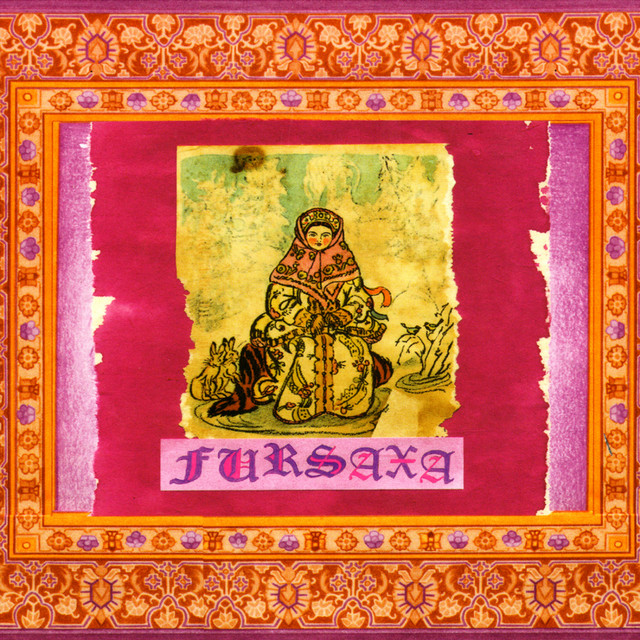
Tara Burke's work as Fursaxa is a clearer test than any festival bill: voice, chord organ and detuned guitar built into long residues of delay, with repetition doing most of what a song's structure would otherwise do. The Blithe Sons went further, letting outdoor sound occupy enough of a recording that removing it would have changed the composition rather than simply cleaned the track. What both were doing, underneath the shared bills and the shared record-shop bins, was narrower than "free folk" ever described: moving attention off the song and the player and onto drone, duration, environment and recording medium. By 2007 Terrascope could hear Alone in the Dark Wood alongside both Jewelled Antler and the Finnish label Fonal — accurately, since part of the record had in fact been made in Finland.
The music was acquiring affinities before it acquired a shared name.
III. Finland doesn't particularly want a movement
Fonal Records was founded by Sami Sänpäkkilä in 1995, and by the middle of the following decade foreign listeners had started treating the label almost as shorthand for a Finnish experimental-folk movement — a convenience the musicians themselves didn't share. The network it named loosely included Kemialliset Ystävät, Islaja, Lau Nau, Es, Kiila and Paavoharju, with Avarus, Anaksimandros, Päivänsäde, Kuupuu and other temporary configurations moving around them. A contemporary Finnish account of Avarus noticed domestic and foreign media alike constructing an underground Finnish "movement," and distrusted how neat the idea was; Global DIY folk was the term it offered instead.
Global DIY folk might indeed be closer to the mark: nothing here was reaching for an uncontaminated Finnish tradition, and folk material sat next to toys, cheap electronics, tape, drone, nonsense, ritual, improvisation and whatever else happened to be lying around. Kemialliset Ystävät, led by Jan Anderzén, often treated instrumental sources as though they had lost their social hierarchy: acoustic strings, percussion, digital loops, speech and electronics entered the same unstable object. Islaja, Merja Kokkonen's solo project, used voice, warped strings, bells, piano, saw-like tones and multitracking until singer-songwriter intimacy began to buckle.
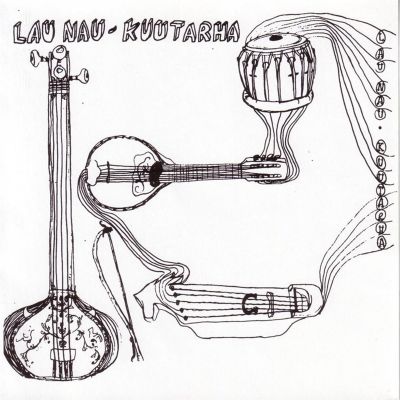
Lau Nau's Kuutarha first existed as a small self-released CD-R with painted packaging and actual plant material attached; Laura Naukkarinen moved between song, lullaby, acoustic playing and extended intervals of sound without announcing where one form had ended. A label description from 2006 placed Jonna Karanka beside Fursaxa, Lau Nau, Kemialliset Ystävät, Colleen and Jewelled Antler.
That comparison is evidence of something more consequential than influence: listeners and labels were putting these things beside one another often enough for the resemblance to become difficult to miss.
IV. A radio station behind the hill
Paavoharju's Yhä hämärää, issued by Fonal in 2005, collects many of these conditions while remaining oddly resistant to the categories around it. The group came from Savonlinna; the album was assembled between 2001 and 2005. Acoustic guitar and devotional voices coexist with shortwave radio, cheap electronics, field recordings, damaged rhythm, toys, crackle and scraps that sound less performed than intercepted. Finnish writers heard ambient somewhere inside it and struggled with the rest. When international listeners encountered Paavoharju, the lack of accessible information around the group became part of the record's aura; one critical comparison imagined finding an unknown radio station while travelling on an unfamiliar road and losing it behind the next hill.
A congregation, a radio transmission, a folk melody, a drum machine, a human voice — any of them can enter Yhä hämärää as though the recording had tuned into it rather than authored it, a song picked up rather than written, as if someone had stumbled onto its frequency by accident. It's worth being careful with that description: the cliché of the mysterious foreign underground is a dangerous one, and Tori Kudo has explained exactly why. But something genuinely technical is happening in how these recordings are put together, and it doesn't require exoticizing the band to hear it.

The idea will matter again when Grouper enters this story later in the decade. Here it's enough to note something more ordinary: a small Christian collective in Savonlinna could make a record for a Finnish micro-label and be heard, within a few years, thousands of kilometres away — at a speed that would have been close to impossible for most private recordings two decades earlier.
V. Routes instead of schools
In 2000 Stephen McRobbie and Katrina Mitchell of The Pastels started Geographic, an imprint of Domino built to release beautiful, semi-unknown music from wherever it happened to be made — a route into this history that had nothing to do with a home burner. One of its earliest signings was Maher Shalal Hash Baz, Tori Kudo's unstable ensemble from Japan, whose music dissolved the usual lines between folk, pop, free jazz, punk, rehearsal and outright error. Kudo himself had little patience for the Western habit of reading that instability as innocence. Asked about the apparent purity of Maher's mistakes, he rejected the framing outright: recording, in his account, was full of pressure, and whatever pleasure came out of it was incidental rather than the point. He was equally unwilling to let foreign publications manufacture an exaggerated image of Japanese underground culture and then export it back to Japan as description.
Kudo's objection is worth carrying into the rest of this chapter, because the mechanism he was pointing at doesn't stop at Japan: a badly recorded guitar turns "authentic" almost as soon as it reaches someone listening from another country, tape hiss starts to sound like a moral position, and a field recording gets heard back as mysticism instead of what it more often was — a practical decision.
Shinji Shibayama and Masako Takeda, recording as Nagisa Ni Te, reduced psychedelic folk further still — down to three or four chords, repetition, voice and slow guitar carrying unusual stretches of time on very little material. The songs weren't building toward anything; they held a handful of chords in place long enough that staying still became the technique. It's the same redistribution of attention this history already found in Fursaxa and The Blithe Sons, arrived at independently and in a completely different register.
In Sweden, a different connection took shape around Tape, formed in 2000 by Andreas and Johan Berthling with Tomas Hallonsten, who recorded early work in a stone barn on Öland. Acoustic guitar, vibraphone, organ, electronics, laptop processing and small percussive sounds occupied the same field without the digital layer automatically taking control. On Milieu, in 2003, electronics altered the scale of acoustic events: a small gesture became enormous because so little stood around it. Tape then recorded with Tenniscoats in 2006, and Tan-Tan Therapy followed in 2007.
The value of those sessions to this history lies partly in the meeting itself: Swedish musicians working between acoustic material and laptop processing, encountering Japanese songwriters whose songs already behaved like provisional structures rather than finished ones. By this point the network wasn't just moving records from place to place — it was moving the musicians themselves, following the same routes their records had already worn in.
The Tape sessions with Tenniscoats mark the point where correspondence stopped being something a listener noticed after the fact and became something the musicians did deliberately. Two networks that had recognised one another through records were now in the same room making one.
VI. When the archive moves
Some recordings entered this field without having participated in its formation. Księżyc released their self-titled album in Poland in 1996, reportedly in only 333 copies through OBUH Records: Slavic song, medieval-sounding vocal forms, clarinet, unusual acoustic instruments, keyboards, minimalism, electronics and water existed together on a record almost nobody outside its immediate environment could hear. The band then effectively vanished for seventeen years.
Nothing about the date changed when the album resurfaced, and nothing travelled backwards in time to meet it; what changed was classification. Listeners could now place Księżyc beside Finnish home recordings, California CD-Rs, French drone and private folk records that shared some of its procedures, even though most of those later musicians had no plausible way of having heard the Polish pressing — there was no lost chain of influence to uncover, only a relationship that arrived after both sides of it already existed. It's correspondence in an especially strange form: an archive manufacturing a historical neighbour once the objects on either side of it are already finished and can no longer respond to one another.
Before digital circulation was widespread, scarcity could keep an affinity like this dormant for decades: a record might have every quality needed to belong to a later musical vocabulary and still sit outside it, simply because almost nobody could hear it. Rips, blogs, forums, reissues and shared folders unsettled that old boundary — old catalogues got reshuffled at the same speed new releases did, so chronology stayed exactly where it was while adjacency stopped being fixed.
A Polish album from 1996 could now turn up beside Lau Nau, Jewelled Antler or Natural Snow Buildings in the same listener's folder, and once that kind of placement happened often enough it changed the listener's sense of the field itself: records once heard as exceptions gained relatives they'd never had, and later music started to look as though it had precedents its own makers had never known about — genealogies the archive had produced that history itself never supplied. It's the clearest case yet in this history of a genre changing because its archive did, and not because anyone changed what they played.
VII. At the edge of the map
Antony Milton's PseudoArcana, in New Zealand, was one of numerous tiny labels capable of circulating experimental recordings without any industrial pressing run — the same network operating at a much smaller scale. Milton and Stefan Neville, working as Pumice, released the first Sunken recording as a CD-R in 2004: two reed organs, tape loops, contact microphones, intercoms, echo units and guitar were enough. Milton's own Nether Dawn work moved toward degraded guitar ambience, with tape hiss sometimes so heavy that the music seemed physically removed from its own source; contemporary writing compared this territory to Jewelled Antler while wondering, in the same breath, whether its heavier electrical weight still belonged anywhere near free folk.
Brothers of the Occult Sisterhood, in Australia, make the wider critical network easier to see. By 2007, coverage of Preying in Circles was placing its acoustic drone, improvisation and ritualistic folk atmosphere against Jewelled Antler and Fonal. The importance of that comparison lies less in whether the three bodies of music actually belonged together than in how readily the pairing had begun to travel. California, Finland, New South Wales: there was no headquarters, no shared programme and no ambient-folk scene linking them. What existed instead was a critical shorthand capable of recognising related procedures across otherwise unrelated local contexts.
VIII. Leeds stays on one chord
Vibracathedral Orchestra, formed in Leeds in 1998, belong here primarily as a boundary. Their communal improvisations could combine strings, harmonium, percussion, electronics, drone and folk-like figures while remaining on a single tonal centre for an extraordinary length of time. Contemporary criticism placed them somewhere between Krautrock, pan-ethnic folk and Riley/Conrad minimalism within a broader international avant-drone continuum. Calling them simply an ambient-folk group would flatten them; they matter because they demonstrate how far the word folk was being stretched in the same underground.
Folk, by this point, could mean a remembered mode, a communal method, an acoustic source, something played by hand, or an instrumental gesture whose provenance was already blurred — and it didn't need song at all, or quiet: a drone could roar, repetition could apply real physical pressure, and the redistribution of attention that ambient music brought with it came with no obligation to be polite about it. A performance could get dense enough that the identity of an individual player mattered less than the sustained object the group produced together.
This expansion produced extraordinary music, but it also exposes the boundary problem ambient folk still hasn't solved: if drone plus an acoustic instrument were sufficient on their own, almost anything could walk through the door. Any use of the term wide enough to remain interesting is also wide enough to require resistance.
IX. France builds a snow country
Natural Snow Buildings began after Mehdi Ameziane and Solange Gularte met at university in Paris in 1997. They started recording around 1998 and soon built the sort of catalogue that's only possible once scarcity stops being an embarrassment: cassettes, CD-Rs, handmade editions, overlapping releases in tiny quantities, and eventually contact with American and British micro-labels, including Digitalis, Students of Decay, and later Blackest Rainbow.
Their music could become enormous: The Dance of the Moon and the Sun, recorded at home in Vitré in 2004-05, eventually stretched across two discs, with acoustic folk songs sitting beside drones long enough to damage any ordinary sense of scale. Related solo projects, Isengrind and TwinSisterMoon, pulled similar material toward ritual, raga, private song and sustained sound. By 2008, The Snowbringer Cult could be described in Italy as an important development in drone folk, one more name change in a set of practices that kept drawing closer together underneath it.
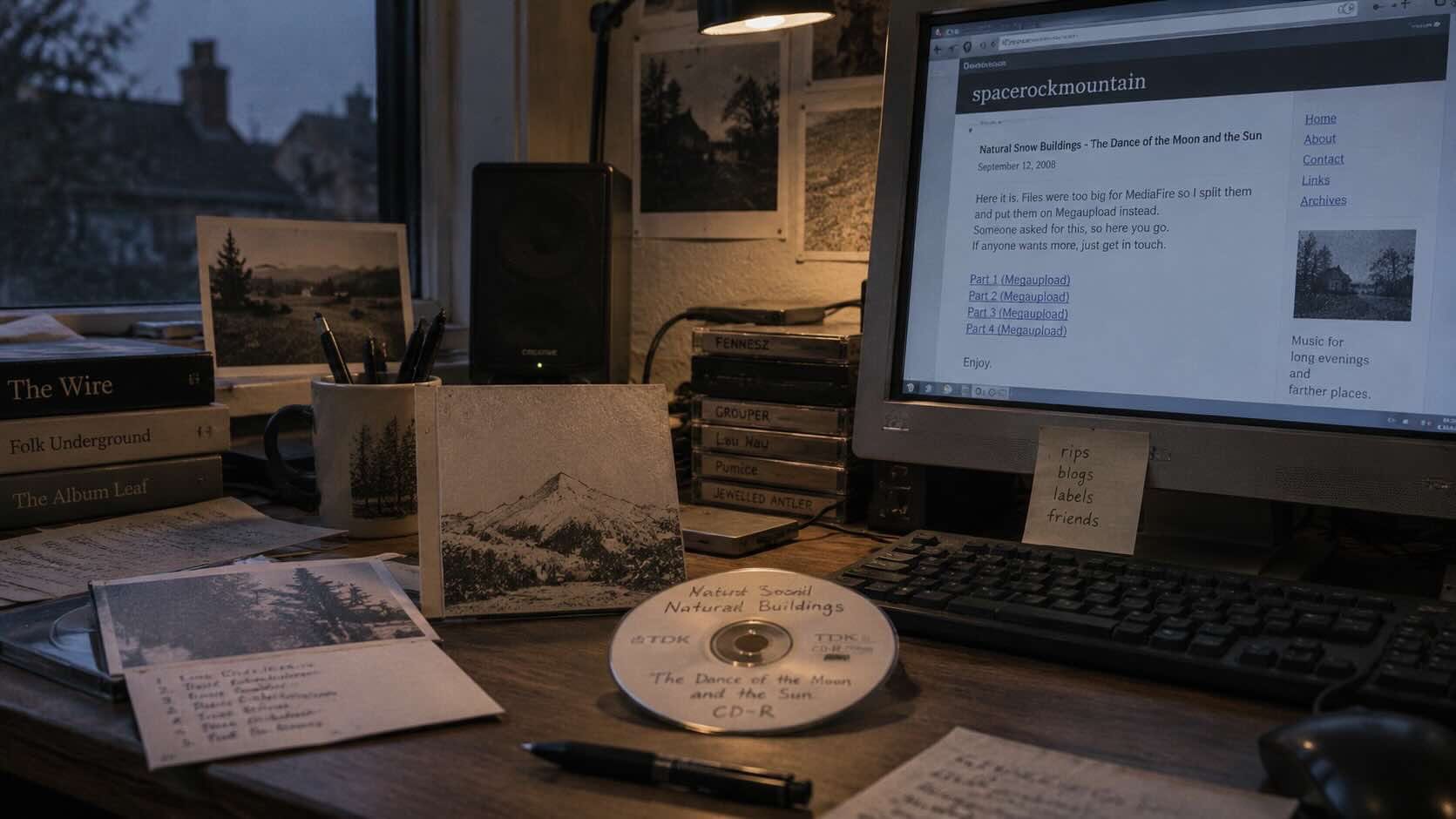
What happened next was messier, and in the end mattered more. In September 2008 a small blog, Spacerockmountain, uploaded The Dance of the Moon and the Sun. The writer complained that the files were too large for MediaFire, split them, and put them on Megaupload instead. Somebody had requested the album; readers were invited to ask for more.
There, inside an ugly paragraph about bandwidth and file size, is one of the decisive changes in this story. A handmade French recording that once required the correct mail-order address could now reach an unknown listener overnight. The physical object could remain absurdly rare while the sound had already got away from it.
It's worth holding this against the burner Loren Chasse bought at the start of this piece. A CD-R had already made scarcity survivable for anyone patient enough to find the right mail-order address; a file locker made it free, and asked for no address, no relationship with the label, not even a stamp. The mailing list had been replaced by a comment thread asking for more.
X. The blog becomes the listening room
Once that threshold is crossed, ambient folk stops depending only on labels, scenes or physical collections, and starts depending on something far scrappier: blogs, forums, message boards, file lockers, scans of inserts, partial discographies assembled by strangers, broken links, reposts, dead ends, accidental recoveries. Much of this lived in legal and ethical grey zones, which is worth saying plainly instead of either excusing it or pretending it didn't shape the history that came out of it.
A small blog could work as a listening room, an archive and a critical apparatus all at once: someone uploaded a record, someone else read the post, and a third reader followed a comparison buried in the comments and ended up somewhere else entirely. What had once required geographical luck, private correspondence or a specialist shop could now happen in a single evening. A listener in Italy might hear an out-of-print Polish record, then a Finnish home recording, then a Californian CD-R, and take them for neighbours before ever learning the history that had kept them apart.
Criticism reordered itself the same way, because writers stopped meeting records only inside the distribution channels built for them and started meeting them in mixed company: a forgotten private pressing turning up in the same folder as a current release, a reissue seeming to answer a record made twenty years after it, a review starting from adjacency, with the scene it technically belonged to almost an afterthought. Comparison got easier and faster, and stranger with it.
This is one reason genre history after 2000 is hard to write as a sequence of schools: a school presumes local coherence, a shared programme, a visible community, and ambient folk had some of that here and there without ever settling into it as a rule. What it had, more consistently, was proximity without co-presence, which is only this piece's earlier term, correspondence, restated in the language of geography rather than circulation: records recognising each other without their makers ever sharing a city, a decade or even a continent.
The blog's part in all this was narrower than inventing anything: it simply changed how fast, and at what scale, the music could recognise itself.
XI. What ambient folk might mean
Reconstruct ambient folk by surface resemblance and the category becomes useless very quickly.
A quiet acoustic record with reverb cannot be enough. Otherwise large areas of new age, psych folk, American Primitive guitar, folktronica, ambient country, drone and private-press instrumental music collapse into the same shelf. Pastoral imagery is even less reliable. A forest on a sleeve tells us almost nothing about the behaviour of the recording.
A more useful definition describes a relationship between foreground and background, between a song and the room it happens to occupy.
"Folk" in this formulation can mean repertoire, instrument, technique, regional practice, remembered melody, vocal manner, or simply the physical presence of acoustic playing; a pastoral subject is optional.
"Ambient" is harder to pin down. It doesn't just mean soft, slow or atmospheric; it means that whatever surrounds the song has taken on structural weight, so that room sound, tape degradation, duration, silence and environment can all count as much as the notes do, and electronics can enter without pushing the folk material out of the middle of the picture.
This is why geographically separate examples matter even when no line of influence joins them: they show musicians encountering similar possibilities inside the same materials, and the genealogy that results runs sideways as often as it runs forward.
Across different countries and under different pressures, musicians kept arriving at related solutions: loosening a song's authority over the recording field, letting drone, environment, silence, tape or distance share the burden of meaning. Later circulation made those solutions visible to one another; the archive caught up with the music.
What started as recurrence, separate musicians solving the same problem without knowing it, turned into correspondence once an archive could hold all of it in the same place at once. What that correspondence eventually made visible had never been a school in the ordinary sense, a group of people who had agreed on anything. It was a field: a set of related pressures that kept producing similar answers, in rooms that never had any reason to know about each other.
Last revised: September 2026