Composing the Void: Seven Voices Beside Grouper's
Seven voices beyond Grouper, from Ana Roxanne to Nivhek, past the word.

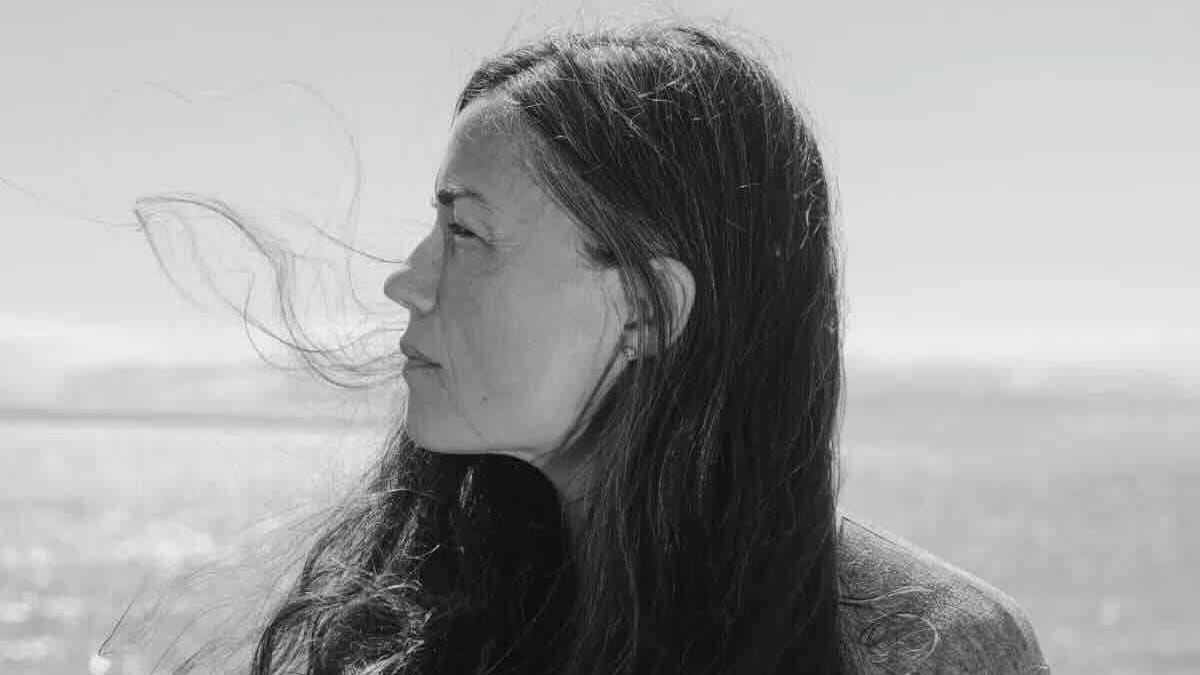
Seven voices, the last of them Liz Harris's own under other names, that have stopped wanting to be understood and found what remains of a voice once its meaning is gone.
On almost every Grouper record there is a moment when you notice that you have been failing to make out the words, and that you stopped wanting to some time ago. Liz Harris's voice is right there, clear in intention and illegible in the letter. She is singing something, certainly, but it arrives already eroded, like writing left out for one season too many. The erosion is deliberate, and it amounts to a refusal to deliver a meaning.
That is where to begin, because missing it makes almost every list of "artists similar to Grouper" useless. Such lists look for the likeness in the means: the reverb, the tape, the drowned guitar. The means serve an end, a voice carried to the exact threshold where it stops carrying a message and becomes something closer to weight. It stays present and says almost nothing.
Most pop production treats a voice you cannot make out as an error: you redo the mix, fix the diction, ask for clarity. Plenty of older practices treat it otherwise. A mantra is made to be repeated, and its meaning matters less than its return; liturgical chant holds the sense of its words suspended inside the sound; in darshan, the act of seeing and being seen by the divine, presence does its work without a word being said. Grouper, with no programme and no announcement, brings back something these practices took for granted, that the void at the centre of a voice can hold meaning an instant before it cools into a word.
The seven names that follow all stand on that threshold, each from a different side, and the map they draw together is the reason to write about them side by side.
I. Ana Roxanne :: Because of a Flower (Kranky, 2020)
We start at home, because Ana Roxanne is family: Grouper's label, Kranky, and a voice living on the same ridge between the intimate and the sacred. Where Harris erodes, Roxanne suspends. Her voice holds still in the air like a note sustained in a stone room, and the word dissolves into recollection, a prayer said so quietly it becomes breath. She has spoken of studying Hindustani vocal music, and the training shows in how long a single tone can be allowed to stay. Grouper's voice grazes ritual; Roxanne lives inside it.
II. Cate Kennan :: Shadows (Kranky, 2026)
The newest record here, out in June and again on Kranky, and perhaps the most literally Grouper-like in subject. Shadowscomes out of Kennan's return to the rustic neighbourhood north-west of Los Angeles where she grew up, a place time had quietly shifted, familiar and unrecognisable at once. Ten miniatures of keys, strings, reverb and voice sit between lullaby and small-hours torch song, "rose-coloured but remote" in her own words. Here the threshold is a place: she sings somewhere that still exists and no longer recognises her.
III. Lucy Gooch :: Desert Window (Fire Records, 2025)
Lucy Gooch builds choral architecture out of her own voice, naves of sound, a liturgical ambient in which the single word loses itself in its echo. The void comes from saturation: the word layered and repeated until it becomes vault, ceiling, space. She stands to Grouper as a cathedral stands to a room, with the same faith in sound as presence at the opposite scale.
IV. Ekin Fil :: Maps (Helen Scarsdale Agency, 2018)
This is the best-documented link on the list, and it comes from biography. Ekin Fil opened for Grouper in Europe, and it was Harris who introduced her to the people who would later release her. From Istanbul, or from a quiet island in the Sea of Marmara where she spent a winter with "too much silence around, no choice but to concentrate", Fil writes songs for organ, piano and heavily reverbed guitar in which the voice is a whisper that narrates "more by emotive decree than by verse". Maps is about distance and dislocation, the voice as a map of a place one has come loose from.
V. IKEBANA :: When You Arrive There (Flau, 2013)
IKEBANA were a duo from Kyoto and Tokyo, maki and en, and their only record, from 2013, has to be dug up. One came from shoegaze; the other, a tape experimentalist, gave up digital equipment and the Internet altogether and, like Harris, treats tape as an ethic. Deeply reverbed voice and minimal guitar drift "between dream and reality". The name says the rest. Ikebana, the art of arranging flowers, works with the stem, the leaf and the empty space between them as much as with the bloom, and that is close to what Grouper does with the voice, composing the intervals, treating the space between one word and the next as raw material. "Alone" is the track to enter through.
VI. Dagmar Zuniga :: In Filth Your Mystery Is Kingdom / Far Smile Peasant in Yellow Music (AD 93, 2026)
Dagmar Zuniga stands halfway between the song and its dissolution: ghost folk cut onto a four-track, vocals turned inside out, pieces that come back twice and are never identical. The voice is badly recorded on purpose, like a transmission picked up by mistake. This is the hauntological branch of the Grouper family, where time folds back and hands you something slightly wrong.
VII. Nivhek :: After its own death / Walking in a spiral towards the house (Yellowelectric, 2019) and Mirrorring :: Foreign Body (Kranky, 2012)
The seventh voice is Harris's own, under other names. As Nivhek, on her own Yellowelectric label, she took a pseudonym to look for an erosion other than Grouper's; in Mirrorring, her duo with Jesy Fortino of Tiny Vipers, she let her voice meet another until the two were hard to tell apart. Both are ways of becoming a stranger to herself and finding out what remains of the threshold when the one crossing it is someone else with her voice.
Seven positions around the same void, from Roxanne's ritual to Nivhek's doubling. None of them is "similar to Grouper" in the thin sense an algorithm means. All seven trust a voice to mean something after it stops saying anything.
VIII. In the margin: those who don't sing
Two names turn up for anyone searching for Grouper, and neither of them sings: Tim Hecker and William Basinski. Listing them as similar is right and misleading at once. What they share with Harris is the matter: tape coming apart (Basinski's The Disintegration Loops is literally a loop shedding itself as it plays), decay as form, music that rots while you listen. They are relatives of Grouper's instrumental side, the drones of A I A and the bare piano of Ruins; her songs belong elsewhere.
If you came looking for the voice at the bottom of the water, these two take it away and leave you only the water.
A third name carries this side to Tokyo. Chihei Hatakeyama, who released his first records on Kranky, makes music that is almost always instrumental, guitar, reverb and tape loops, and yet in an interview he has named Basinski and Grouper as the artists in whom he hears a pre-linguistic quality, music caught in the state before the word.
Grouper: Liz Harris and the Art of Absence
Last revised: October 2026