Grand River :: Temporary
Ambient electronics and guitar written in the shadow of a loss.

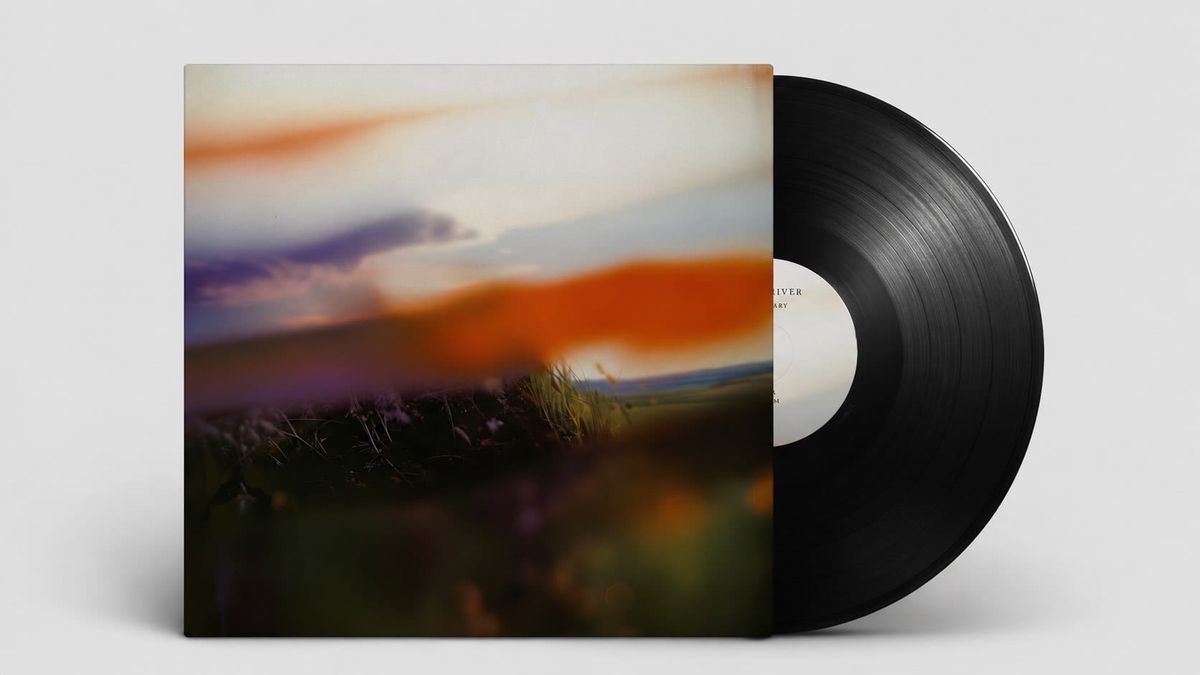
Read in sequence, the eight titles on Temporary form a single sentence. It begins with eighteen circles towards heaven and ends with the work of ending.
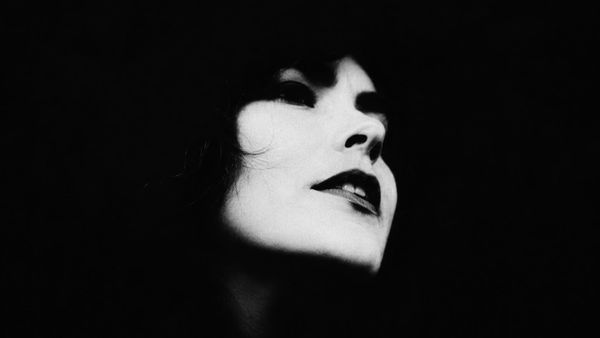
Temporary came out on 20 November 2026 on Editions Mego, digitally and on vinyl: four hundred black copies, one hundred clear, eight tracks across forty minutes. Aimée Portioli, an Italian-Dutch artist based in Berlin, composed it over two years and handled production and mixing largely by herself, with help from Luca Sammartin. Rashad Becker mastered it; Marta De Pascalis cut the lacquer at Schnittstelle. The record grew out of a journey far from home, made to accompany someone she loved towards the end of their life.
Her previous album, Tuning the Wind (2025), used the wind as an instrument: a force that plays without anyone touching it. On Temporary the material is a filtered guitar set against modular synthesis that pulses and drifts out of phase. From sound that arrives on its own, she turns back to sound that someone has to sustain, note by note.
"18 circles to heaven" opens in just over two minutes. On "The crossing of the body, the crossing of the mind" the guitar stays restless, in figures that find nowhere to settle, and cuts through sharp inserts of white distortion. Then it turns, with unusual care, to arpeggiated lines resting on the rhythm section, percussion and bass, which give the track its almost post-rock outline.
Guitar and electronics collide on "The little we last": the guitar breaks apart against synthetic textures that beat in regular pulses, without respite. The result is an oblique view of the instrument. Portioli pulls it away from the habits of experimental music, which so often narrow its vocabulary, and treats it as a sound wave, free to move beyond its own conventions.
On "Maybe I'm dead and this is paradise" Andert Tysma's acoustic piano weaves through the guitar and through runs that recall a harp. Company, on a record played almost entirely by one person, arrives in the piece that imagines the afterlife. More cinematic than the rest of the sequence, the track winds the tension tighter in a crescendo that keeps drawing in new layers, until everything comes apart in a tide of distortion: the EQ gives way to the high frequencies, which dissolve all that had built up into interstellar dust.
"Work of ending" suggests that the craft lies in the hands and that every ending is chosen. In the track's final stretch the electronics push towards a space where their geometries meet an acoustic guitar free to be one, and there the album finds its most necessary passage.
The record's coherence holds the biography and the sound together. Temporary leans towards a heavy, almost subterranean synth sound that weighs as much as it illuminates, and the music carries the drama the titles announce all the way through.