The Students of United Bible Studies
Free folk, open membership, micro-labels and a transatlantic underground
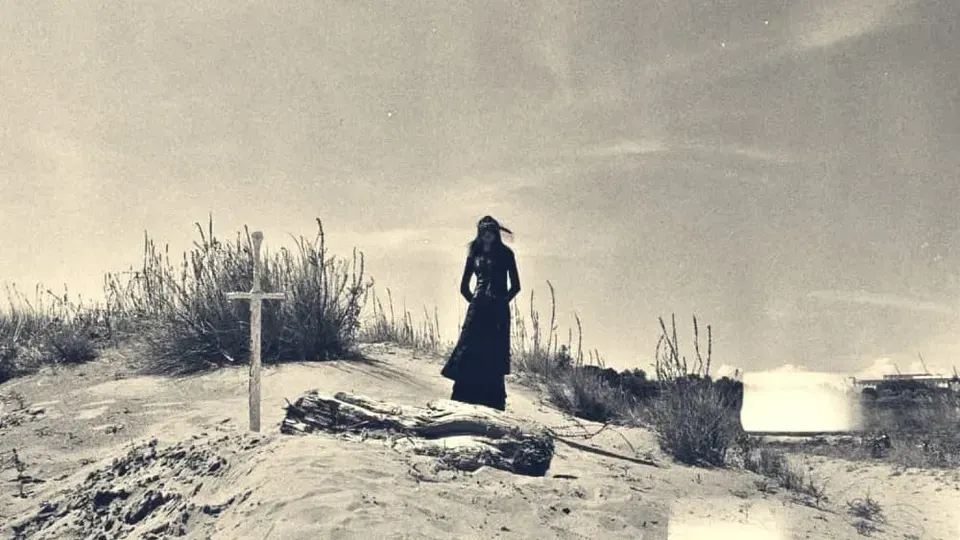
There is a photograph of United Bible Studies taken around 2015. Six people: James Rider, Alison Cotton, Matt Leivers, Michael Tanner, Alison O'Donnell, David Colohan. Worth beginning here because the photograph is accurate and misleading at once, and the gap between those two things is more or less the subject of this piece.
Accurate, because these are real members of a real band who had by then been working together for years. Misleading, because six months earlier or later it would have contained different people — and because the group has, over its lifetime, involved a cast that Colohan has put at more than two hundred.
United Bible Studies stretches the word band almost beyond its usual meaning. It is closer to an institution with a door left open, one that its own members describe, half in jest, as a studentship. Alison O'Donnell — who joined in 2008, having already sung on one of the defining Irish records of 1972 — calls herself “a student of United Bible Studies since 2008.” Dom Cooper puts it more plainly: an open band, willing to let anyone get involved, with performers beyond counting.
What grew up around that open door, over twenty-five years, is a scene: several record labels founded or run by people inside it, a touring circuit running from Galway to Massachusetts, festival appearances across Britain, Ireland, Denmark and the United States, and a set of shared preoccupations remarkably consistent given how many hands passed through. It has rarely been documented as a whole. Individual records have been reviewed, sometimes very well. The network that produced them usually survives in pieces.
This is an attempt at that map. It is also an attempt to say what this music was for — what the people making it thought they were doing, working in a tradition that has been contested in Britain and Ireland for most of a century.
I. Dublin, 2000 or 2001
The founding is dated variously. Dusted has the band formed in Dublin in 2000; the group's own materials, and Deserted Village, say 2001. The year remains uncertain. The circumstances are clearer. James Rider was studying at Trinity College Dublin; David Colohan had recently returned from living in Australia. Already friends, they spent an afternoon listening to Incredible String Band records and decided to make music together.
The name United Bible Studies was taken from a prayer book belonging to one of the early participants. The name was a joke. The original intention was a duo. Neither condition lasted very long.
That these were the reference points, and not the Irish tradition proper, matters. The Incredible String Band were Scottish, autodidactic, wilfully strange. Fairport were English and had spent the late sixties working out how to put a rock rhythm section behind a ballad collected in the nineteenth century. Neither is a model for traditional Irish music, and neither is what United Bible Studies became. What both offered was a licence: proof that the old material could be handled by people who had not inherited it, and handled irreverently.
At almost the same moment another route into this music was opening. Gavin Prior met Colohan and other future collaborators at an improvisation workshop during an AMM weekend in Dublin, hosted by Eddie Prévost. Murmansk grew from the encounter, and Deserted Village initially existed partly to get that music into circulation. Prior has been explicit about what survived from the workshop: improvisation allowed the personnel around United Bible Studies to remain open and flexible.
This makes the chronology less tidy than a folk group gradually discovering experimentation. The two things were there beside one another very early.
Colohan had already been recording. "When I was eighteen I began recording as Agitated Radio Pilot," he has said, "putting out many tapes of primitive home recordings." That project ran under his name until 2011 and produced, in World Winding Down, one of the more substantial Irish songwriter records of its decade — twenty-four tracks, cut across Ballymahon, Mullingar, Galway, Dublin, Corrigeenroe and the Welsh hills between February 2005 and August 2007. Rider played in Cubs and would found the Belfast label deadslackstring. Between them, and Gavin Prior, who co-founded Deserted Village with Colohan, the infrastructure was in place within a few years of the band's formation.
The early sound was loud — the band's own account describes an evolution "from raucous group improvisations that led them to share stages with Sunburned Hand of the Man and Charalambides, to the mellow, more folk-centred and song-focused music" of the later records. Those two names locate them precisely: Sunburned Hand of the Man from Massachusetts and Charalambides from Texas were central to the American free-folk underground of the early 2000s, the loose movement the music press was then calling New Weird America. United Bible Studies were not imitating that scene. They were on the same bills.
The first album already carried the collective method inside it. Much of Stations of the Sun, Transits of the Moon came from two sessions recorded directly to open microphones, without overdubs, with the players sitting together and breaking into smaller combinations. They were supposed to be rehearsing for the Mór Festival the following week. They recorded new music instead.
II. The Transatlantic Circuit
Before the American circuit there was Damo Suzuki.
In 2005 United Bible Studies became his Sound Carriers for a performance at Richardson's in Galway. Suzuki's method required a local formation, normally without rehearsal, often barely assembled before the event. A contemporary account describes a room without a proper stage, around a hundred people, two drummers, bass, electronics and tenor sax. During the set instruments changed hands; sax became bugle, percussion multiplied, and at one point two tin whistles were being played together.
Suzuki stood inside the formation rather than in front of it.
His Sound Carriers and the Students of United Bible Studies were built on different ideas, but the overlap was unusually close: provisional personnel, little or no rehearsal, and no guarantee that the same formation would exist again. The Galway concert is one of the earliest well-documented occasions on which UBS's open membership encountered another musical system organised on much the same principle.
The United Bible Studies door could open just as quickly without Suzuki there. In August 2005, eighteen-year-old Vicky Langan played support to them in Cork with Eachtra. She remembers meeting the group that night and, within hours, being persuaded to travel to Limerick and play violin with them the following day, on a bill with Josephine Foster and Mi & L'au.
She stayed in the network, appearing later with United Bible Studies, Agitated Radio Pilot and Raising Holy Sparks and eventually forming Meitheal with Colohan and Mike Gangloff.
An open band sometimes meant knowing somebody on Saturday and playing with them on Sunday.
July 2008, the Montague Bookmill in Northampton, Massachusetts: a converted grist mill on a river, selling second-hand books, with a room upstairs. On the bill that night were United Bible Studies, Sharron Kraus and the Norwegian duo Thinguma*jigsaw. The band had come from Ireland; the tour would take in Terrastock 7 in Louisville, the irregular gathering convened by Ptolemaic Terrascope magazine that had functioned for years as one of the meeting points of the international psychedelic and folk underground.
That US tour eventually produced two quite different documents. The Dreamlike States of United Bible Studies, released on cassette by Fort Evil Fruit, was assembled from performances at various venues during the three-week American tour surrounding the Terrastock appearance. I Am Providence, issued by Jellyfant, isolates something much smaller: one day.
On 1 July the musicians went to Swan Point Cemetery in Providence and performed at H. P. Lovecraft's grave. That evening they played at Top Shelf on Tobey Street with local musicians Alec K Redfearn, Orion Rigel Dommisse, Manbeard and touring companion Sharron Kraus. The house performance was improvised and entirely a cappella.
A touring group had crossed the Atlantic and, for the evening, found it could do without instruments.
Kraus deserves more than a passing mention, since her presence connects this Irish scene to several others. American-born and English-raised, with a doctorate in philosophy from Oxford, she has been compared to Shirley Collins and Anne Briggs and called one of the strongest voices in contemporary English folk. Her first album came out on Camera Obscura, the small Australian label run by the late Tony Dale that was among the most important conduits for this music internationally. Through Dale she was put in touch with the American band The Iditarod, toured North America, and met Fursaxa, Jack Rose and Espers — with two of whom, Meg Baird and Helena Espvall, she later recorded an album of traditional songs. She has toured Europe and the States with United Bible Studies, and sings a duet with Colohan on their arrangement of the English shanty "The Lowlands of Holland."
So the circuit was genuinely international: Dublin and Ballymahon connected to Philadelphia, to Texas, to Melbourne, by touring and shared labels and the friendships touring produces. In August 2013 alone the band and its satellites played the Fanø Free Folk Festival in Denmark; Colchester Arts Centre with Dead Rat Orchestra and Simon Finn; Brighton with Alison O'Donnell, Áine O'Dwyer and Taskerlands; and Woolf Music in Melksham alongside Plinth, Sharron Kraus and the American critic Byron Coley. Earlier that year Deserted Village had assembled an international compilation to help cover Tom Carter's hospital costs, after the Charalambides guitarist fell ill during a European tour.
III. Who Was Actually Involved
The two-hundred figure is Colohan's own, and is probably accurate on its own terms, counting everyone who ever sat in. The recurring personnel — people who appear across releases, under different band names, on different labels, over years — can be established, and the list runs considerably longer than the usual accounts suggest.
David Colohan (Ballymahon, Co. Longford) is the constant, and his side of the family tree is really two families. Agitated Radio Pilot, begun around his eighteenth year as home-recorded cassettes and lo-fi songwriting before opening out into atmospheric folk, field recordings and improvisation, was his first and longest-running solo vehicle; when it was retired in 2011, Raising Holy Sparks rose, in his own words, from its ashes, carrying the work toward instrumental composition, drone, ambient and collaboration. United Bible Studies sits alongside these as the collective proper — the one name here that was never a solo vehicle.
The first cluster of side projects belongs to the volatile CD-R years, when a new ensemble name might arise from a single session and disappear after one release. Arkhangelsk — sometimes spelled Arkhangelesk, the two versions coexisting even in the band's own paperwork — was Colohan, Gavin Prior and Seán Mac Erlaine, a Dublin session from November 2003 issued by Foxglove in 2005 and later reissued by Deserted Village: rougher and more openly improvisational than United Bible Studies generally allowed itself, with horns and small electronics pushed further forward. Team Discovery Channel, a quartet with Prior, Shane Cullinane and Johnny Dykes, recorded Nocturnes in Dublin that same September and put it out as a three-inch CD-R on PseudoArcana — one of the more obscure and short-lived names from that first Deserted Village moment, close to free improv and noise. Lost Roman Legions, a folk-dadaist collective of Colohan, Prior, Paul Condon, Cullinane and Stefan Neville, recorded in Drumcondra in February 2005 and issued a CD-R the following year jointly through Deserted Village and Stabbiesetc, with further tapes including The Red Tape. Townparks Foundry, a duo or near-duo including Colohan, left behind a single documented release, the CD-R A Vista Opens, around 2003 — one of the rarest names in his early discography. Murmansk supplied the openly abstract, improvisatory counterpart to what United Bible Studies was becoming in its first years; Colohan has described the two projects as feeding each other, Murmansk carrying the free side of the work while the other project narrowed toward song.
Later pairings are easier to place. Children of the Stones, best known for The Bright Day Is Gone, was one of several parallel Deserted Village projects working the same seam of psychedelic folk, drone and ritual. Holt, formed with friends from Colohan's time in Australia, made a single album, 80 Mile Beach, which he has called probably the last band he rehearsed with in a conventional sense; its atmosphere and lyrics belong directly to that Australian period. Taskerlands, his duo with Michael Tanner — Plinth — recorded its self-titled work in an unlit Belfast attic during a particularly cold winter: two long, austere pieces for guitar and keyboards. Look to the North paired him at a distance with Zachary Corsaof the American project Lost Trail on You're a Séance, Old North, pastoral ambient meeting a kind of rural shoegaze. Meitheal, a variable-geometry name — the Irish word describes a group that gathers for shared work — produced Greeting the Solar Storm with the fiddle of Mike Gangloff and Vicky Langan, recorded in 2012 for the For Tom Carterbenefit compilation. Gorges recurs in his more recent biographies without much public documentation beyond the mention itself. Divil A'Bit, with Natalia Beylis and Willie Stewart of Woven Skull, is built on improvisation and on listening to landscape by more recent, acoustic and electroacoustic means.
Beyond these are names that survive less as continuous groups than as traces in old biographies, label catalogues and recollections. The Driftwood Manor belongs chiefly to Eddie Keenan, with Colohan a recurring collaborator rather than a founder. Lodern and Resurrection Fern turn up in old Agitated Radio Pilot biographies as connected but thinly documented first-phase projects. Cosmic Nanou is remembered, in one contemporary account of the Deserted Village scene, as a wilder, freer version of United Bible Studies, with almost no discography to show for it. Weapons of Mass Destruction, free-rock and noise, belongs to the same earliest layer of the community around the label. Two more, Innercity and Fort Bedmar, are Belgian bands Colohan has said he plays with only occasionally — in his own words, whenever the stars are right — collaborations, by his own account, rather than projects of his own.
On World Winding Down he is credited with voice, acoustic, electric and bass guitars, accordion, mandocello and melodica. On Search for the Vanished Heaven, nine years later, the instrument list runs past thirty.
James Rider co-founded the band and runs deadslackstring in Belfast. His presence became less regular without turning into a formal departure; twenty years after the group's founding he appears again among the participants in Twenty Voices.
Alison O'Donnell sang on Mellow Candle's Swaddling Songs, released in April 1972, the record that is now the most valuable and most mythologised object in Irish acid folk. It was cut the previous December in sessions running from ten in the morning until three the next; she has said the intonation slips near the end because nobody can sing for that long. The NME's review wondered in print whether the album had been issued as a tax loss. Her own account of her career is worth quoting for its scope: "Aside from short-lived, little-known groups and units, I have been associated with Mellow Candle, Flibbertigibbet, Éishtlinn, The Owl Service, Head South By Weaving, Firefay, and then a student of United Bible Studies since 2008." One reviewer has noted that she has grown richer and witchier with age.
Áine O'Dwyer is the figure this scene's coverage has most consistently undersold. Limerick-born, London-based, she asked as a teenager to learn the church organ at her convent school and was refused; she learned the harp instead. In 2011 she talked her way into permission to play the pipe organ at St Mark's, Islington, and recorded there over several months while the cleaners worked. The resulting Music for Church Cleaners — cassette on Fort Evil Fruit in 2012, double LP on MIE in 2015 — makes no attempt to exclude the building. As the label's description has it, she entered the sessions "with a Cagean mindset, embracing the extra-musical sounds," so that "the synth-like whoosh of the vacuum cleaner, a child's laughter, various echoed clatters and chatter become part of the music." She has performed with Charlemagne Palestine. Anything Bright or Startling? came out on Second Language in 2013.
She is also the member most careful about what her involvement meant. Asked about the apparent religious content of her work, she drew a line between her own project and the band's: "In the case of United Bible Studies, this was not my work, per se, and the band already had their name when I became involved." She went on to describe her own music as a subversion of the Irish church's patriarchal history. The open door lets people in; it does not make the house theirs.
Michael Tanner (Lewes, East Sussex) records as Plinth, and has recorded as The A. Lords with Nicholas Palmer, as The Cloisters, Thalassing, Cat Lady with Matt Shaw, and as Bible Student — a joke about his membership here. Collected Machine Music (2012) was assembled to analogue tape between 2005 and 2011 from Victorian parlour music machines, wax cylinder recordings, a French carillon and a seafront calliope. Music for Smalls Lighthouse appeared on Second Language in a limited edition of 150: a ribbon-bound, hand-made hardback book housing the record and telling, in its own booklet, the story of the lighthouse itself, with the bonus mini-album Flotsam folded in alongside — itself a second, paper version of the same piece. He has retired his aliases; the two albums issued in 2022 were billed as final.
Gavin Prior (Dublin) co-founded Deserted Village and appears across the catalogue on guitars, field recordings, and as mixer. His own work runs well outside folk: Babbleon Cork is a three-part audio collage assembled entirely from sounds recorded during a residency in Cork, closer to documentary sound art than to anything else here, and he has played in the Primal Barber Trio and in Tarracóir.
Richard Moult was a recurring member for years, and is treated separately below, for reasons that are not musical.
Then the wider cast, all of whom appear in documented credits: Sharron Kraus, Alison Cotton, Matt Leivers, Dom Cooper, Grey Malkin, Alan Davidson, Graeme Lockett, Paul Condon, Bryan O'Connell, Suzanne Walsh, Vicky Langan, Maja Elliott (Current 93), Aaron Hurley, Shane Cullinane, Keith Wallace, Veronica Moran, Gary Morrison, Seán Óg, Emer Brady, Enda Trautt, Paul Conlon, Casey Denman, Amanda Faery, Declan Kelly, Barry Synnott, John Cavanagh, Guenter Schlienz, Bart De Paepe, Jez Creek. Grey Malkin and Alan Davidson belong to the later history as well as the wider cast; both appear among the twenty participants in Twenty Voices and return on Roses in the Voltage.
And from outside: the Dutch lutenist Jozef van Wissem on Downland; Richard Skelton, Mirakil Whip and Phosphene on World Winding Down; Seán Mac Erlaine and Kerrie Robinson on Taskerlands; Aaron Martin, Daniel Merrill of Dead Rat Orchestra, Hanna Tuulikki and Katie English on The Cloisters; Tom James Scott, Julian Poidevin and Autumn Grieve on The A. Lords.
Recurring core: perhaps eight to twelve. Documented cast: past forty. Claimed cast: two hundred. All three figures are true and they measure different things.
IV. The Collective Explains Itself
For their twentieth anniversary in 2021, the group made a piece called Twenty Voices. Twenty participants — band regulars, friends, collaborators, including Grey Malkin and Alan Davidson — were each allotted twenty-one seconds, working by the rules of the exquisite corpse: each heard only the contribution immediately before their own, and built on it blind to everything else. Nobody performing the piece knew the whole of it; the whole existed only once it had passed through all twenty hands.
Few anniversary records have explained the group that made them so exactly. United Bible Studies had spent two decades behaving like a folk process — material entering, changing hands, changing shape, moving on without a single owner — and here, briefly, they made the process audible.
Damo Suzuki had supplied an accidental version of the same experiment sixteen years earlier. Different rules, same inconvenience: nobody gets to know the whole thing before entering it.
V. The Labels
Before the books, boxes and numbered vinyl came a humbler economy of miniature discs. Slow Loris issued Huntly Town as a handmade three-inch CD-R in 2004; Foxglove followed with The Lunar Observatory in an edition of 120, and 23 Productions released The Solar Observatory the following year, documenting the less pastoral, more abstract and improvisatory side of the early band. Barl Fire later returned the group's debut, Stations of the Sun, Transits of the Moon— originally issued by Deserted Village in 2003 — to circulation in newly designed packaging, replacing the original artwork with iconography from the Rosarium Philosophorum, printed on quality card stock. Leaftrail in Dublin preserved performances that might otherwise have disappeared with the rooms in which they were made: its Live at the Warehouse, in 2008, collected all three of the group's concerts at the Warehouse in Fairview, a Dublin DIY space some of whose regulars went on to found Stitchy Press.
Rusted Rail makes the division between label and band especially difficult to maintain. Founded in Galway by Keith Wallace in 2006, it released The Northern Lights and the Northern Dark as a three-inch CD-R that same year. Wallace was not standing outside the music packaging it: he is one of the musicians credited on the recording. The label owner had joined the band whose record his label was releasing.
These were small systems of memory more than labels in the commercial sense, and the model — tiny print runs, hand-assembled packaging, music moving through personal relationships before it moved through any market — was already a decade old by the time it found grander expression.
Time Released Sound of San Francisco issued Collected Machine Music in January 2012 as a chocolate box, hand-decorated, eighty of them, containing a music box and a strip of punched paper that plays a short Plinth melody, a different one for every buyer, plus a blank strip and a hole punch so the owner could compose a reply. The San Francisco edition enlarged that instinct into theatre, without inventing it.
Deserted Village (Ireland), co-founded by Colohan and Prior, is the scene's home address and considerably stranger than a folk label. Its catalogue includes United Bible Studies and Agitated Radio Pilot, but also Woven Skull, the Leitrim trio whose minimal drones and distorted riffs come out of a landscape known locally for ghosts, tree folk and the battle-calls of the Tuatha Dé Danann; the Primal Barber Trio, an a cappella improvising group; Tarracóir, whose instrumentation includes tenor sax, trombone and garden hose; Drainland; Thinguma*jigsaw; Toymonger. An experimental label that happens to have a folk wing, in other words.
deadslackstring (Belfast, from 2001), James Rider's imprint, released Plinth's Albatross, Agitated Radio Pilot titles, the Cubs record on which Colohan, Tanner and C Joynes appear, and co-released The Shore That Fears the Sea with Deserted Village in 2006 — a record by a band co-founded by two friends, issued jointly by the two labels those friends ran.
Fort Evil Fruit, founded by United Bible Studies participant Paul Condon in Dublin in 2011, makes the same point even more plainly. Its first two releases were The Dreamlike States of United Bible Studies and Beyond the Unnamed Bay by Colohan's Raising Holy Sparks. It later issued the original cassette of Áine O'Dwyer's Music for Church Cleaners in February 2012. Condon's catalogue quickly moved far beyond this immediate circle, but the label began with people already standing inside it.
Deep Water Acres deserves more than a place in a list: in 2008 it reissued Airs of Sun and Stone, originally put out by Deserted Village in 2005, and stands as one of the clearest links between this scene and the American underground that received it.
Second Language (London, from 2009), founded by Glen Johnson of Piano Magic with David Sheppard and Martin Jensen, is the English hinge. Its catalogue carries Plinth, The Cloisters, O'Dwyer's Anything Bright or Startling?, Moult's Celestial King for a Year, and I Lived in Trees, on which The A. Lords backed Mark Fry — whose Dreaming with Alice, recorded in Rome in 1972 and released only in Italy, spent thirty years as one of acid folk's expensive rumours before its rediscovery.
A Year in the Country issued Doineann, and describes its own remit as "explorations of an otherly pastoralism, a wandering amongst subculture that draws from the undergrowth of the land." Also in the orbit: Cruel Nature in Newcastle, Wild Silence in France, MIE, Eiderdown, Reverb Worship, Was Ist Das?, Camera Obscura, Jellyfant.
The network continued to renew itself well after its first decade. Apollolaan Recordings issued The Gascoigne Observatory in fifty copies, recorded live and improvised in Wicklow in July 2010, from the phase when the folk element receded and the improvisatory method carried most of the weight. Pariah Child gave Cave Hill Ascension a later life on vinyl, keeping the same small-numbers economy alive well into the group's later years and its ties to European psychedelic folk and drone. Café OTO's Takuroku, the digital label born of lockdown, documented the band as The Night Fell Off Its Axis, tying the collective to London's improvisation scene at a moment when the usual circuit of gigs and micro-editions was suspended. And Talking Elephant eventually brought Strange Is the Coastline, in 2025, into a more conventionally distributed British folk catalogue — the CD on Talking Elephant itself, the vinyl on Hobby-Horse— moving this part of the network into something closer to ordinary distribution. The labels changed because the function changed: first to circulate the music, then to preserve it, and finally to give a scattered body of work something resembling an afterlife.
The archive has begun to interfere with the catalogue as well.
For the twentieth anniversary, the two volumes of Between Illusion & Illumination (Rarities 2001–2021) gathered material from across the group's history. “Soil”, on Volume I, and “Aurelia Aurita”, on Volume II, carry the same small note in the official archive: both come from Branch Crowns, an unreleased album recorded in 2015.
No public Branch Crowns album sits between the other titles. Two pieces from it nevertheless occupy separate positions in the official discography six years later. An album that never quite became a release survives by leaking into two others.
VI. What the Music Was For
Here the sources thin, and it is worth saying so. There are few long interviews with these musicians, and much of what exists sits on blogs that stopped updating a decade ago. What follows draws on what they have said; where I am interpreting rather than reporting, I have tried to make that visible.
Colohan is the most explicit. Describing Cave Hill Ascension, he set out a method: "part of a series of albums using the idea of divining movements, an approach I've been working on as a way of accessing the numinous. A literal movement through landscapes and then exploring them in musical movements and divinations." Elsewhere, more compactly: some landscapes suggest their own sound.
That is a stronger claim than it looks. The walking comes first, and the composition transcribes it — a record of movement through terrain, with the terrain doing part of the work. The titles bear this out with unusual literalness. Hill of the Moon runs through "The Ritual Landscape," "Medb's Cairn," "Knocknarea," "The Ritual Seascape." Knocknarea is the Sligo hill topped by the cairn traditionally identified as the grave of Medb, the queen of the Táin. Colohan is not inventing a mythic Ireland; he is walking up an actual hill that has a Neolithic monument on it, and recording what the walk suggested.
The same principle extends to arrangement as much as to original composition. The Ale's What Cures Ye (2015), the collective's collection of traditional songs from the British Isles, was recorded largely on location: "Sullivan's John" inside Mupe Bay Smuggler's Cave on the Dorset coast, other tracks at Greenwitch, West Moors and Ballymahon. A traditional song, in this practice, goes back into a kind of ground, even where the ground has nothing literally to do with its origin.
The cave contributed more than reverberation. During “The Recruited Collier” the tide was coming back quickly. Colohan, singing in haste, substituted “take my heart” for “break my heart”. Then he did it again. There was no room for another take. The musicians got themselves out of the smugglers' cave and Colohan later remembered swearing never again to carry a harmonium up and down a cliff face.
The wrong word stayed on the record.
That is a less romantic version of the proposition that landscape participates in music. Sometimes the landscape changes the acoustics. Sometimes it changes a lyric because everybody needs to get out.
There was another experiment with inherited material much earlier. The Magickal Folk of the Faraway Tree began in Dublin in 2002 after Colohan acquired Peter Kennedy's Folksongs of Britain and Ireland. He and Shane Cullinane began choosing songs from it. For some of them they disregarded the printed notation entirely and wrote new music for the traditional words.
Gavin Prior remembers coming home to hear “Le Bon Marain”, one of the first pieces they had made this way, and being surprised when he discovered the melody was theirs. It had sounded old enough to pass.
Other songs were learned more conventionally, from recordings or sessions, and the project deliberately remained more acoustic than United Bible Studies. The useful part is the contradiction. A group could call itself closer to traditional folk while replacing the traditional tune.
Which is where the scene's preoccupations connect to something older and much more contested.
The recovery of rural song and rural ritual in these islands has never been politically neutral. In England the revival that began with Cecil Sharp's collecting in the 1900s carried, from the start, an argument about national character: that the songs of the countryside were the authentic voice of a people obscured by industrialisation, and that recovering them amounted to cultural restoration. The argument had a benign form — the songs really were vanishing, and the collecting really did save them — and a malign one. The interwar decades produced Rolf Gardiner, whose enthusiasm for morris dancing, tree-planting and rural revival ran alongside a warm regard for German youth movements and a politics his defenders still find awkward. The same materials that gave England Vaughan Williams gave it, in other hands, a mysticism of blood and soil. This is documented history and not a charge invented by the present, and anyone working in the idiom has to know it.
Between Sharp's first revival and the music made here lies the more decisive rupture of the 1960s and 1970s. Shirley Collins, the Watersons, Anne Briggs, Fairport Convention and the Incredible String Band did not agree on what tradition required; what they shared was the decision to return the song to use. It could be sung bare, electrified, stretched, mistranslated, or placed beside material of one's own. United Bible Studies inherit that permission more directly than they inherit the collectors' idea of preservation.
The Irish version of the argument is differently structured and no less loaded. The recovery of Irish traditional music became entangled with cultural nationalism from the Gaelic League onward, so language, song and place-lore arrived in the twentieth century carrying political histories that cannot simply be mapped onto the English revival. There is also an unusually dense relationship in Irish culture between named places, prehistoric monuments and written traditions of place. Dindsenchas, the medieval lore of place-names, is a literary genre in Irish; hills, rivers and territories come with stories about why they are called what they are.
The distinction should not be drawn too cleanly. Ireland passed through archaeology, literary revival, state-building and cultural nationalism; England has its own continuous prehistoric landscape, and local knowledge was never simply erased there either. What differs is less the presence of old stones than the historical machinery through which places and traditions were made to speak.
What the distinction obscures is the scene's real geography. Their real territory was the archipelago between Ireland and England: a chain of caves, barrows, coasts, islands, churches and temporary rooms made continuous by travel and shared practice rather than contained by nationality. Colohan's landscapes are specific and local — Ballymahon, Longford, Sligo, Connemara — but reviewers have consistently noted that they do not stay local; the KLOF review of Doineann called them landscapes "that are sometimes local but which never lose their universality." The band's own composition is transnational by construction. O'Donnell is precise on the point: "usually students from Ireland and Britain, but frequently extracting influences from contributors in other countries." So As to Preserve the Mystery was recorded across Ireland, the Western Isles of Scotland and the south coast of England.
The treatment of the tradition is not preservationist either. When United Bible Studies play a traditional shanty the arrangement thickens into drone and the vocal line is deliberately estranged; a reviewer for the Journal of Music, who was not uniformly kind about the record, described the band caressing "a growing intensity from thickening textures and an estrangement of line." The old song here is raw material — a position closer to where Shirley Collins and the Watersons had arrived by the late sixties, that the tradition survives by being used, than to the archival impulse of the first revival.
The phrase that recurs, in the musicians' own descriptions and in the reviews, points not towards heritage but towards the numinous. Colohan uses the word directly. A German label distributing his work reached for Popol Vuh and "almost Neolithic atmospheres" — a comparison that turns up in nearly every review he gets, Herzog's composer invoked over and over for a man recording in Longford.
O'Dwyer's relationship with sacred space runs differently. She had been refused permission to learn the organ as a schoolgirl; years later she gained access to the instrument at St Mark's in Islington and let cleaners, vacuum cleaners, conversations and whatever else happened in the building remain on the recordings. She has described her own work in relation to a subversion of the Irish church's patriarchal history.
What these people appear to be after is an experience — awe, dread, the sense of a place being older than you and indifferent to you — for which the old materials happen to be useful. The material does not dictate what has to be done with it.
VII. The One that Has To Be Told
The public record contains almost no language of departure. Rider simply became less visible while remaining a recognised co-founder; Alison Cotton appears, disappears and reappears without becoming a "former member"; even Áine O'Dwyer, after building a wholly independent career, drew a boundary around her own work rather than announcing an exit. People drift toward other projects and sometimes drift back. There is no documented resignation, no public break-up, across twenty-five years. Richard Moult is the one clear exception, and a structurally telling one: collaboration with him ended by explicit, mutual agreement — a different kind of ending from anyone else's story here.
In the autumn of 2018 a PDF began circulating in occult and musical circles. Nobody signed it. It alleged that Richard Moult had used his connections with respected leftfield musicians to gain a wider audience for the Order of Nine Angles, a British satanic neo-Nazi network. Researchers describe the Order as a significant ideological current within the wider neo-Nazi and accelerationist milieu, one whose texts and adherents have surfaced around groups including National Action, proscribed under the Terrorism Act in 2016, and the American Atomwaffen Division — an ideological proximity the specialist literature documents more securely than it does any direct organisational link.
The Quietus investigated and published that November. Its findings: that Moult, under the names Christos Beest, Beesty Boy and Audun, had been a core member of the Order for at least two decades, had for some years effectively run it as its Outer Representative — training and initiating members, editing its journal Fenrir, giving direction to its strategies — and had rendered its tarot.
Parts of that account are supported by the academic literature, in particular the identification of Audun as a prominent editor and producer of the Order's material. A study published in Studies in Conflict & Terrorism identifies Fenrir's editor as Audun, "allegedly one of the pseudonyms of Richard Moult" — the hedge is the paper's own. What the academic literature does not independently establish is the full chronology and extent of Moult's authority within the Order. That fuller account rests more heavily on the anonymous document and on The Quietus's reporting.
The dates do not agree and no honest account can pretend otherwise. Sources close to the Order give 1989 to 1999, followed by renunciation and an informal conversion to Catholicism. Hope Not Hate and the Counter Extremism Project have him taking over the leadership in the 1990s, resigning publicly in 2001, returning in 2008. The Quietus reports that chronology while being careful about provenance: the 2008 return rests on the anonymous document. Moult, according to Stanford's Mapping Militants profile, denies ever having been a leader and states that he left the role.
What the scene did is documented, and is the part that matters here.
Colohan learned in 2017 that Moult had deceived the band and remained, at some level, involved. It was agreed that Moult would no longer work with United Bible Studies. Speaking to The Quietus the following year, Colohan was unequivocal: the far right, he said, is morally, spiritually and intellectually repugnant, and anyone who actively participates in or supports far-right groups or movements is not someone the members of United Bible Studies wish to be associated with. Fort Evil Fruit — Paul Condon's label, which had released Music for Church Cleaners — removed Moult's records from its catalogue on learning what the Order actually was, saying he did not want to deal with anything with far-right connections.
The separation happened before the story was published.
There is nothing in the documentation to suggest that the musicians around Moult knew. The Quietus framed its own investigation as entryism — a network using the credibility of others — and the word its reporting uses for what happened to the band is deceived.
But the episode cannot be filed as an aberration, because The Quietus's larger argument was precisely that the folk-horror revival and the wider folkloric and pagan scenes contain an implicit potential for retrogressive and nationalist appropriation. Which is the same argument this piece has already had to make about Gardiner and the interwar English revival. The pathways exist and have existed for a century. What distinguishes one practice from another is not the material — the cairn, the ballad, the pre-Christian site are common property — but what gets done when the question arrives.
The people and labels directly involved were confronted with the question in 2017, and their answer was exclusion rather than equivocation.
VIII. Where it Stands
Activity peaked in the years around 2011 to 2016 and has since dispersed rather than stopped. Tanner has retired his names. Colohan continues prolifically — Darlington Point, the Visitations sequence, work drifting toward vintage synthesiser and away from the acoustic — and told an interviewer in 2021 that there are always several projects on the go. United Bible Studies persists. A 2020 live incarnation brought together O'Donnell, Dom Cooper, Graeme Lockett and Colohan.
Strange Is the Coastline, released on 3 October 2025, gives the clearest recent official account of where the name currently sits. Its own notes describe David Colohan and Alison O'Donnell as current core members, working on the album with multi-instrumentalist Steven Collins of The Owl Service. The same notes put the United Bible Studies catalogue at 28 albums of studio and live recordings.
That number should not be mistaken for an entirely tidy discography. Bandcamp does not contain every physical release, old editions survive on other labels, and Branch Crowns demonstrates that even recorded albums can remain outside the public sequence while pieces from them turn up later. Twenty-eight is useful because the band itself uses it, not because it closes the account.
O'Dwyer has built a solo career of real substance, with residencies in the Brunel Tunnel shaft and in a Franciscan friary in Limerick.
The later network also explains why somebody like Grey Malkin belongs here without needing to be described as a successor. He appears among the Students of Twenty Voices and continues to intersect with musicians from the same constellation elsewhere. People leave one formation and turn up in another. That was the system from the beginning.
Twenty-five years on, what this scene produced is not easy to name, and has suffered for it. Too improvisational for folk, too song-based for drone, too Irish for the English hauntological labels and too indebted to English models for the Irish traditional world, it fell between every available category. The hauntological point is worth making precisely: English labels like Ghost Box, and much of A Year in the Country, work mainly through mediation — public-information graphics, library music, vanished television, the memory of a postwar future that never arrived. United Bible Studies more often approached landscape by entering it: the tape machine carried to the cave, the cairn, the church, with the weather, the labour and the passing voices left in the recording. It is a practice adjacent to hauntology, close enough to share shelf space and different enough to slide off it. That is one reason the recordings are hard to find: most were pressed in editions of eighty or a hundred, and a fair number of the labels no longer exist.
The name they gave themselves is better than any of the genre terms applied to them since. What began as a joke found in a prayer book ended up describing the method unusually well.
They were students — of the Incredible String Band at first, then of one another, and finally of the hills, caves and coastlines they kept walking up and into, in order to find out what those places sounded like.
A student owns neither the material nor the last word on it. That may be why the collective could take in two hundred people without dissolving into anonymity, and why, when that same material was claimed for the worst possible reason, the answer needed no argument about who owned it.
The hill remains after every formation has changed.
United Bible Studies is on bandcamp
Further Reading & Sources
Sources: interviews with David Colohan, Gavin Prior, Alison O'Donnell and Dom Cooper (Terrascope Online; It's Psychedelic Baby, 2020; Sun 13, 2021; Pennyblack Music, 2021); Áine O'Dwyer interviewed in BOMB Magazine (2015) and The Irish Times (2015); Vicky Langan's Deserted Village archive; contemporary reporting on Damo Suzuki and United Bible Studies in Galway, originally published in SIN (2005); Dusted Magazine; The Journal of Music; KLOF Magazine; A Closer Listen; The Quietus, "Beyond The Iron Gates" (Dylan Miller, 27 November 2018); Studies in Conflict & Terrorism (2021); Hope Not Hate; Stanford Mapping Militants Project; United Bible Studies' own release notes and credits for I Am Providence, Twenty Voices, Between Illusion & Illumination and related recordings; label catalogues and artist archives for Deserted Village, deadslackstring, Rusted Rail, Second Language, Fort Evil Fruit, Time Released Sound, MIE, Deep Water Acres and A Year in the Country.
Editorial Note
Dates, personnel, releases and touring history were checked against interviews with the musicians, contemporary reviews, label catalogues, artist archives and the other sources listed above. Where accounts differ — including the date of the group's formation and parts of the chronology surrounding Richard Moult — the disagreement is retained rather than silently resolved. Claims resting principally on disputed or anonymous material are distinguished from facts independently documented elsewhere.
Last revised: July 2026