MANAS :: The most yielding thing in the world will overcome the most rigid
Experimental: MANAS turn a film score and a line of Lao Tzu into a duo record.

Tashi Dorji has used this title before. In 2020 it named a solo guitar piece of almost fifteen minutes, recorded five years earlier and sold to raise money for bail funds and mutual aid, with the dedication “For all the uprisings now and future!”
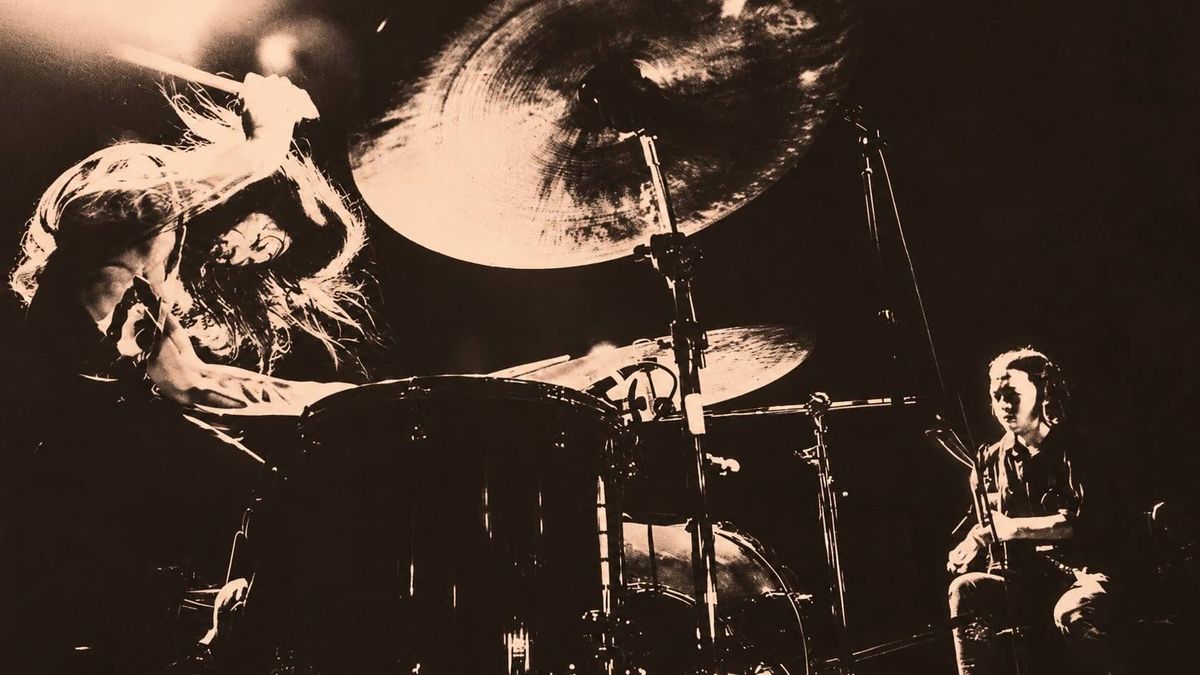
Six years later the same line from the Tao Te Ching heads a double album made with a drummer, for a film. The most yielding thing in the world will overcome the most rigid came out on 30 October 2026 on American Dreams, digitally first, with a double LP following in November. MANAS is the Asheville duo of Dorji, a guitarist born in Bhutan, and the drummer Thom Nguyên, who have played together since 2012.
The four pieces began as music for 100 Sunset, Kunsang Kyirong’s first feature, which premiered in Toronto in September 2025. It follows two young women, Kunsel and Passang, in the Tibetan community of Parkdale, as they try to make room for themselves inside what the people around them expect. The film’s credits give the music to Dorji alone; the record, made at Ritual Botanica, a herbal apothecary near the French Broad River, gives it to the duo.
On the record’s Bandcamp page the pair describe the work as an exercise in space, repetition and restraint, with structures built in real time. For a guitarist whose solo playing has long favoured attack, scrape and the broken line, restraint is the harder discipline, and the title’s line sets the terms: what gives way outlasts what resists.
The title track opens the record and sets out its method: thirteen minutes of mantra-like repetition in which the image surfaces slowly, as a photograph does in the developing tray. It begins as an intimate portrait taken from the edge of the frame and, by small accretions, becomes a narrative carried by two instruments, a story of unease that turns into awareness. Each time the playing threatens to scatter, the rhythm draws it back to a methodical improvisation, and the listener never loses the thread. The live structure is all there, yet the piece’s origin as a score holds it in check. For a duo whose 2019 set with the guitarist N.R. Safi, released as Alone We Are Alone As Far Down As the Sediment, kept building and collapsing for half an hour, this is a new kind of patience. The effect stays hypnotic until the closing minutes, when Dorji lets loose clattering bursts of distorted guitar that pick the figure apart, like small errors in a Tibetan temple. In 2022 he described his music as “deconstructive and horizontal”; here the deconstruction comes late, once the form has been allowed to stand.
“Dreams of Durdak” is where the record hands itself over to improvisation in the full sense. Its title names the Durdak Cham, the Bhutanese dance of the masters of the charnel ground, two skeleton figures who dance at festivals as a reminder of impermanence. Nguyên’s drumming has something of that spectral animation: an avant-garde jazz of visceral, organised chaos, loose in every stroke and never without direction. Dorji’s guitar is drawn into the same machinery and, in all its experimental guises, becomes almost part of the rhythm section, given over to a climate that feels inevitable. After the slow exposure of the opening track, this is the record’s other face, the one closest to the music Dorji once called “really volatile”.
“For the Wild” starts as a coda to “Dreams of Durdak” and gathers strength until it becomes an obsessive vamp, running wild inside an atonal cage. It is a methodical, Dionysian mantra that carries a childlike motif into something close to ecstatic trance. The repetition that steadied the opening track becomes, here, the engine of abandon.
“destituons le monde” turns the whole record into a crescendo. A scream would be too small to hold this noise: a scream clarifies a state, and this noise never comes to rest. Free industrial jazz is the nearest name for it, and from first minute to last it dismantles everything the three earlier pieces built. The title shares its words with a chapter of Maintenant, the Invisible Committee’s 2017 book, where destitution means withdrawing from power and letting its institutions wither. Whether Dorji intended the reference is not documented, but it sits close to the 2020 dedication, and the music behaves as though he did.
After the release, Dorji and Nguyên take MANAS on the road as a trio with Che Chen of 75 Dollar Bill, starting in Asheville and travelling up the East Coast.