The Sons of Pink Moon: Who Inherited Nick Drake's Hush
A 1999 car advert, and the musicians filed under Nick Drake after it.
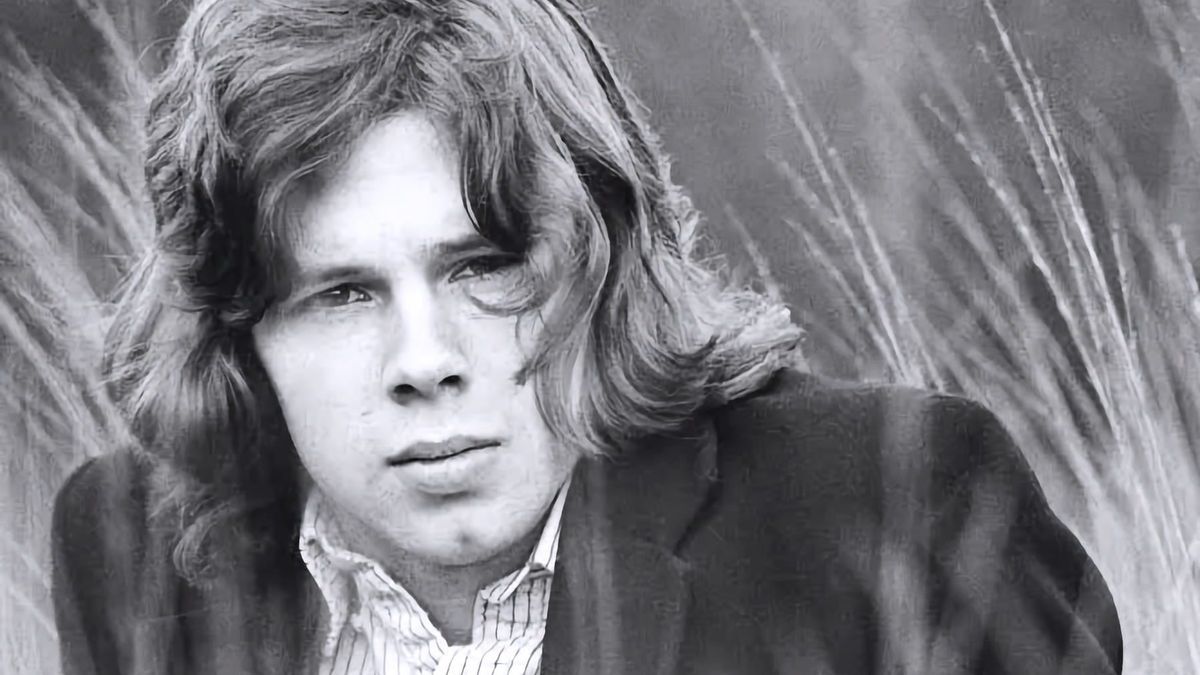
In November 1999 a sixty-second spot for the Volkswagen Cabrio went on air, the work of a Boston agency: two couples under a night sky, roof down, driving past a party, and on the soundtrack a song by a man twenty-five years dead.
The song was "Pink Moon". Nick Drake had made three albums and sold very few of them while he was alive. The men who made the advert still disagree about how he got into it. One says a Drake CD happened to be playing, another that he and a colleague proposed the song at the concept stage, and Joe Boyd, Drake's producer, remembers being sent a storyboard before the shoot. Gabrielle Drake had turned down plenty of requests for her brother's music. She agreed to this one because the scene looked to her like somewhere people might really listen to him. In the first ten weeks of 2000 American buyers took about 4,700 copies of the album, against 815 in the same weeks a year earlier, and the yearly figure went from around six thousand to seventy-four thousand. One of the admen got hate mail.
Since then Drake has acquired a family, most of it assigned to him afterwards by listeners. I have kept the usual names below and tried to find out when each of them actually heard him. Where anyone has said, it tends to be later than I expected, and for Jansch too late. The others get the circumstances of the record.
I. Before the advert
"Sadly, I didn't ever meet Nick Drake," Bert Jansch said. By the time he got round to listening, Drake was dead. The influence ran one way: Drake taped Jansch's "Strolling Down the Highway" at home, and it surfaced decades later on Family Tree. I have also seen it said that he learned from Jansch's "Blackwaterside", and I cannot trace the claim. Rosemary Lane (1971) was made between June 1970 and the following January at Jansch's cottage in Ticehurst, Sussex, where the engineer Bill Leader brought a portable recorder and waited for the mood to come.
Bridget St John did know him, and says she learned a lot from watching him and others at gigs. Ask Me No Questions(1969) took ten hours at CBS over two evenings, with John Peel producing for his new Dandelion label and John Martyn on the title track and "Curl Your Toes". Open D and DADGAD, she has said, opened up "a whole other world" for her, and she did not think of what she played as folk. The birds and church bells on the title track were Peel's idea, and came from the BBC effects library.
Linda Perhacs worked as a dental hygienist for a Beverly Hills periodontist, and one of the patients was the film composer Leonard Rosenman. Parallelograms (1970) was timed by stopwatch against a scroll score, with lines she drew for the musicians. It also has a ring modulator, an amplified shower hose, and tapes she made at home late at night, singing into speakers for a watery effect. Kapp mixed it for AM radio. She told one interviewer she threw her copy in the bin, and another, in 2004, that she put it away. By the definition above she barely qualifies, and listeners keep filing the record here all the same.
Ben Watt was eight when Pink Moon came out, and nineteen or twenty, by his own count, when he recorded North Marine Drive over five days in September 1982. It is nearly all his own guitar, piano and voice, with Peter King's alto saxophone on some tracks and Dylan's "You're Gonna Make Me Lonesome When You Go" at the end. The voice stays just above a whisper over the picking. He found Drake at university around then and has loved him since. When he describes what he was doing on Cherry Red, though, he names "a little bit of John Martyn" and the Durutti Column, and the Drake comes from everybody else.
II. After the advert
José González is the awkward case. After a gig in 1999 people told him he sounded like Nick Drake. "But I'd never heard him!" He went and listened, and "Pink Moon" became his point of comparison for Veneer (2003), begun on a four-track in a small Gothenburg flat. His account of the sound is a technician's: very old strings, the thumb doing the bass, thinking in bass lines and arpeggios instead of chords. He calls his own "Stay in the Shade" more or less a Drake rip-off.
Then in November 2005 Sony put his cover of the Knife's "Heartbeats" on a Bravia commercial, with 250,000 real rubber balls fired from cannons and tipped from cranes down a San Francisco hill. I used to set this beside the Cabrio, and the parallel fails: González was alive, the album had come out in Britain and America that same year, and the single that followed in January reached number nine in the UK. He had not wanted to license the song in the first place, which did not stop a Dutch fan asking him whether Drake would have been applauded for selling his music to an advertising company.
Sibylle Baier taped Colour Green at home in Germany between 1970 and 1973 and gave copies to a few friends, Wim Wenders among them; she also sings on screen in his Alice in the Cities. Her son Robby, himself a musician and producer, made a CD of the tapes for the family; a copy reached J Mascis, who passed it to Orange Twin. The record came out in February 2006. Nothing suggests she had heard Drake. Most of the record is voice and guitar, though the last track, "Give Me a Smile", has strings and an organ that nobody has credited.
III. Since 2010
Gareth Dickson, who toured as guitarist with Vashti Bunyan, does sound like Drake some of the time, because he went to the trouble: he ran a project playing Drake's songs as close as possible to the way they were written. His own Quite a Way Away came out on 12k in 2012, among ambient records, and the people he credits include Robert Johnson, Eno, Aphex Twin and Glenn Gould.
Chris Brain started as a Megadeth fan in Leeds and found folk through the clubs at eighteen. He now runs two of them and a festival. Steady Away (2023) was made in a refurbished church he calls the Nave, with support from the Bert Jansch Foundation. He said in an interview that he had discovered Drake and Martyn only about six years earlier, long after he began writing songs.
Danny Paul Grody, once of Tarentel, spent 2008 at home on Fountain (Root Strata, 2010) with electric guitar, piano and melodica, wanting something "unorthodox and weird", and he went to the kora and John Fahey for it. Lucy Roleff recorded This Paradise (2016) in three days, with cello, pump organ and bowed glockenspiel, in what she describes as an old hall built off a house where her producer, Tony Dupé, once lived. People play the two side by side, though neither fits the definition I began with.
The nearest thing to a statement of method comes from Joan Shelley, who made Joan Shelley (2017) at Wilco's Loft in Chicago with Jeff Tweedy producing and his son Spencer drumming, sometimes on songs he had not heard. About half are first takes, band and all, and they were trying, she said, "to get away with less".
On the others I have found nothing about Drake at all: James Yorkston, whose first solo show in Edinburgh was in support of Jansch, and who made Moving Up Country (Domino, 2002) with the Athletes in a damp cottage in the Borders; Fionn Regan, whose The End of History, shortlisted for the Mercury in 2007, is recorded so bare that every syllable carries; Raoul Vignal, who made The Silver Veil (2017) in Berlin with Bernard Vignal on transverse flute; River Crombie, who put Light Trails on Bandcamp from Hamburg in October 2014, on no label.
St John learned from Drake and Dickson studied him. González heard him after being told to, Brain came late and Jansch too late; for Perhacs and Baier there is no recorded link. The thing that joins these records is a habit of listening, and as far as I can establish it the habit starts in 1999, when sixty seconds of a car going past a party taught a lot of people to hear a quiet voice close to the microphone as Drake's. I suspect most of these albums were filed under Drake by people who had learned his name that way, or from someone who had. I filed Watt's with the rest, though it had been out for sixteen years by then.
Pink Moon: The Meaning Nick Drake Left Behind
No Place to Be: The Hidden Geography of Nick Drake’s Pink Moon
Last revised: July 2026