Sairie :: Beneath the Spreading Tree
Old folk materials, arrangements with something left unsettled.

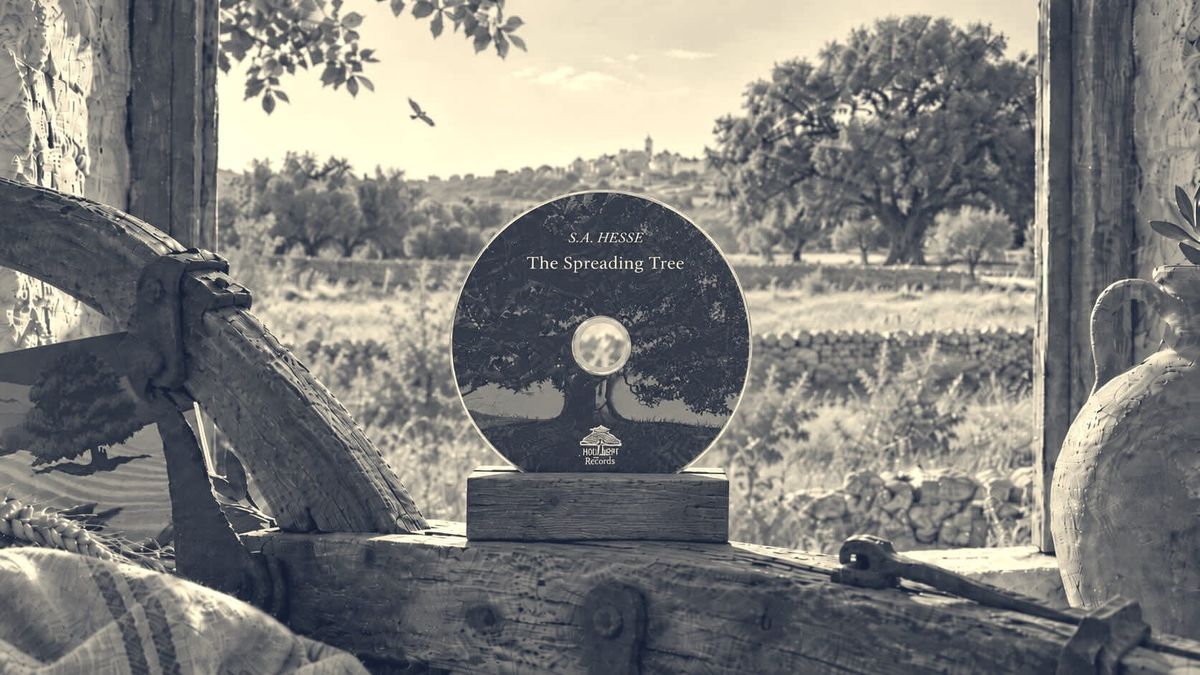
In Beneath the Spreading Tree there is plenty of old wood: autoharp, harmonium, violin, cello and acoustic guitar.
Emma Morton, Jon Griffin and Andy Thomas began releasing music as Sairie in 2019. Beneath the Spreading Tree is their first full-length, written and arranged by Morton and Griffin, recorded and mixed by Griffin in Newhaven. Around the trio: Maria Marzaioli on violin, Alice Eldridge on cello, Rebecca Tann on accordion. Griffin adds harmonium and percussion; Morton's autoharp stays one of the record's quieter signatures, a texture you notice late and then keep hearing. The band frame the album as a continuation of their early-Seventies folk interests, pushed toward barer arrangements and stranger atmospheres. The record mostly earns the description, though not evenly.
"Song for the Winter" makes the genealogy easy to hear. The writing carries the kind of landscape language older British folk has made almost dangerous to use lightly — birds, hills, waves, the turn towards evening — without gathering the dust of old records. Morton and Griffin's voices are clear in their different registers, hers brighter, his denser. The phrasing is almost marble-hard; voice and guitar carry its weight.
They sit over the instruments like something alive, and the arrangement gathers around them, dark as hay in a shut barn.
On "The Breeze on the Meadow", Griffin's harmonium stays low beneath violin and cello, which keep something of the severity of older British folk. It takes very little for that pastoral calm to start slipping. Voice and guitar hold the song close to the ground, melodic and vernacular; the line stays simple and singable.
"The Gairdner" is where the link to traditional song is hardest to miss. Sairie don't rough the material up until the source disappears: the traditional structure stays legible, set out plainly between acoustic guitar, voice and strings. Not much else is needed. Across the record this restraint is cumulative.
"Harder Than It Seemed" shifts the record's centre of gravity. Andy Thomas's bass turns heavier, Griffin brings in electric guitar, and the song edges toward pop without tidying itself up enough to become one. There's a John Barry streak in the fuzz guitar and the percussion. Here Sairie's folk steps outside its own historical vocabulary: the bass can be blunt, the guitar opens a more modern surface for the song to move across, and the voice, intense and oblique, keeps the volume from taking over.
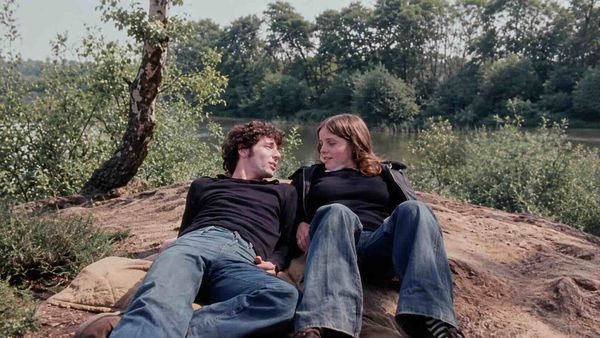
"The Green Light" is about young love, and it holds together through small recognitions. No ballad plot, no landscape standing in for feeling: the scale is domestic, and the closeness feels earned.
The record knows its late-Sixties and Seventies progressive-folk shelf well: the instruments, the modal turns, the slight ceremonial pull a harmonium brings into a mix, like weather that hasn't broken yet.
The title track pulls the older material back into view. Its story echoes the execution narrative of the Scottish ballad "Gilderoy", which gives the closing piece a darker skeleton than its pastoral title suggests. Sairie keep that darkness inside the song's texture; nothing in the arrangement flags it as a twist. By the end the tree has become an archetypal object, and shelter sits closer to a hanging place than the title lets on.
A family tree, if one is still wanted: Pentangle, Trees, Espers, Mellow Candle, Vashti Bunyan. Beneath the Spreading Tree survives the comparison. Plenty of records this conscious of their ancestry do not.