Maisy Owen :: Interview
Maisy Owen on poetry, distance, Nashville, folk and the places that remain.
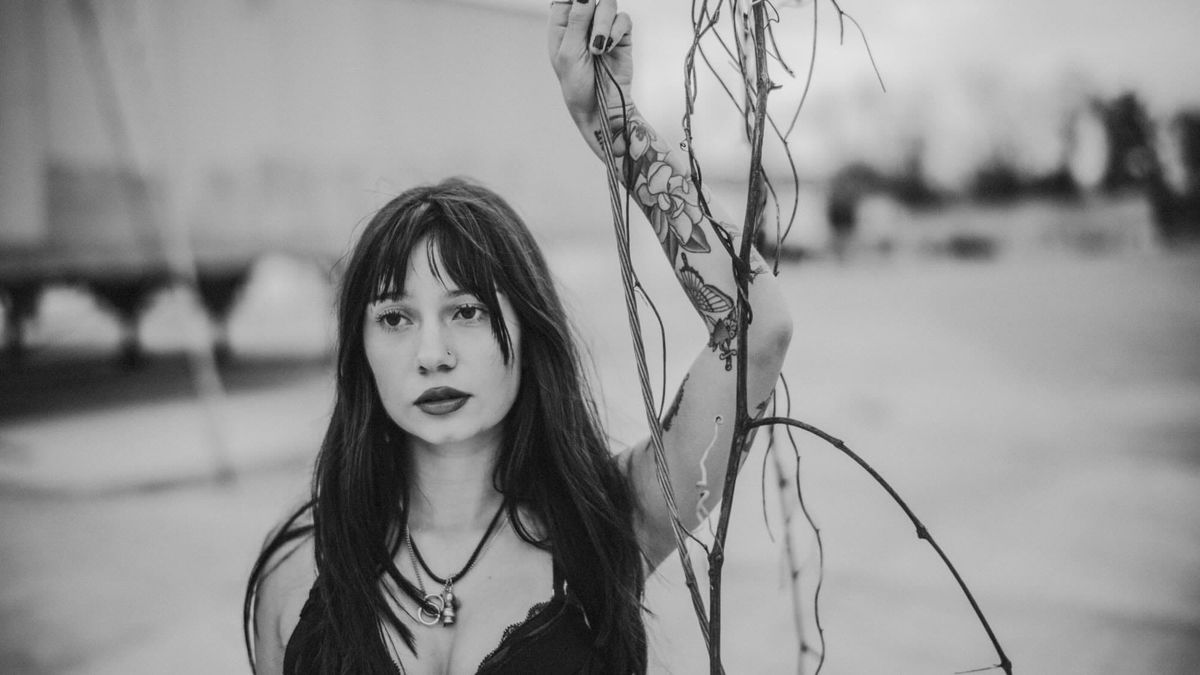
Before the songs there were poems, a viola, abandoned buildings and a dirt road between a lake and a forest.
It's a detail almost everyone writing about Maisy Owen mentions in passing: she started playing viola at nine, working from scores that changed time signature and key without warning. It's there, more than in the folk revival she's often associated with, that the sense of submerged calculation running through Dark on a Sunny Day seems to begin. Before she was a songwriter, Owen was an ear trained to think of music as irregular structure, and something of that childhood grammar has stayed in her writing.
The second thread is genealogical more than geographical. She learned fingerpicking from David Olney, one of Nashville's more singular and quietly respected songwriters; her father, Gwil Owen, an Oscar-nominated co-writer of "A Soft Place to Fall," became her first editor, the person who strips clichés from her verses. And Joe Boyd, producer of Nick Drake, heard in the record an original voice free of contemporary mannerisms.
That method begins before the song, in poetry. Owen writes regularly, and the album's title grew out of one of her own lines: "I find a lot of sweetness in pain, and a lot of darkness in joy. It's a pendulum." Words come first; the song arrives later, giving them time, breath and sound.
This is where the interview that follows begins: with the relationship between poetry and song, the way Owen uses her voice, the distance between the Nashville where she grew up and the Nashville where contracts are written, and the places that enter her work long before they become image or word.
THE CONVERSATION
Maisy Owen / 13 September 2026
Q / 01
When a poem enters a song, it doesn't simply change form: it also changes the way it is remembered, heard, and perhaps even understood. Are you interested in that moment when words stop belonging only to the page and begin to depend on voice, time, and sound?
I try to write poetry as often as I can, even if it’s nothing I’ll use later. I rarely write with the intention of creating a song, the songs usually show themselves in their own time. The cadence changes completely once the words become lyrics, I find it interesting to look back on.
Q / 02
I appreciate the way your voice in Dark on a Sunny Day remains surrounded by space and reverb, almost held at a certain distance from the listener. Is that quality particular to this record, or do you feel it may continue into your future work?
I am a big fan of sparse production! Some of those recordings captured my first few days ever in a studio, they are fragile because that’s how I was feeling. I like to sing with as little emotion as possible, leave it up to the instrumentation and the melody and the lyrics. I think that aspect of distance will remain the same as I continue recording.

Q / 03
Empty houses, roads and open spaces recur throughout your videos and visual world — places where the past seems to survive without ever being completely recoverable. Are you drawn to that point where the memory of a place begins to merge with what we eventually read into it?
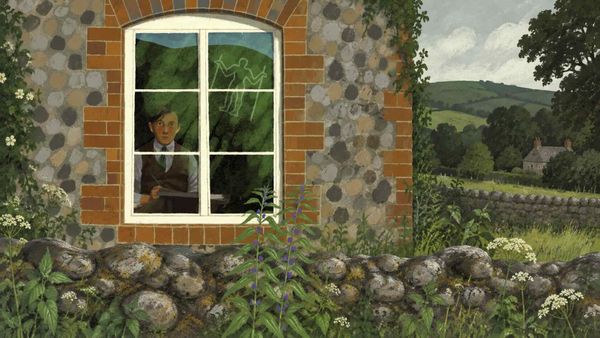
I love abandoned buildings because there is something so peaceful about them, they are no longer bound by time. I love the visuals of nature reclaiming something man made, I love the aspect of decay. I was visiting and photographing abandoned buildings way before I started writing songs, although some places that I’ve visited have definitely provided inspiration.
Q / 04
Growing up in Nashville means living somewhere songwriting is simultaneously culture, tradition, profession and industry. Have you ever felt the need to protect part of your own writing from everything a city like that can teach, even unconsciously, about what a song is supposed to be?
I feel very safe and comfortable being in Nashville. It’s incredibly warm and familiar to me. The suit and tie songwriting industry has little effect on my day to day life or on my writing. I don’t co write, and I don’t buy into the idea of songwriting as an industry. That part of Nashville is like a different city to me.
Q / 05
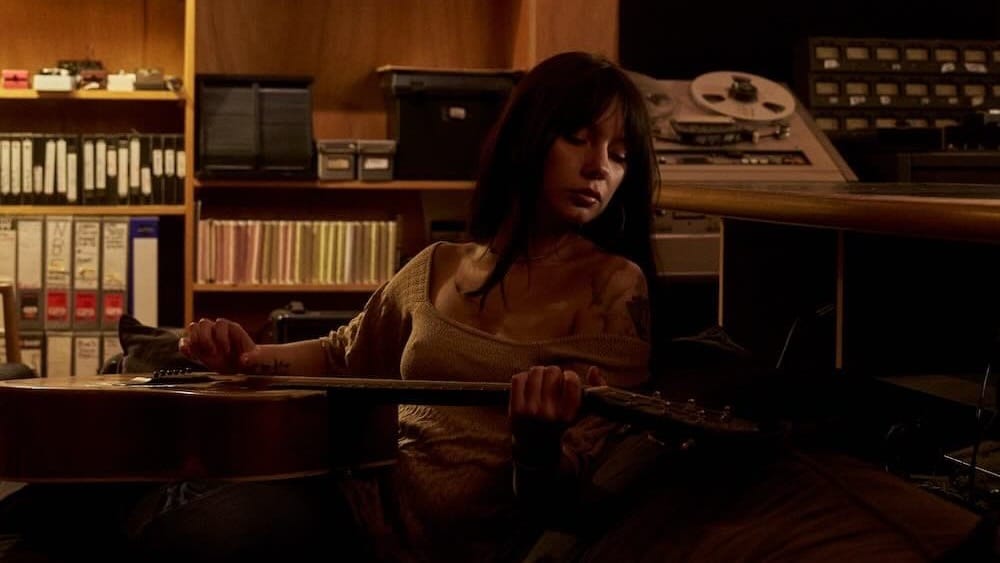
You began with the viola, and your work continues to move close to musical forms with histories far older than the contemporary idea of the singer-songwriter. There is also something in your sound that recalls a more secluded, atmospheric and oblique strand of folk. How deep do you feel those roots run, and how much of them may have entered your musical language so completely that you no longer experience them as influences?
When I played the viola as a child in school, we focused on a lot of folk music and traditional tunes. As I got older that morphed into classical pieces. I have a very distinct sort of melody in my head that I can’t tie to anything concrete, it’s kind of an innate way of expressing pain? I think my biggest influence musically will always be classical. Being able to express so much emotion without any words at all is so important.
Q / 06
When something very private — a poem, a melody, even an image that once belonged only to you — is recorded, released and eventually heard by people you have never met, does it still feel as though it belongs to you in the same way?
I was initially nervous to release music for that reason, but I was proved wonderfully wrong. It is so incredible to be understood! I love knowing that these songs mean something to others like they do to me.
Q / 07
If you had to choose one real place that has left a trace on the way you create — even before you were aware of it — what would it be?
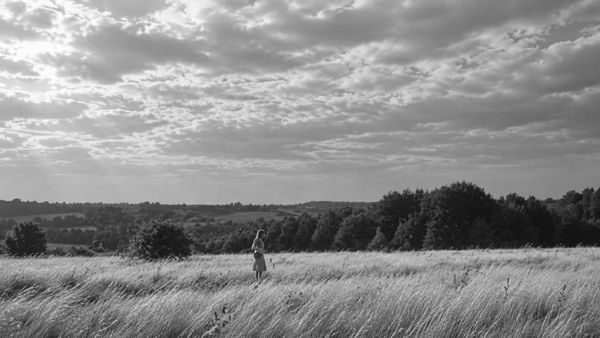
Manitoulin Island! There is a long dirt road and a few tiny little cabins up in Ontario, sitting between the lake and the forest. It’s wild and remote and my absolute favorite place to create. I’ve been going there in the summers since I was a baby and so has my dad, and his dad. It’s a songwriting heaven.