Maisy Owen :: Dark on a Sunny Day
Folk, fingerstyle guitar, Nashville unease and spectral Americana

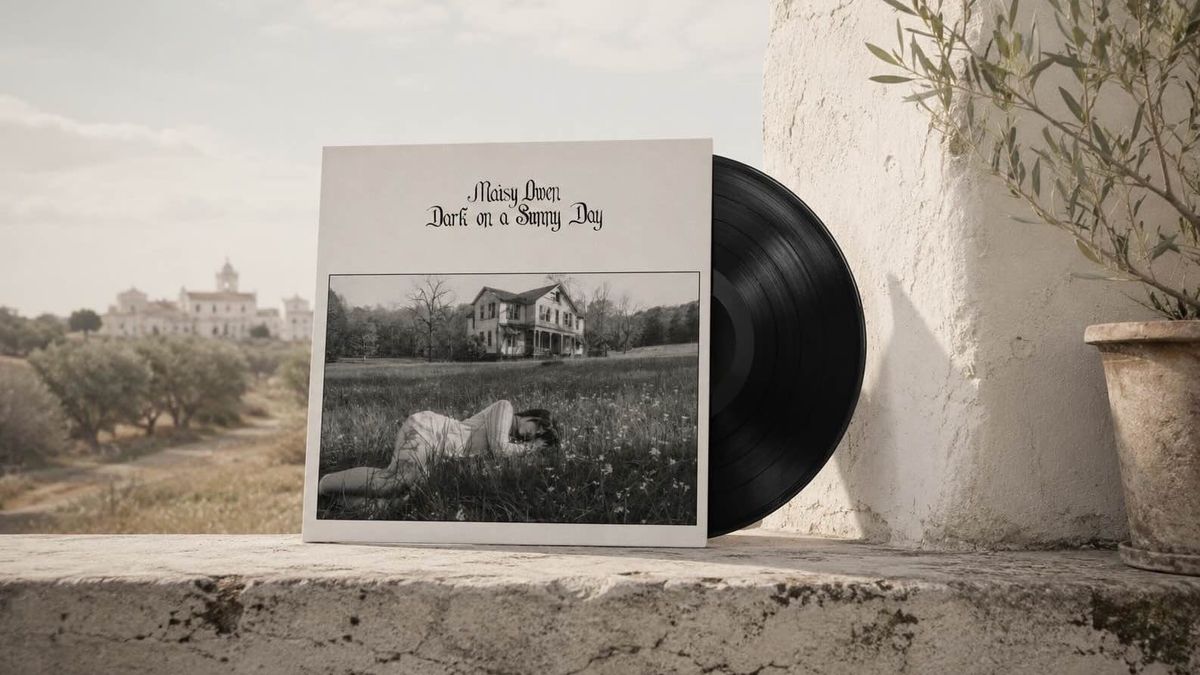
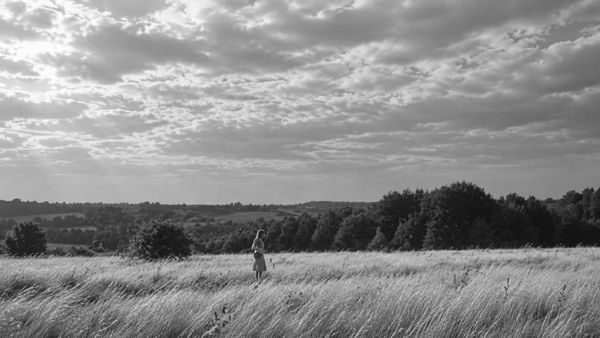
The sleeve gets to you before the music does. It cites, without naming it, Andrew Wyeth's Christina's World: the girl prone in dry grass, staring at a house she may never reach.
An image from 1948, painted in an America already mythologizing itself. Putting it on a 2026 record is practically a warning label. This isn't a comfort record. The oxymoron in the title says the same thing more plainly: daylight here doesn't hide the violence. It just makes it easier to see.
Maisy Owen is twenty-three, Nashville-raised, the daughter of songwriter Gwil Owen. She knows this. Take the title track: a mid-tempo built on the offbeat, cadenced vocal, rightly chosen as the single. For a moment it drags the listener out of American pastoral and into dusty desert, helped by drums that for once get to build some momentum. The most-quoted line, "are you going to force yourself to hit me harder," opens over Roger Moutenot's lap steel, which unfolds the space like a lowering sky.
The most repeated comparison is Vashti Bunyan. It's a lazy one. Not wrong, just lazy. That record was born out of flight, a retreat to the Hebrides. Owen writes from inside Nashville, with session players who do this for a living. Connie Converse fits better: she recorded beautiful songs in her living room, released none of them, and vanished in 1974. That's a real ghost. Owen isn't one. The record works hard to sound like it might be, though, stretching out long reverb tails that Americana Highways called out directly, writing that the voice sounds as if it's singing from inside a bathroom. Manufacturing that kind of spectrality in a studio carries a real risk, when other people paid for the real thing with actual oblivion.
"Letters" is the album's emotional and compositional high point, and it shows the tension plainly. The fingerstyle is intricate, never quite static, and the weave of bass and guitar recalls the Tim Smith-era Midlake, where that same interplay used to read as epistolary elegy. "Your chaos is insatiable and it will never end" sounds like it was written for the act of writing itself, whoever was supposed to read it be damned.
"On My Way Down" recalls the solo Edie Brickell of Picture Perfect Morning. That's no small thing.
"I Can Be Just Like You" stages the anxiety of influence. The confidence in the singing doesn't waver, even while the lyric wishes to be someone else, and that's the poise of a debut artist drawing on an early folk revival and still refusing to get dull. "God Fear" only carries real weight once you anchor it to Nashville, capital of both country music and the Bible Belt. What it captures is local friction, the kind that never quite rises to rebellion.
The record closes with "It All Ends the Same," the only track James Russell produced instead of Eaton. You feel the change of hand before you know why. Piano takes over from guitar as the gravitational centre. The chords move slowly, and the harmonies hang suspended, never quite resolving. The voice, less propped up by reverb, turns drier, almost like a live take, and unspools into long phrases about impermanence. There's no fatalism in them.
An offbeat pulse and Roger Moutenot's lap steel pull the song away from American pastoral and towards a drier, more exposed landscape.
Intricate fingerstyle and the weave of bass and guitar make the album's emotional high point feel continually in motion rather than settled.
Piano replaces guitar as the gravitational centre while drier vocals and suspended harmonies leave the record with impermanence rather than fatalism.
She knows exactly what she's citing, Bunyan, Drake, Jansch, Mazzy Star. She also knows how to let a second, less tidy record show through beneath the polished one.