Elanor Moss: Company and Consolation
An interview with Elanor Moss about recording The Knife, The Needle to tape.
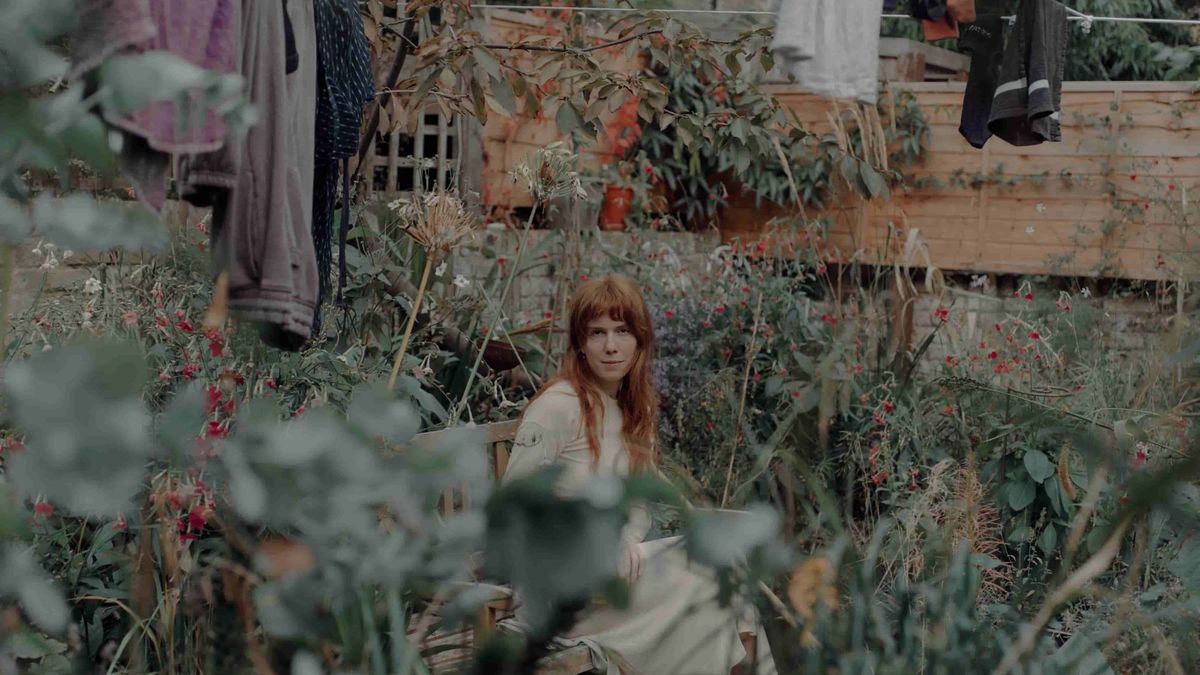
A barn in Devon, two and a half days, every musician in the room and a tape machine running out of tape: Elanor Moss made The Knife, The Needle by settling every decision before the reels began to turn.
I wrote about The Knife, The Needle when it came out, and I have lived with it ever since. It is a record that gives more of itself the quieter the room gets, and that was the first thing I told Elanor Moss when I got in touch. What kept me coming back was a flaw. On "Improvisation", the tape, nearing the end of its reel, sets the pitch wavering, and that is the take on the record. I wanted to know what kind of musician lets a machine have the final say, and whether the instinct was learnt at home, from her father, who recorded his songs for a small circle of listeners, or came from Molly Drake, whose songs reached us on tapes nobody meant us to hear.
Her first answer gently pushes back on my first question, and I am glad it does. The record, she explains, was always meant to be heard; treating the sessions as a document was a production choice, and a way of learning to stop performing for an imagined audience. From there she goes further than I had dared hope. She talks about the song the method made hardest to catch, about the Gothic house the visuals uncovered in her songs before she had seen it herself, and about a one-man puppet play in London that showed her how much the places that hurt can teach.
THE CONVERSATION
Elanor Moss / 30 October 2026
Your father is a musician who recorded his work for a small circle, with no thought of release, and the artist you have named most often is Molly Drake, whose songs survived as home recordings never meant for us. On The Knife, The Needle, you asked to be recorded “like documentation”, as unsparingly as possible. Are those three things the same instinct? What does a recording owe to the people who were never supposed to hear it?
I don’t think they are the same, necessarily. I knew I was making a record with the goal of eventually releasing it. I didn’t know whether it would get released - I didn’t have a label or management or any of the things that would have made that feel realistic at the time, but I did have an ambition for it to be released into the world for people to hear one way or another. So for me, while the recording process was absolutely a form of documentation, that decision was also a production choice, with an intended impact on the listener. I wanted to create something that felt very alive and tactile, and also wanted to leave myself and the players space to focus purely on performing, which is always the part of the post-writing process that I connect with the most. And it’s also what I look for a lot of the time in records I listen to - to feel close to the performers as though they’re performing in the same room as me. The way I wanted to try and achieve that was by treating the process as a documentation - a snapshot. That said - just because my Dad and Molly Drake never had ambitions to release their recordings, I don’t think this necessarily means their instinct to want to record the way that they did was any different to my own instinct, from an artistic standpoint. I haven’t asked, so I don’t know…
You can never really know what the impact of a piece will be on the listener, and after a lot of trial and error prior to this session, I wanted to approach the session purely with a sense of trying to please myself and not give heed to the imagined future audience or critic. I enjoy performing, and so recording this as though it were just a performance made me comfortable, and allowed me to be fully present in the process in a way that multi-tracking doesn’t really do for me. I was conscious that I needed to try and develop a healthier relationship with the imagined audience during the process of recording music - not feeling beholden to them, or needing something from them (approval, validation), but seeking to give them something instead. With the knowledge that you can’t, and shouldn’t try, to please everyone.
I wanted to approach the recording as a documentation, because that was the structure I felt would capture the songs in the truest way for me. But I also knew it was a way for me to re-calibrate my relationship with recording and the “imagined audience.” So in that sense, I don’t see recordings as “owing” audiences anything. I do see recordings as innately having a relationship with an audience, though, as the very act of documenting - even for relatively private intentions - makes something available to be heard by others in a way that just sitting in a room and playing to yourself does not.
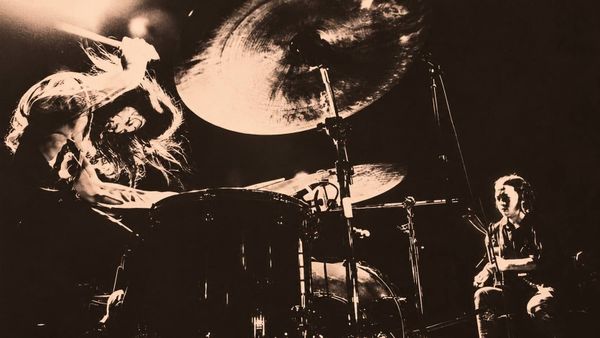
Two and a half days at Middle Farm in Devon, everyone in the room, straight to tape. You said that if your voice wasn't strong that day, that's simply what's on the record. Was there a take where that rule cost you something you'd have liked to fix, and what did it give you in exchange that overdubbing would have taken away? Please feel free to get technical, down to the microphones and the tape: some of our readers will want the details.
The thing it gave us was a huge amount of license to just perform and try to be fully present in the studio as we worked. For me personally, I’ve always found studio environments quite challenging and difficult spaces to get into a creative-flow in. Working in this way was the first time I felt totally at ease in the studio to just be myself. I was able to let go and not overthink it. So the approach really facilitated something psychological for me, that allowed me to show up fully each day.
It also helped me to “produce” the record, because all of the meaningful decisions about the music were made before we stepped into the studio. I commissioned some arrangements from my trusted friend Matthew Herd, rehearsed them with the ensemble, and knew it was right, and that we just had to capture it well and honestly in the studio. The ensemble and arrangements we had created a container for the sessions, and the pieces we didn’t have arrangements for could form within that container live in the space as we were recording. I see production kind of as the process you go through to create that container that holds the sonic world of the album.
So the choices were minimal: who are we asking to play in the ensemble, which songs are we arranging, who is arranging them, and how are we recording them? That made it feel straightforward and less daunting. All of the big decisions had been made before we stepped into the studio, so once we were in the studio, all we had to do was play.
One obvious place where recording to tape came back to bite us was in the “Improvisation” tune. We did about four takes of that in a row, and the best take was the last one. When we went in to listen back, the tape machine had malfunctioned; it had reached near the end of the reel and was pulling unevenly on the tape that was left, which caused it to speed up and slow down, pulling the pitch up and down microtonally in places. Luckily, it kind of worked, and we saw it as the machine joining in on the performance!
Where it got in the way in retrospect was in how difficult it was to capture “Louise”. I’m at peace with it now, but that was a difficult one to get right, and some more flexibility in the methodology might’ve helped there.
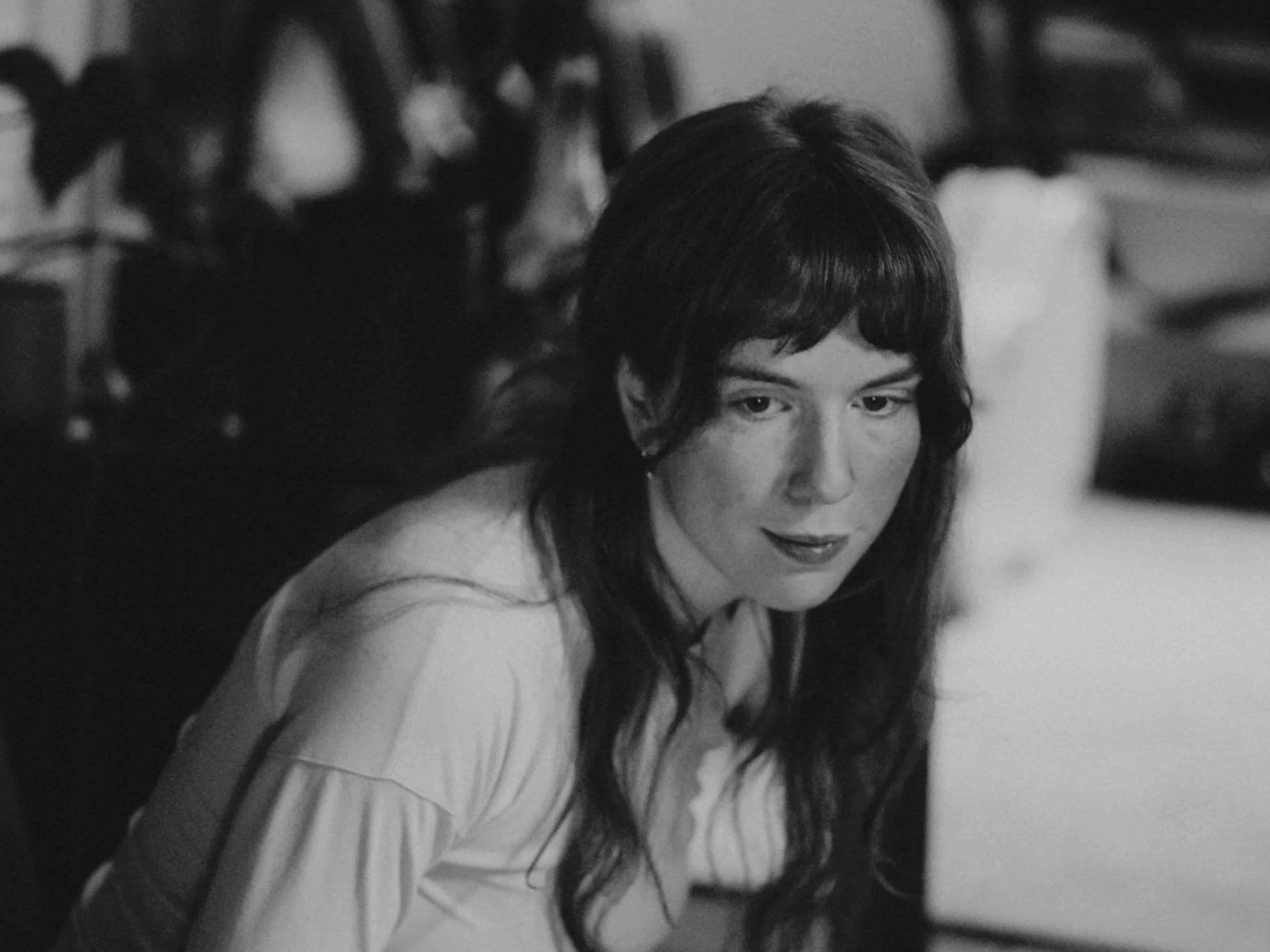
Much of the album was written at night in a cabin in the Scottish Highlands, and then played in a barn in Devon. Those are two very different Englands, or rather one isn't England at all. What did each place leave in the songs that a listener could actually hear, in a tempo, a silence, a word?
I think each place shares a kind of quietude that worked its way into the songs. On “The Way That it Feels” you can hear the spring chorus of birds singing out of the studio window in the background. I wrote a lot in my flat in London too, at nighttime. It’s eerily quiet where I live, you wouldn’t know it’s in London. That is another place that quiet and slowness seeped in.
You’ve wondered aloud whether British folk tales grow out of the long dark winters, and you’ve called this record “quieter, weirder, more English”. Which kind of weirdness did you mean? The eeriness of the old ballads, or something closer to home, the oddness of a house with no television, just a few VHS tapes played until they wore out?
I think the weirdness I was interested in is exactly the latter - the weirdness that is innate in the quietest recesses of every person’s inner life, and can be seen in the mundane details of the places that we live. There’s a great introduction by Sarah Perry to an edition of Iris Murdoch’s The Bell that I read recently that feels as though it captures something of it. Perry describes Murdoch’s take on the Gothic novel as something of a lens through which the world is seen as deeply symbolic. Once you decide to tend to the symbolic nature of anything it lends a weirdness and haunting to it. “The House” is a big character and symbol in the canon of English gothic stories - Heathcliffe’s Wuthering Heights, Rochester’s Fairfax Hall where Bertha is locked in the attic, to name two famous ones. I didn’t realise that I’d sort of created a sort of “Gothic” record until I started to think about the visual world with Huw Evans (H.Hawkline) who was the creative director for the still visuals, and then Matthew Thorne, who did the videos. Huw instantly brought up the Gothic house as a visual centrepiece, and then I realised that the domestic setting of many of the songs was something that lended a weirdness to the heart of it. Matthew Thorne had a similar idea for the video for “Sarah Waiting in the Car,” which is made up of a lot of still shots of a house and its surroundings, recently vacated of the people that were in it. There’s something innately spooky about that, and a bit weird. And then there are all of the everyday objects/ things in the songs that are symbols, too - knives, needles, birds, walls, doors… Lots of familiar objects are treated symbolically throughout, which wasn’t intentional but was a thing I kept returning to when writing.
There is a track called "Improvisation" on an album otherwise written over three years and rewritten after it was already finished. What is it doing there? Was it a way of letting the tape keep something the songwriting hadn't decided yet?
I think I see it as a bit of a counterweight, and something I’m looking to lean into more in my practice overall. I have a tendency towards perfectionism, which is never ultimately helpful, and the trust-fall that is letting other people help guide something (like in this instrumental piece) is a useful way to practise letting go. I think the recording approach was a counterweight to that tendency in me, too. It was a safe way of letting go in the studio - I had a container made up of the process, my trusted ensemble players, and Pete co-producing and engineering, that meant that I could let go once the recording started. Like I said before, this was facilitated by all the “big” production choices having been made before we started recording.
Matthew Herd arranged the woodwinds. A classical guitar, picked the way you pick it, already has several voices going at once. How do you tell an arranger where your guitar stops and his instruments may begin, and was there a part you claimed back?
Working with Matthew I gave complete trust to him with these songs. He is an unbelievable songwriter in his own right, and so has an incredible grasp of where to let things breathe, and how to facilitate the narrative arc of a piece of music. We have also played together a lot over the years with him on the saxophone and me with guitar and voice, so he has a great familiarity with my musicality and tendencies and has an instinct for how to support those without overstepping anywhere. He is that way as an accompanist - able to be very restrained, even on an instrument as difficult to play quietly as the saxophone!
Some of the tracks didn’t have arrangements and the ensemble improvised around me in the studio, using the language of those other arrangements as a bit of a guide. Most of it was just down to trust and intuition.
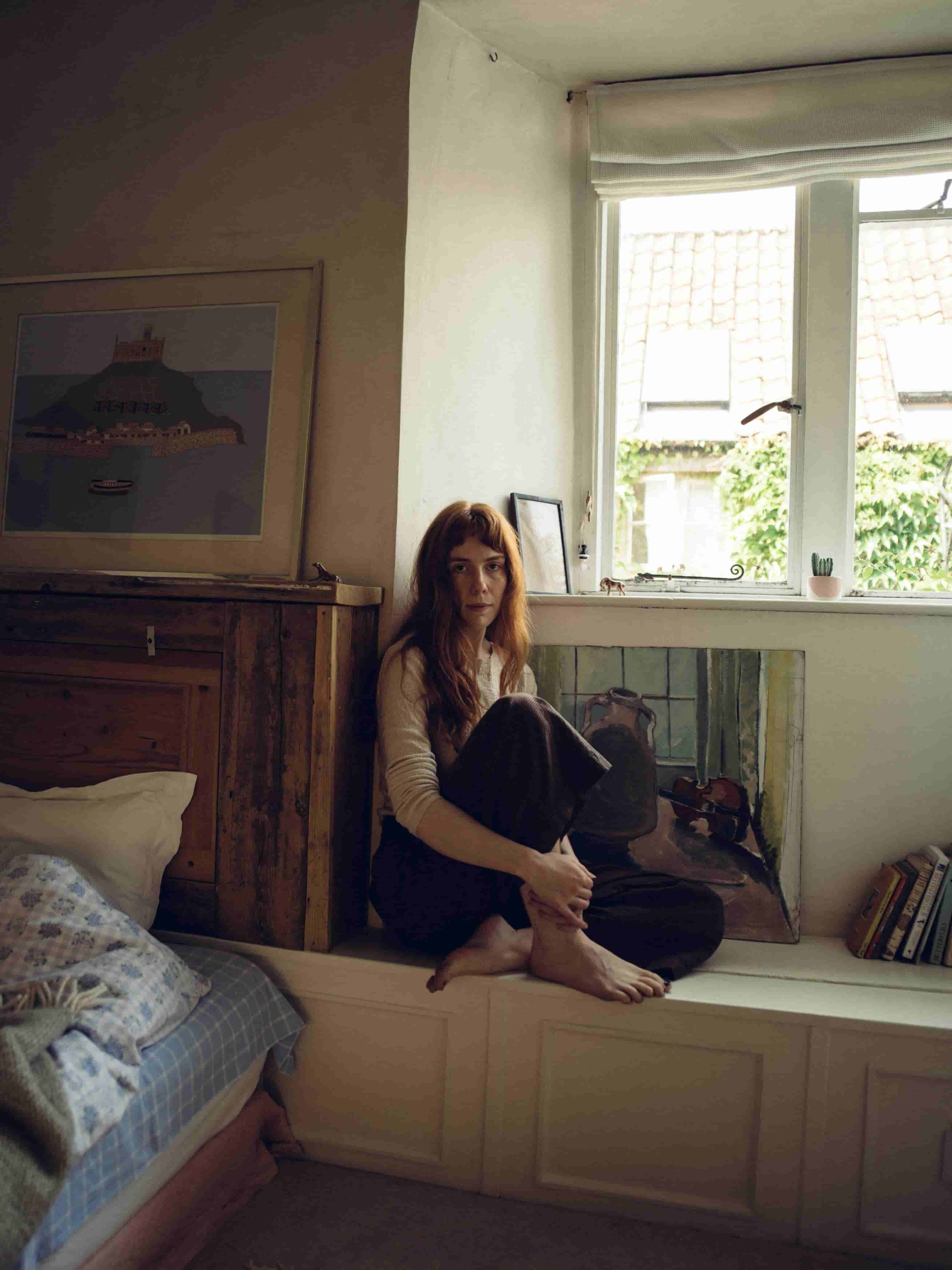
The album's image is the knife that turns out to be a needle. In folk medicine the thing that wounds is very often the thing used to heal, the same dart, the same blade. Did you know you were writing inside an old belief, and would you rather the songs mended something for the listener or simply reported the wound accurately?
I didn’t know this was an image from folk medicine, but I’m not particularly surprised! It seems like a kind of folk wisdom for sure. It reminds me of stinging nettles and doc weeds, or even the fact that nettle stings can have medicinal purposes in folk medicine, too! That wasn’t on my mind when I was writing but it makes sense.
It was also something I was just learning through experience, that the places that hurt have so much to teach you, that will ultimately be the key to your own healing. I remember seeing a play called “Blind” a few years ago at the Coronet Theatre in London, that I think in retrospect had a big influence on me. It was a one-man piece of physical theatre using life sized puppets that were curled up inside the actor’s costume, presenting as huge lumps on his body. At different points in the play he’d pull the character out of the lump, and the character would act out its lesson - like a riddle that the hero had to understand in order to reach the other side and heal. The terrifying, angry character turned out to be a frightened, lonely character, and it was only through facing him that the hero could heal the things that ailed him. He went through a transformation that required the facing of and assimilation of all parts. It was a beautiful and very visceral production that acted out this terrible transformation very physically. That was definitely a moment that helped solidify and deepen my understanding of some of my own experiences, and that I had an immediate and very visceral reaction to.
As for my hopes for the songs - I don’t expect any songs to heal, but I do hope that they provide company and consolation to whoever needs it.