Charlotte Jacobs :: Word Passed the Time
Experimental electronics, spoken voice, memory and unstable architecture

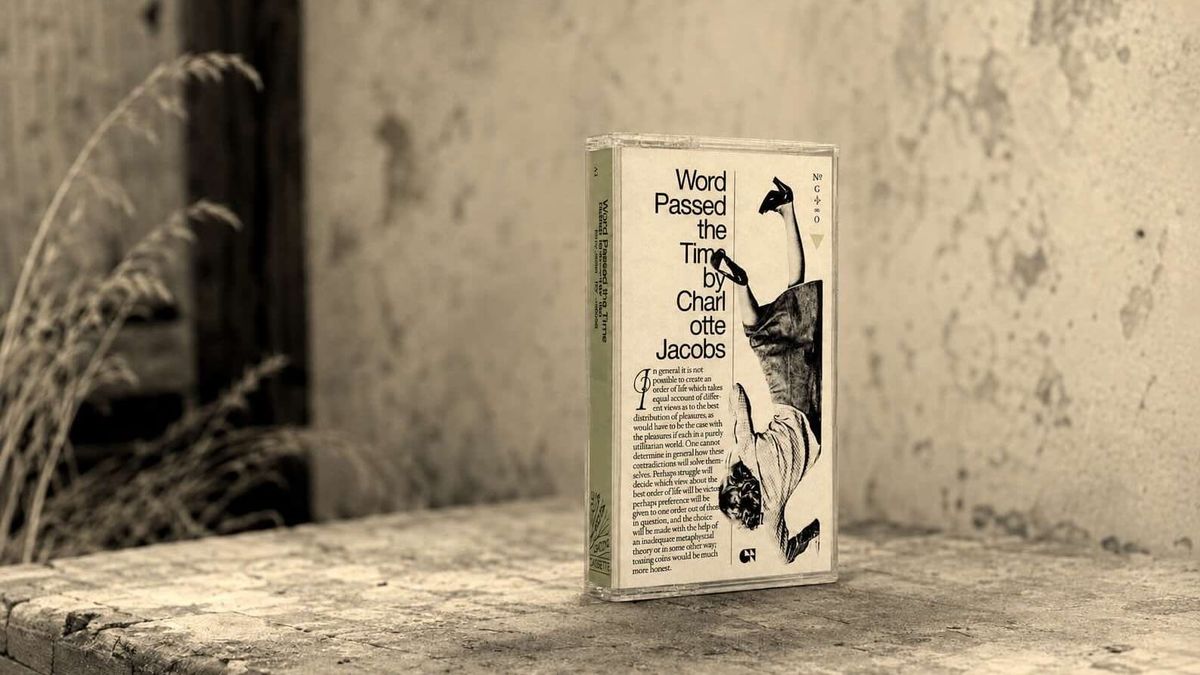
Word Passed the Time, released July 28 on Geographic North, finds Jacobs at her most radical: seven movements marked only by Roman numerals, twenty-seven minutes with no compass but sequence.
The decision is methodological before it is stylistic. There is no name to hold each passage steady; what remains is a progression closer to walking through a building whose rooms keep changing proportion as you move through them.
The first movement builds by addition. A gentle drone thickens beneath the voice; brief vocal masses take shape, the rhythm arrives already stripped to the bone, the synths keep their edges frayed. Each new element reorders the whole more than it colours the harmony. The words remain spoken — a human measure against which the machine keeps recalibrating itself.
The second movement lets the outline of a song surface. A single synth line beneath the voice is enough to reveal the songwriter housed inside the experimental apparatus. The vocoder is rationed; it only just tilts the grain of a few syllables; elsewhere, it might have become mere surface gloss. Around it, the electronics pulse low, like a heartbeat heard through a wall.
The third holds that closeness to song while continuous variation loosens the frame. Words surface alone. The air around each one makes the attack, the breath, the slow disappearance audible. Jacobs hears in spoken language a music that precedes melody: the rhythm of hesitation, the curve of an accent, whatever survives in the timbre once the sentence has used up its meaning.
Memory becomes a method of editing in the fourth movement. The cut samples resemble sutures laid across material already giving way. Jacobs layers vocal takes in search of continuity; the glitches reopen the seams — sudden jolts, fine incisions, accelerations that seem to work directly on the body of the sound. What surfaces is the unsettled precision of Aphex Twin’s more fractured work.
That fragmentation becomes spatial in the fifth movement. The voice is placed at varying distances from the listener. A phrase spoken up close splits into replicas; its semantic body thins until only a choral residue is left. It recalls late David Sylvian, above all in its discipline of distance: the voice treated as acoustic matter — residue, habitable volume.
Jacobs pushes the process towards something almost cellular. A presence divides into imperfect descendants, each carrying a fragment of the original utterance.
Repetition does not return the memory; it produces versions that gradually cease to resemble their source.
The sixth movement opens the descent. It runs no longer than the tracks around it, yet functions as a passage because the architecture built so far begins to lose its human scale. The manipulation darkens the voices. Contours warp. No dramatic threshold announces the shift: the listener simply finds that they have passed beneath the building.
From here there is no credible way back to the surface. The final movement concentrates the pressure into an obsessive continuum, the pressure of EBM with its beat removed. Everything stays sharp; the edge offers no relief. The journey settles into its final shape — a surrender to duration, carried out without spectacle. The calm still holds a pulse, though it now carries the weight of resignation. The last phrases sound as though they were spoken by someone who has already made peace with the coming silence.
A single synth line lets the outline of a song surface while the vocoder only lightly alters the grain of the voice.
Layered vocal takes search for continuity while glitches reopen the seams, turning memory itself into a method of editing.
The final movement condenses the album into an obsessive continuum, keeping pressure and pulse while removing any obvious route back to the surface.
Word Passed the Time ends without resolving the geography it has created. Silence appears as the last room, perhaps the deepest one. The machines withdraw, the voice disperses into its remaining traces. Beneath the visible level, time keeps moving through the structure long after the listener has left it.