Who Keeps Opening the Drawer
Most of private folk's lost records had contracts. Who keeps saying otherwise?
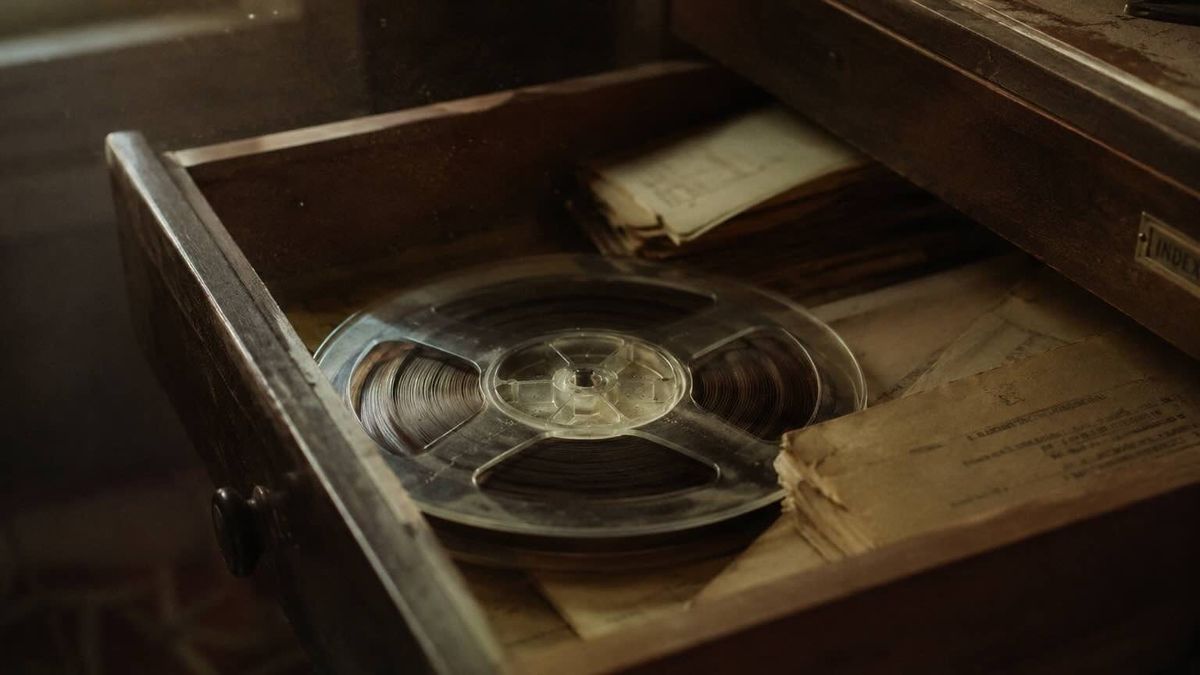
There is a drawer somewhere, and in it a tape. Someone recorded it at home one evening because the song had come to them; then life went elsewhere and the tape stayed put. Years pass, sometimes thirty of them. Then someone opens the drawer. It is a lovely story, and I can find only one record it is true of.
Sibylle Baier sang into a tape machine at home in Germany between 1970 and 1973, voice and guitar and nothing else. "It's myself in a painful February mood," she said of the songs, much later, and "I think I had forgotten it." Even this tape leaked. Her husband made four cassettes and three went to friends, one of them Wim Wenders, in whose Alice in the Cities she had acted. Her son Robby turned the songs into a CD as a birthday present, J Mascis heard it, and Orange Twin released Colour Green in 2006, the label's co-owner refusing overdubs as sacrilegious. Wenders, who had owned the cassette for three decades, bought the CD in a Chicago record shop.
Almost every other singer in this story had a contract. People keep telling it as if they hadn't.
I. The sources
Linda Perhacs made Parallelograms for Kapp in 1970, with the Hollywood composer Leonard Rosenman, over about a year of sessions fitted in after her shifts as a dental hygienist in Beverly Hills. The record got some FM play and sold best, as she remembers it, in Washington State, Portland, Hawaii and Canada. She kept cleaning teeth. "I thought it was on a shelf, forgotten." Around 2000, after she had nearly died of pneumonia, a package reached her from a man named Michael Piper, with CDs inside and a letter saying he had been looking for her for some twenty-seven years. Her second album, The Soul of All Natural Things, came in 2014, forty-four years after the first, made with younger admirers including Julia Holter.
The others had labels too. Wendy and Bonnie Flower were seventeen and thirteen when they made Genesis (1969) for Skye, with Gary McFarland behind them. "The next thing we knew, the company had bellied up." Vashti Bunyan made Just Another Diamond Day (1970) for Philips with Joe Boyd, then walked away; in the mid-Nineties she typed her own name into a search engine and found a stranger asking what had become of her. "That's when I realized that the album hadn't disappeared completely." She then traced the rights and the master herself, partly to answer a bootleg copied from scratched vinyl.
Judee Sill launched David Geffen's Asylum in 1971. Her records were acclaimed and barely sold. She died in 1979. Susan Christie reached the Hot 100 in 1966 with "I Love Onions"; ABC-Paramount then offered her an album and dropped it as uncommercial after the first tracks. Paint a Lady, psychedelic folk that smells more of the séance than of Laurel Canyon, survived in three vanity copies until Finders Keepers issued it in 2006.
Most of these records came out, failed, and left their makers knowing it; Christie's was refused before it could fail. The drawer story leaves that out, which I suspect is what keeps it in circulation. Bunyan has a dry view of how the failure was reversed. "I think before the re-issue it was just its rarity that made people notice it."
II. The school
The next part of the story says that a generation found Baier and these other women in reissue catalogues and formed a school around them. I told it that way myself until I checked the dates, which rule out at least Baier, the school's best-loved name. Colour Green came out in February 2006, after Diane Cluck's Oh Vanille / Ova Nil (2003, five hundred copies in handmade packaging), Joanna Newsom's The Milk-Eyed Mender (2004) and Josephine Foster's Hazel Eyes, I Will Lead You (2005).
Perhacs and Bunyan were in circulation by then, and there are real threads. Devendra Banhart wrote to Bunyan in 2001 and sang with Perhacs; Newsom played on Bunyan's comeback Lookaftering. Follow the singers to their sources, though, and the family tree starts to wobble. Newsom's are Henry Cow and Roy Harper. Foster went off to the German Lied on A Wolf in Sheep's Clothing, Meg Baird to barer, older material on Dear Companion (2007). Marissa Nadler, who carried the spectral ballad into dream folk on Little Hells (2009), said in 2005 that her influences were early American blues. Most of that tree was drawn by critics.
III. The moderns
The later singers share a taste for distance, the sound of the drawer. Mariee Siou, who then spelled her name Sioux, took hers from landscape on Faces in the Rocks (2007), setting Gentle Thunder's flutes against the California Sierra. A studio can supply it too. Jessica Pratt recorded Quiet Signs (2019) at Gary's Electric in Brooklyn, her first real professional studio, and asked for the tape hiss of her own early recordings; she was, she said, "very wary of the typical evolution and the loss of warmth or magic". Nine songs seem to come from far away, and the past they counterfeit is her own. Laura Nyro, Scott Walker and Robert Wyatt are the ancestors she names, though Mexican Summer, which put the record out, had reissued Parallelograms nine years earlier.
Windswept Adan (2020), Ichiko Aoba's soundtrack to a film that does not exist, layers voices in a way a Perhacs listener will recognise. She credits her mother, Studio Ghibli and whale song; offered a nearer lineage, Japanese folk of the Sixties and Seventies, she refused it.
Weyes Blood does claim Sill, and Titanic Rising (2019) turns that inheritance into cinemascope soft rock, about as far from a drawer as a record can get. The nearest I have found since Baier is Eleanor Murray's Lost Songs (2016), a run of a hundred cassettes gathering stray songs from about 2007 to 2013. Grouper's Ruins (2014) sounds as if nobody arranged anything, which hurts my argument. Liz Harris, who records as Grouper, made it during a 2011 residency in Portugal with an upright piano and a four-track, which only partly saves my argument. "The album is a document," she said, and she took the title from her daily walk past the ruins of several old estates.
Ruth Garbus's record doesn't try to sound far away. On Profound (Orindal, 2026) the shivering electric keyboards and flights of melody do recall Parallelograms, but they run against drum machines, and the whole thing was cut live to quarter-inch tape in a producer's home studio in Vermont. She is forty-four. Her voice began to feel weak, so she took lessons. The opening song, she says, is "about being a ripe fruit, I guess". Asked about the young musicians in her own town, she shrugged: "I think I maybe aged out of being cool enough to know?"
Last revised: October 2026