Victoria Mingot :: God Spill
Experimental folk, fingerstyle guitar, pedal loops and devotional unease

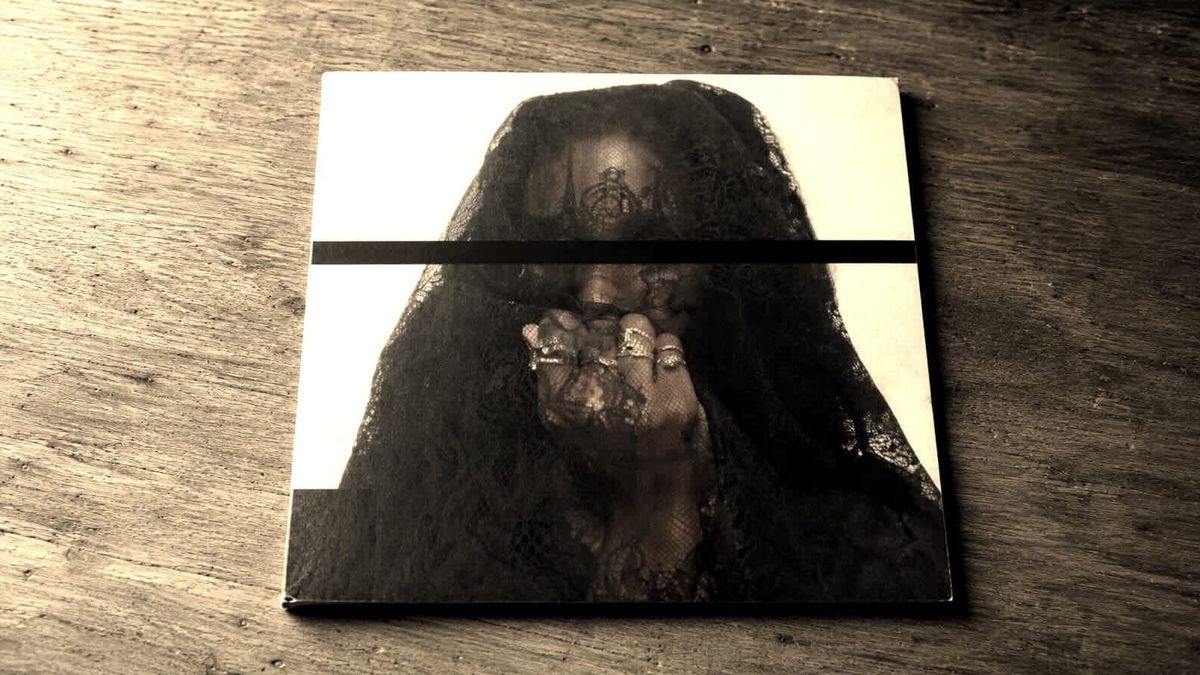
Victoria Mingot's debut full-length arrives as God Spill, out on the UK's 5 Gate Temple on 21 June 2026, after years spent releasing music elusively under the hardcore guise of St Agnis.
The label already knew her under that name. St Agnis has sat on 5 Gate Temple's roster since the early years, so this isn't a label discovering an artist. It's a label betting twice on the same person, once on the priestess, once on what's left when the mask comes off.
God Spill sets that noise aside for a classical-style acoustic guitar: twelve tracks of roughly recorded improvisation, fingerpicked lines run through unsteady pedal loops and hissed drones drawn from flawed circuitry.
Mingot doesn't treat the instrument as an heirloom. She treats it as something to be worked loose.
Triads dissolve mid-gesture, arpeggios are abandoned before they resolve, muted strings are struck for their thud, not their pitch, as though the guitar's whole vocabulary were being taught to forget itself. A loop station gathers the debris, hum and hiss circling like octaves that have wandered from home and cannot find their way back to a key. Somewhere behind it all lies Taku Sugimoto's discipline of near-silence, the notion that a note is owed its full disappearance before another is granted leave to sound, though here that silence keeps getting interrupted by static.
The track titles alone read like beads on a broken rosary, "In Plentitude of the Harvest" beside "Before You Fly," devotion and collapse refusing to settle into either. Mingot is a Queens native now living in the EU, and there is something fitting in hearing an artist relearn her own instrument in a borrowed country, patience and dislocation sitting inside the same twelve songs.
The record's one door out of the dark is the echo of Annabel Lee, and Poe's name works as incantation, not citation, drawing on the same old, weathered material as the ballad of the unquiet grave, love that outlives its own burial. This isn't comfort. It's a wake, a record best heard the way one sits vigil over the dead, wax guttering, the light unsteady.