Hidrogenesse :: Variaciones Pombo
Electronic art pop setting Álvaro Pombo's poems to song.
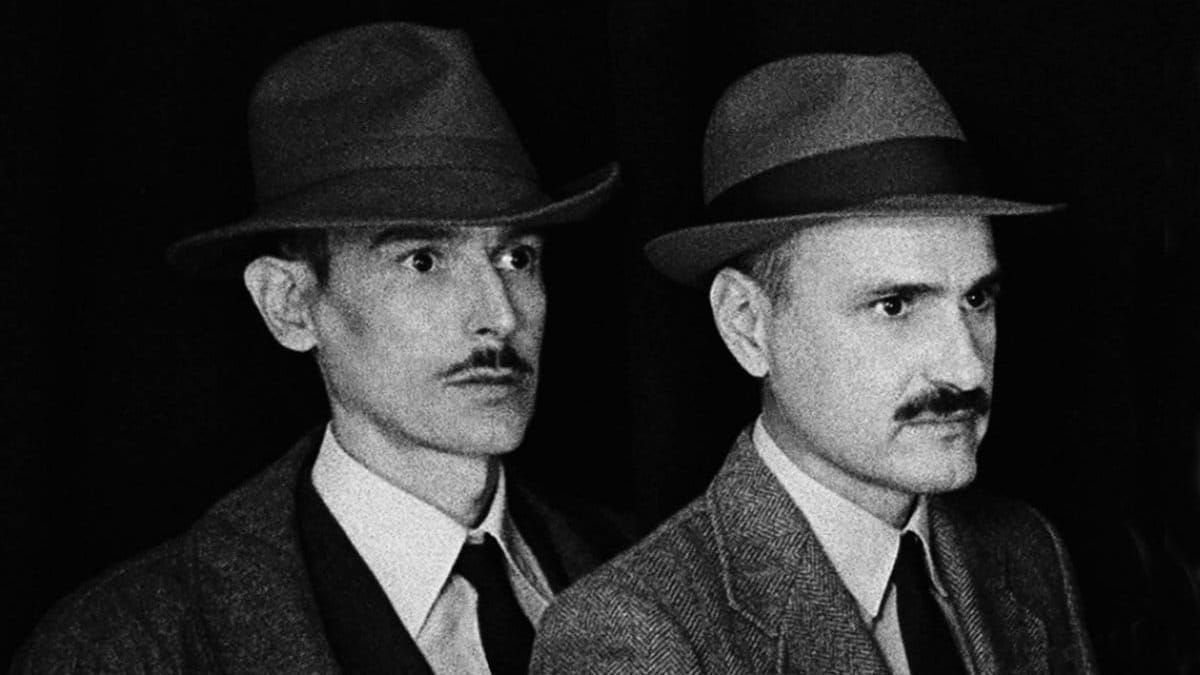
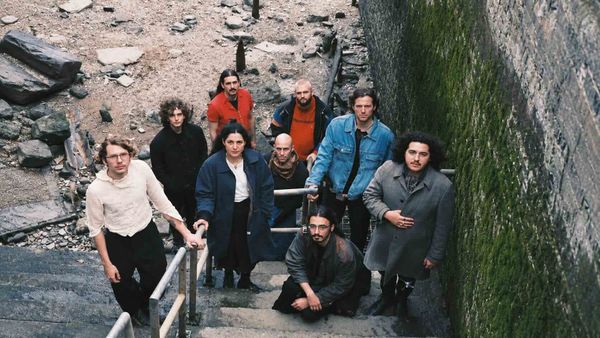
For years Genís Segarra and Carlos Ballesteros sent the Cervantes-winning poet and novelist Álvaro Pombo an annual postcard. Then they went to his house for tea to sing him his own poems, and he decided there was too much music.
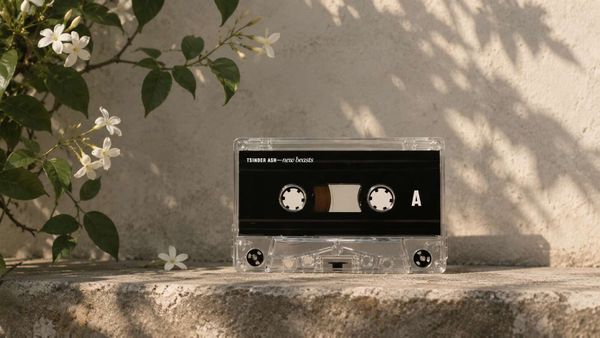
Variaciones Pombo, released on 30 October 2026 on Austrohúngaro, the label the duo run themselves, grew out of a choice they could not make. Hidrogenesse had already set a passage of Góngora’s Polifemo on their album Gimnàstica passiva and, from a Terenci Moix travel book, lines that vanished from later editions. With Pombo they spent decades looking for a single text and never settled on one. Segarra had discovered him as a teenager on a 1980s television panel and had been filling notebooks with his sentences ever since. In the end they stopped choosing and took eleven poems, written between 1973 and 2009, taking the old left-wing Lorca records as their model.
Many of the melodies and some of the phrasing come from recordings you will not hear on the album: Pombo reading at lectures and recitals and on television, material consulted to find out how he would have said a given line. In September the duo ruled out any appearance by him in the studio, so what remains of him is the intonation, passed into another throat the way a ballad is learned by ear, except that this tradition-bearer is 87 and can have his pupils round for tea to give them his opinion. Most of his novels, Ballesteros points out, were dictated, so the voice had been doing the writing all along.
A Pombo poem can start with four words of conversation and find itself inside a sentence that refuses to end, and whoever sings it has to invent a second melody, then a third, hoping for a way back to the first. In “Imaginado es todo”, from Variación 38 of 1977, he nests the verb inside itself: I imagined your love, I imagined that I imagined it, and then a third time. Nearly fifty years before anyone put drums under it, the loop was already in print with the publisher Lumen. The last line ends the game, with oblivion and death turning out to be real all the same.
“La jarra” holds on to the feeling of night music turned into pop. Perhaps it’s the percussion, the mallets, the synths themselves played as stabs on the downbeat; the cosmic influences do the rest and bring the night in with them. “Paseantes del alba” is a romantic ballad out of black-and-white scenes. “Los días se beben entre sí” unfolds over tuned percussion, the voice more static and melodic on top, and it is this kind of decision that keeps the record from becoming a well-packaged pop phenomenon.
“A la muerte” goes the other way, letting death pass through a vocoder, where it becomes a daytime voice, with the synths mocking it at their ease, in high good humour, with brushstrokes of 1980s plastic. The running order shares the joke: it opens with a last will, “Registro de últimas voluntades”, and closes on “Hortera y Mártir”, the vulgarian and the martyr.
“Todo el verano” has the taste of what life has already put us through: the taste comes back, the images that went with it don’t. Hidrogenesse win when the mood follows the prose, and then there is no doubting the emotional force they give it. Elsewhere Pombo’s spoken cadence gets a little lost in the melody: Ballesteros at times leans too far towards pop, closer to a late-night club than to a chamber recital, in a delivery that can sound too commercial. Part of that is a matter of taste.
Pombo's first reaction had been cheerful: he suggested the music might go in the exhibition being prepared for him at Alcalá de Henares, to liven up the papers in their cases. The doubts about the arrangements came later, and the duo replied that the poem was already written and that their job was to give it music worth having. The arrangements are the record's great strength, and they prove the duo right: the percussion, the mallets and the plastic synths carry these poems a long way, and they are exactly what Pombo found too much of. They had promised songs on subjects they had never touched (the past, childhood, death), and they take them on with the same hand that wrote "Así se baila el siglo XX" in 2000.
Pombo had already found his way into one of their songs: in “Aquí y ahora”, which closes their album Roma, he stands at his window helping a swift back into flight. They first met around 2006 and spent a whole afternoon on a bench on the Paseo de Gracia. Vinyl and CD each come with two postcards in the package, this time addressed to whoever is listening.