Vicarious Nostalgia — Saudade, Mono no Aware, and the Words We Don’t Have
Viraha, huaigu, Sehnsucht and older vocabularies for unlived longing

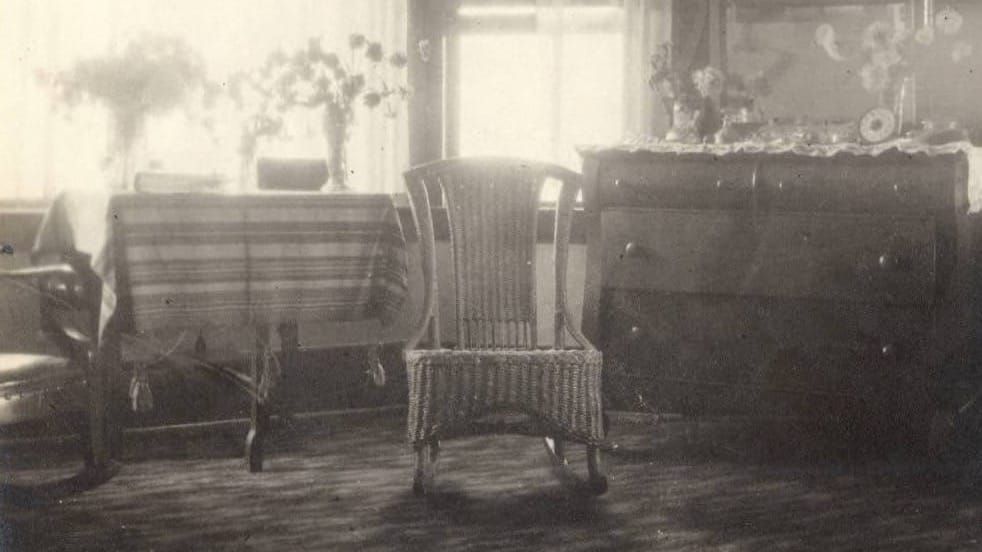
The English-speaking world found anemoia among the ruins of the Eighties shopping mall. Japan, Portugal, India, China and Germany had known its neighbouring forms for centuries, and had already given them names.
There is an hour, in the inland towns, when the November light falls slantwise across the stone walls and something you have never lived begins to ache with absence. It is not memory: there was nothing, before, to remember. The feeling arrives ahead of its own origin, a mourning with no one dead.
The English-speaking world, only recently persuaded that it needed a word for this, calls it anemoia: nostalgia for a time, place or era one has never known. John Koenig coined the term in The Dictionary of Obscure Sorrows, joining the Greek ánemos, wind, to nóos, mind. The resulting image has its own accuracy: a wind passing through consciousness, bending what it never touched.
Look at where anemoia has taken root in contemporary anglophone culture, however, and something curious appears. The word lives largely inside a narrow imaginary: the American shopping mall of the Eighties, neon signage, vaporwave, synthwave, deserted food courts, obsolete corporate interiors, the future-pasts dreamed into existence beneath YouTube compilations. It has become a nostalgia of backlit plastic and extinguished fluorescence.
An ancient human posture has been narrowed into a recent aesthetic and held there among the imitation palms of a shopping centre that no longer exists, or that never existed in quite that form at all.
This is the misunderstanding Hwael Mag means to undo. Longing for an unlived past did not begin with late capitalism, nor with the first kick drum lifted from a sampler. It belongs to a much older family of responses to time: absence, separation, transience, imagined return, the contemplation of ruins, desire for an object whose shape cannot be recovered. Cultures that examined these states closely gave them words of their own, each marking a different contour of the same difficult territory.
To place those words beside one another is more than a glossary exercise. It is a way of drawing the map of a feeling that English and Italian can experience more readily than they can pronounce. For anyone who listens to the music gathered here, it also offers one of the most exact accounts of what that music is doing.
I. Saudade, Mono no Aware
We begin at the Atlantic, on the Portuguese shore, because there the word has acquired something close to national gravity.
Saudade: melancholic longing for someone or something absent, a word commonly traced to the Latin language of solitude. It describes more than recollection. The lost object remains active inside the present; absence continues to exert pressure. Portuguese even possesses the expression matar as saudades, to kill the saudades, as though longing were a creature living within the body, something that must occasionally be fed, appeased or put down.
Yet saudade does not always look back toward a possession that once existed in full. It may also reach toward a plenitude never entirely held, a home known only through fragments, distance or inheritance. This is the string that vibrates in domestic recordings, saturated tape and music that seems to remember a room no one ever inhabited.
Fittingly, saudade itself migrates. The word has travelled with Portuguese-speaking communities and with Brazilian music, entering cultural territories far from the Atlantic that first shaped it. In Japan, Brazilian music has long circulated through radio, record collecting and migration, carrying the Portuguese language into an entirely different history of longing. Nostalgia moves with people; once transplanted, it begins to remember more than one soil.
Then we turn east, and the feeling changes direction.
In Japan, mono no aware, usually rendered as the pathos or poignancy of things, names a sensitivity to transience: the sadness contained in the knowledge that whatever is present will pass. The sensibility inhabits the literature of the Heian period, especially The Tale of Genji, although its formulation as a critical principle belongs largely to the eighteenth-century scholar Motoori Norinaga.
Saudade reaches toward what is absent. Mono no aware remains with what is still here and perceives its departure already beginning. One longs for return; the other attends to leave-taking. They meet in the recognition that time does not restore what it removes.
Anyone who has listened to Japanese acoustic folk, or to recordings in which a voice recedes into tape hiss, knows this sad grace: the sound is caught at the instant it begins to disappear. The recording does not preserve it completely. Its beauty lies partly in the failure.
II. Viraha, Huaigu
Further south, on the Indian subcontinent, longing enters a highly codified musical and poetic structure.
Viraha, with related forms including biraha in Bhojpuri folk traditions, is the pain of separation from the beloved. It belongs to devotional poetry, courtly literature and vernacular song, where distance may be erotic, spiritual or geographical. The absent beloved can be a person, a god, a homeland or a state of union that the singer has never fully possessed.
Here separation is not merely described. It is organised into voice, metre, melodic gesture and occasion.
The temporal discipline of Hindustani music gives this relationship between feeling and world an even more precise form. Raga Marwa is traditionally associated with the late afternoon and the approach of sunset. Its unsettled character belongs to an hour when daylight has not ended but can no longer be trusted. The feeling is therefore inscribed into the day itself: longing does not float free of place or time but is given an appointed light, a temperature, a horizon.
What contemporary listeners often encounter as an atmospheric effect had already been situated within a musical ecology. Dusk was not decorative background. It formed part of the conditions under which the music could disclose its meaning.
China offers a different discipline of remembrance.
Huaigu, meditation on the past, describes a long poetic tradition in which the writer encounters a historical place, a ruin, a battlefield, a former capital or the remains of vanished splendour. The poem emerges from the distance between what the landscape contains and what history has withdrawn from it.
Here the poet stands before a world never seen whole.
The stones are present; the dynasty is not. The river continues through a city whose former names survive only in literature. Private feeling enters historical geography. The ruin becomes an instrument through which the absent past is made perceptible.
This brings huaigu particularly close to vicarious nostalgia. The poet mourns a greatness available only through fragments, inheritance and imagination. Yet the feeling is no spontaneous modern discovery. It is a recognised form, renewed across generations: anemoia made into discipline, craft and literary tradition.
III. Sehnsucht, and the Task of Listening
We could continue north, into the German language, where Sehnsucht names an intense longing whose object remains elusive. It is desire sharpened by uncertainty, directed toward something distant, incomplete or perhaps impossible to identify.
German Romanticism gave this longing a landscape: moonlit paths, blue distances, forests, mountains, the road disappearing beyond the visible world. In Novalis, Goethe and the writers who followed them, Sehnsucht becomes a condition of consciousness, a hunger for an elsewhere whose precise form recedes whenever it is approached.
Goethe’s line Nur wer die Sehnsucht kennt—only one who knows longing—was repeatedly drawn into music, most famously through Schubert and Tchaikovsky. The phrase survives because it leaves the object of desire unnamed. Longing has been stripped to its essential motion. Nothing remains for it to lean against except its own persistence.
By now the pattern is clear.
Each word illuminates a different face of the same stone:
saudade, the continued presence of absence;
mono no aware, the poignancy of passing things;
viraha, separation given voice, hour and melodic form;
huaigu, history encountered through ruined places;
Sehnsucht, desire whose object cannot be securely named.
None is fully translatable into the others. Nor are they simple ancient synonyms for anemoia. They are older and more exacting vocabularies through which different cultures divided the broad territory that the modern anglophone term gathers into a single word.
Set beside them, contemporary anemoia appears less like the discovery of a new emotion than the late naming of an old human capacity. Its novelty lies in the word, and perhaps in the peculiar aesthetic enclosure into which the word has been placed: the shopping mall, the obsolete interface, the corporate music loop, the remembered future of consumer modernity.
The feeling itself is much older.
It belongs to medieval Japanese literature, Portuguese maritime and domestic memory, Chinese ruin poetry, Indian traditions of separation and the unreachable distances of German Romanticism. Each culture knew a portion of it differently. Each gave that portion a shape.
This is also why we write, here, the way we do.
When a record from this world—a saturated tape, a harp sounding into an almost empty room, a voice that seems reluctant to remain—produces the ache of an absence preceding its own origin, it is not merely reviving an obsolete aesthetic. It enters a much older cultural ecology of longing. The music remembers, in a language shared before it is translated, something that other languages had already separated, examined and named.
Perhaps the listener’s task is therefore more demanding than nostalgia.
It is to hear several histories inside one feeling, and to learn to listen in more than one language at a time.
Further Reading & Sources
Primary Sources: John Koenig, The Dictionary of Obscure Sorrows (2021); Murasaki Shikibu, The Tale of Genji; Motoori Norinaga, writings on mono no aware; selected Portuguese poetry and fado associated with saudade; devotional and vernacular poetry centred on viraha; representative performances of raga Marwa; classical Chinese huaigu poetry; Goethe, “Nur wer die Sehnsucht kennt”; Schubert’s and Tchaikovsky’s settings of the text.
Sources: Svetlana Boym, The Future of Nostalgia (2001); Barbara Cassin, ed., Dictionary of Untranslatables (2014); Eduardo Lourenço, Mitologia da Saudade (1999); Haruo Shirane, The Bridge of Dreams (1987); Michael F. Marra, The Poetics of Motoori Norinaga (2007); Joep Bor et al., The Raga Guide (1999); Stephen Owen, Remembrances (1986); selected studies on viraha, huaigu, Sehnsucht, nostalgia and untranslatability.
Editorial Note
This essay places anemoia, saudade, mono no aware, viraha, huaigu and Sehnsucht in relation without treating them as equivalents. Their affinities concern absence, transience and imagined return, while each retains its own historical and linguistic context. Anemoia is treated as John Koenig’s modern coinage; the broader comparisons are Hwael Mag’s critical interpretation.
Last revised: July 2026