The New Honey Shade :: Stillwater Rooms
Harp improvisation, room tone, overtones and photographic memory
Stillwater Rooms, released on 22 July 2026, reduces The New Honey Shade to five brief harp improvisations, marked only I–V and lasting just 13'45" in total.
The record is presented simply as five harp improvisations from summer 2026.
The New Honey Shade is the project of Mark Daniel Kuykendall, an artist and producer from Oklahoma, with a catalogue now spanning more than a decade and dozens of releases — from his signature blend of electronically manipulated field recordings grafted onto archival 8mm film, to his more recent work in biosonification, grown out of his direct relationship with the flora and fauna of Wild Mountain, where he lives in Osage County.
Stillwater Rooms, five improvisations distinguished only by Roman numerals, finds an artist known chiefly for tape hiss and Moog drone setting all of that aside to sit alone with a harp. From the first gesture the playing tips the whole record toward the treble — the fundamental spent almost as soon as it is struck, overtones gathering above it — before The New Honey Shade has so much as chosen a note.
“I” lasts less than a minute. Forty seconds are enough for that inclination to become a decision: the fundamental is already spent almost as soon as it is struck, while overtones gather above it until the harp settles into its own cold, liquid register, as though that had always been its natural ground rather than the warmer body beneath.
What emerges resembles a music box remembering a cathedral it never saw.
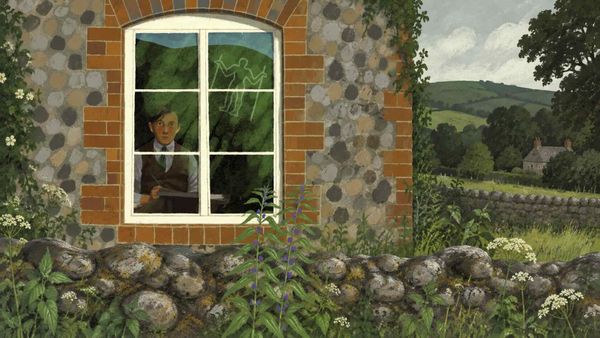
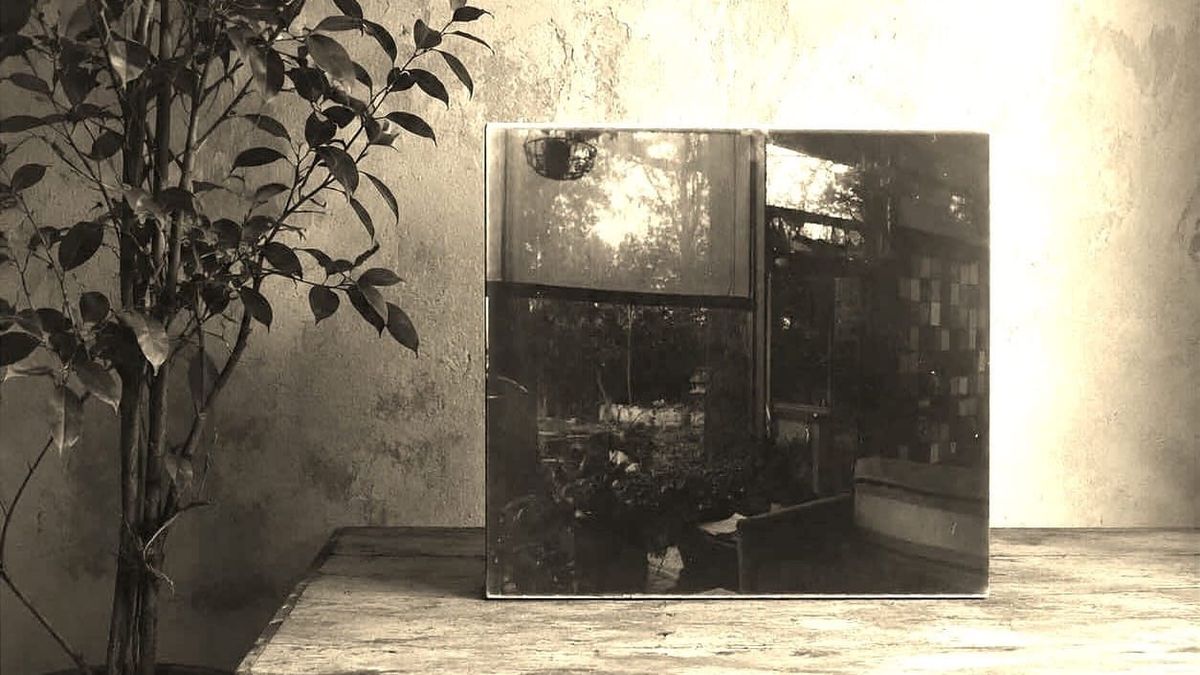
“II” unfolds by accretion. No bar quite resembles the one before it, each varied as much in touch as in pitch, until a wordless vocalise appears somewhere behind the strings, spectral enough to confirm what the harp alone never could: this is no solitary transmission, and despite the empty room pictured on the sleeve, we are not left entirely alone inside it.
By “III”, the room has begun quietly to furnish itself. Its drones are almost botanical, something left simply to grow and keep company where the recording was made. Like the previous pieces, it ends with fewer notes than it began with, until what's left is mostly the room itself.
“IV” returns to “II” the way memory returns to fact. It resembles a nineteenth-century music box wound once and left to run down, its mechanism perhaps broken, perhaps merely slowed beyond the point of carrying its own tune. Unable any longer to sing it, yet unwilling to stop, it continues for two full minutes on inertia alone, harp and phantom clockwork braided so closely that it becomes impossible to tell which of them is failing and which is simply patient.
The five pieces quietly recall what Erik Satie once imagined under the name of furniture music: sound built to inhabit a room, present with the same unclaimed authority as a chair, an open window, the changing light across a floor. The New Honey Shade plays here like one of the last people still willing to pluck a harp in a century that gave up long ago on keeping rooms at all, let alone furnishing them with an instrument so unfashionably patient.
“V”, the longest piece at just over five minutes, is finally given enough time to discover its own place within that room. Slower and more reflective, it comes closest to the still water promised by the title. Here contemplation gradually gives way to feeling, the improvisation pausing now and then as though the music were looking through the window before returning quietly to itself.
The fundamental disappears almost as soon as it is struck, leaving overtones to pull the harp towards a cold, liquid treble register.
Harp and phantom clockwork continue together like a music box winding down, until patience and mechanical failure become difficult to distinguish.
The longest improvisation slows enough to discover its own place in the room, moving from contemplation towards feeling.
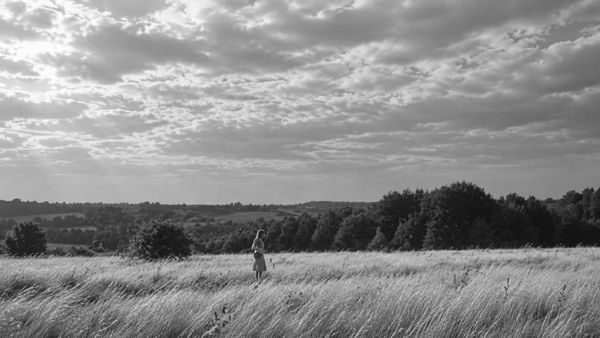
What lingers afterwards is a very particular melancholy: the wish to have lived, if only once, inside the room pictured on the cover. Printed dark enough to read almost as black, the image owes its darkness less to any absence of light than to the coarse grain of the photograph itself. Photographic grain has always aged differently from the moments it records; it never quite keeps pace with time. It is precisely that failure that fixes the room in place. To watch and hear something wear itself away at such a scale is to encounter, almost directly, the shape of a past that ordinary memory can no longer hold.