The Green Kingdom :: Vespera
Ambient, piano, guitar, evening light and slow-moving memory
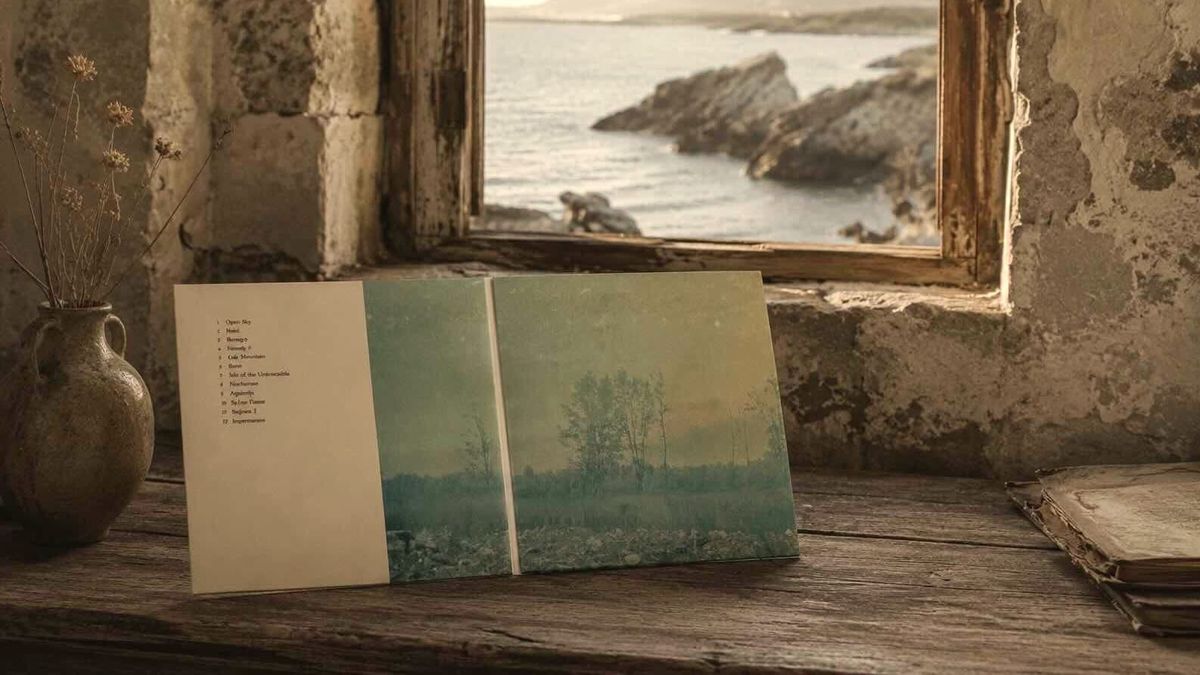
The new record from The Green Kingdom is called Vespera, whatever you might have seen it called online. Released on 18 July 2026 by Whitelabrecs, it comes from Michael Cottone’s long-running project based in Shelby Township, on the edge of Detroit.
Cottone has recorded as The Green Kingdom since the early 2000s. On Vespera, piano takes a more central role than on much of his earlier work, with guitar, sampled textures and occasional synthesisers gathering around it.
Vespera comes from the Latin for evening star, a title that announces its own nature right away: low light, a slow crossing. Asked to describe the record in three words, Cottone answered, “evening, calm and airy.”
The language of Vespera remains remarkably consistent across its twelve pieces. The architecture rarely changes: what shifts is the balance between piano, guitar and atmosphere, a different weighting of harmony and timbre from one piece to the next, enough to transform the emotional landscape without ever abandoning the same essential vocabulary. A handful of tracks are enough to trace that slow transformation.
“Open Sky” opens the record like an aperture widening slowly: chords and ambient-derived pads let the light in a little at a time, before the guitar arrives to fix the image, like the shutter closing on a very long exposure. There's no hurry to find focus.
On “Haku” the piano arranges silence into short harmonic constellations. The melancholy here keeps to the edges, patient, almost watchful. The guitar stretches the track's breath out through isolated notes that dissolve into delay.
“Vespers 1” opens on an essential melody, sustained by warm, deep pads that widen its breath. The piano settles in unhurriedly, allowing each chord its own space before the next arrives, the way it happened in the lucernarium of the old evening liturgies, when lamps were lit one at a time and the Phos Hilaron, the “gladsome light,” was sung as the day withdrew. Around it, the guitar speaks a full ambient language, a handful of suspended notes that delay and reverb stretch until they resemble the echo of a psalm sung in an empty nave, the choir's last voice fading before the great silence of the night.
That liturgical threshold, more than any generic starry sky, is the image closest to the track's centre of gravity.
This is the hour the first lamp is lit, the same contemplative stillness the whole arc of Vespera leans toward.
“Raven” moves through hollows carved by mineral sediment, a sound that takes on a granular, almost geological texture. The feeling that surfaces was already there before listening began, a stillness already present within us that only certain frequencies know how to carry back into the register of feeling.
“Noctilucent” has an almost classical bearing, an authoritative composure that instinctively makes you wait for a voice to arrive and gather up its intensity. That voice never comes, maybe because it would have nothing to add to what the piece already says on its own. The piano takes it on instead, turning every phrase into a silent song and revealing an emotional threshold of rare precision.
“By Low Flame” hands everything to the guitar. Clean, crystalline notes are joined by others carved with the volume swell technique, which skip the pick's dry attack entirely, arriving already lit, like a flame kept low on purpose, a vigil lamp somebody wanted to keep burning through the night. Each note breathes, grows just enough to bite into the dark, then pulls back: never quite long enough to flare, never quite low enough to go out.
For a moment it brings to mind the emotional scale of the Cure's Disintegration, not its sound but its way of turning a handful of harmonic lines into an enormous emotional landscape, as though that imagery were being watched from a great distance and translated into the language of ambient, stripped of rhythm and brought back to pure contemplation. The association gradually extends to other parts of the record, and it's one of its more fascinating traits: the ability to summon recognisable musical memories without ever tipping into quotation, carrying them instead to a further, moving depth.
“Vespers 2” claims a narrative independence of its own, though the sky of Vespers stays crossed by the same constellations that have always guided The Green Kingdom's music.
Maybe the most significant thing about Vespera is the role the piano takes on. On earlier records the acoustic guitar usually suggested the original idea. Here the keys become the record's true centre of gravity, and pads, reverbs and guitars gather around its chords, all inside the same horizon. Out of that balance comes music that keeps finding a meeting point between melancholy and consolation, light and shadow, without ever quite settling still. Cottone describes this shift similarly: many of the pieces began at the piano rather than guitar.
“Impermanent” may be the emotional centre of the record. Its piano carries a rare meditative clarity, yet it also feels like the destination the music had long been circling without ever fully reaching — a melody that arrives with the quiet inevitability of something that had always belonged to the landscape, simply waiting to be heard.
Piano arranges silence into short harmonic constellations while isolated guitar notes stretch the track’s breath through delay.
Warm pads, piano and suspended guitar notes turn the piece towards the contemplative stillness of an evening liturgy.
Its piano carries a meditative clarity that feels like the destination the rest of the record has been quietly circling.
Vespera builds memories. It's music that works slowly, settling quietly into memory until it becomes familiar to that part of us the sound managed, for a moment, to bring back into the light.