Sam Burton :: Fairweather Friend
Canyon folk with country shading, cut live in Los Angeles.
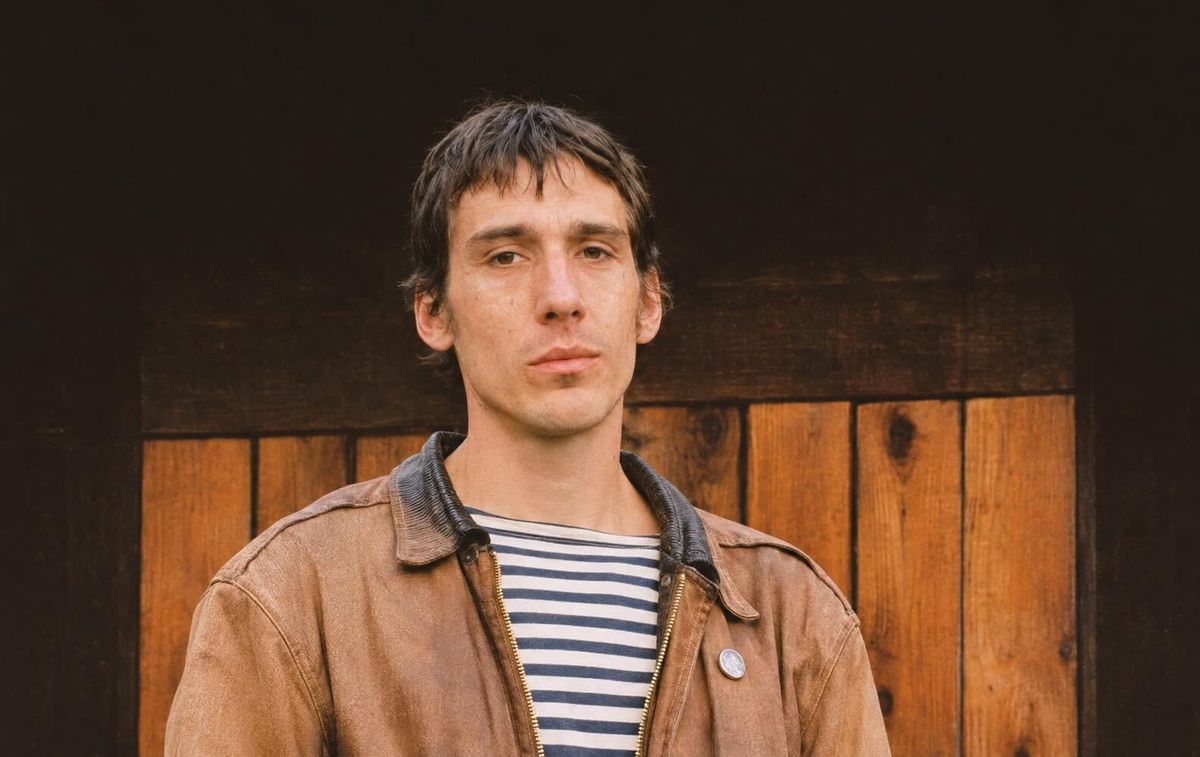
Born of a car crash and a scattered band, the album takes its title from the friend who vanishes at the first sign of bad weather. Sam Burton recorded it with the musicians who stood by him after the accident.
The title track went through five studios and five different line-ups before it found its shape. Somewhere along the way Burton lowered the key, handed the riff to the lead guitar and kept the chords for himself: his name stayed on the cover, the guitar figure the song grew from went to someone else, and much of the record comes out of hand-overs like this one. Fairweather Friend was released on 30 October 2026 by Captured Tracks (CT 388), eleven songs in forty-one minutes. After a touring crash they all walked away from, the project Burton had played in for years fell apart; yet it was with those same players, at Recorders in Echo Park, drummer Pierce Gibson’s studio, that he recut, without a producer, about half of what he had already made with Jonathan Wilson. By then the budget had run out, and for a few months Burton had no home of his own. Some of the songs come from a season working on a farm in Northern California, near Humboldt.
This is restrained folk, with arrangements that never raise their voice and melodic swells that take their gait from Dylan and their hillside shade from Nick Drake. A record like this raises the usual revival question: where does the craft of someone who knows the Laurel Canyon and Greenwich Village canon by heart end, and where does pastiche begin? Burton comes through by holding two things steady, his dark baritone and his acoustic guitar. The risk arrives with the full band. When the pedal steel comes in and the pace loosens towards country, some songs settle into an early-seventies idiom spoken with no accent of its own: pleasant, polished, and interchangeable with plenty of records on the same shelf.
“Lilac Man”, just a voice and an acoustic guitar full of string bends, is the clearest result of the hours Burton spent with the solo performances of Bert Jansch and Neil Young: an evening song, laced with arpeggios, sung in the voice of a man who knows fields from working them and, when the day is done, needs to sing of them with some elegance.
“Picture People” looks at Los Angeles with the lights off and denies Burton the comfortable seat of the onlooker. The band is back beside him, and the disillusionment comes through a rich, warm voice, almost reassuring, that lulls even as it accuses, while his fingers keep the whole American tradition within reach. On “Start Over” the twang turns almost too pretty, yet the verse announces the letdown before it arrives, and in its shadings the voice is by now entirely Burton’s own. “Tomorrow Takes A Dream To Find”, the first song written on the farm, has an unlikely model, and it lightens the whole record: Alan-a-Dale, the minstrel rooster of Disney’s Robin Hood, who narrates the film in song, accompanying himself on guitar.
The last track is also the shortest, at 2:51. In “Do You Still Know Your Man” a man searches for the road to a fountain he can no longer find, and wonders whether the woman he is going back to would still recognise him.