Calum Wood :: Christmas Songs from the Kitchen Table, Vol. 2
Scottish folk carols at the kitchen table: one microphone, a fridge, two sons.
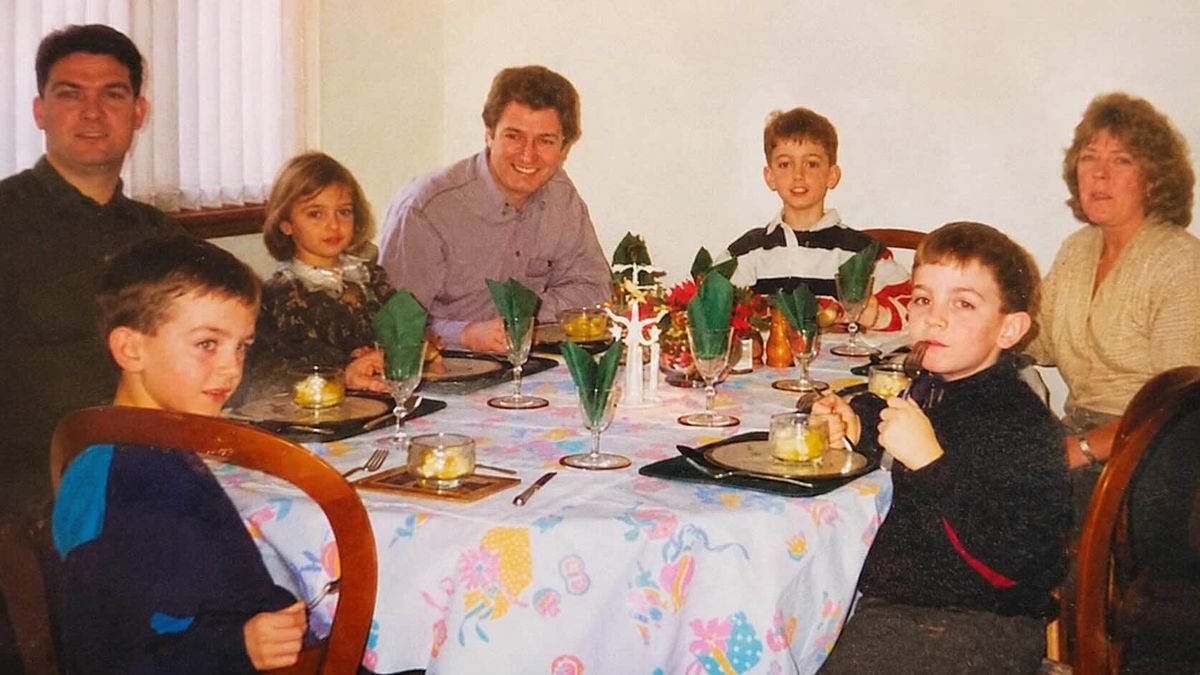
On Calum Wood’s new record the fridge hums under the carols. He left it there on purpose, with the sound of the room around it, so that whoever listens feels seated at his table.
Wood is a Scottish singer-songwriter, and Christmas Songs from the Kitchen Table, Vol. 2 came out on 13 November 2026 on Magic Park Records: eight songs, which he performed, recorded, mixed and mastered himself. The first volume, a year earlier, was voice and guitar on a single microphone. The second adds a glockenspiel, a Casio keyboard and his two sons.
The last track explains the rest. “The Christmas Ramblers” is Wood’s version of an old wassailing song, and wassailers went out: they walked from house to house in the dark, sang at the door and asked for drink and coin. This record turns the custom round. The singers stay at the table, and the house travels to the listener, fridge included. It is a folk singer’s way of hearing carols, as songs that lived in kitchens and village streets as much as in churches, and it fits a writer whose last album of his own, Songs from the Soapbox, took its cue from the British folk revival of the 1960s.
A glockenspiel and a Casio belong to a child’s bedroom, and with his sons beside him the record sounds like a family evening.
For a songwriter like Wood, these carols ask him to give up much of what he does best, the satire and social comment of his own records. Here there is nothing to argue and nothing to sell. The carols belong to everyone, and singing them means setting aside the stage voice for the voice of someone at the table with his own family, the one Wood says he learned at school, at church and at home. On the cover, a Christmas table photographed decades ago seats children beside the adults they will learn the songs from. On the second volume Wood’s two sons sing with him, and the record catches the moment the songs change hands.
Folk does to these carols what a restorer does to an old wooden table: it strips away the coats of varnish that choirs, organs and orchestras have laid on them over a century and a half. Wood’s guitar holds the melody up with a craftsman’s neatness, every chord and each small touch of arrangement in its place, with no ornament added, and his voice stays at the pitch of a family Christmas evening, without solemnity or emphasis. The listener recognises the carols and finds again the intimacy of the table.