Raoul Vignal : The Places Were There All Along
Raoul Vignal, the English countryside critics hear, and the places behind it
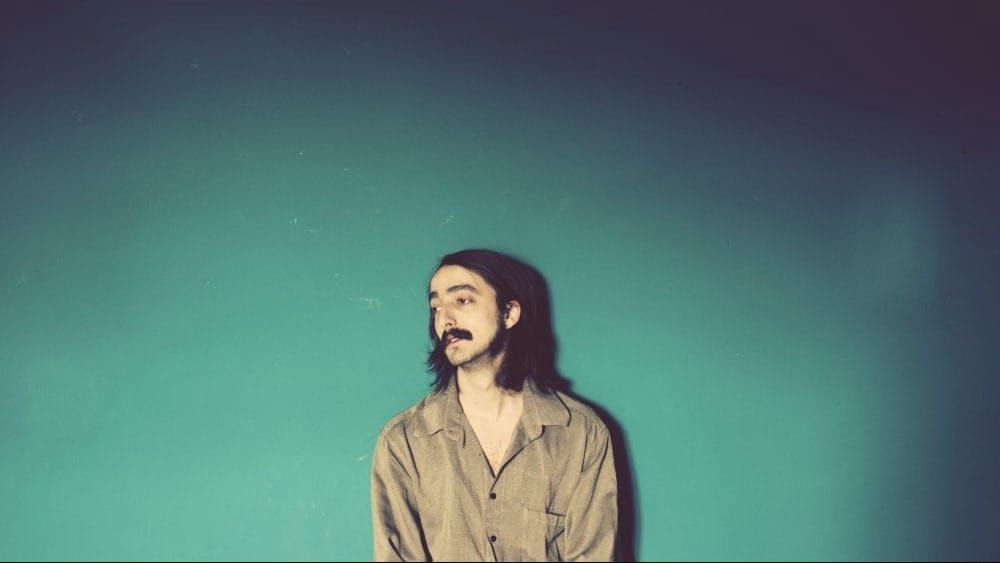
Raoul Vignal's records keep being filed under a countryside he has never lived in. Before the fingerpicked hush came electric guitars, blues and rooms full of other musicians.
You can find that countryside scattered through fifteen years of writing about him: Nick Drake, John Martyn, Davey Graham, wet fields, English autumns. As late as Years in Marble, in 2021, French critics were still hearing an impressionist England in the songs, and his label's press archive holds a whole genealogy of British names summoned around his guitar. The resemblance is real enough. It lies in the floating voice, the precise fingerstyle and the habit of leaving small songs small, and it tells you very little about where any of this came from.
Vignal was born in Lyon and started out there in louder company: a solo blues project, a stoner-garage trio, and a band with his friend Pierre-Hugues Hadacek that, on their own later account, had once been doom metal. Most stories about him begin after all that, when the room has already gone quiet, and his fingerpicking then passes for temperament. He learned it with distortion still within reach.
The quiet is something he chose, and goes on choosing.
I. Berlin, 2014
By the end of 2013 he had left Lyon for Berlin. The earliest thing still easy to hear from those years is an EP called III, and the title leaves a small problem behind, since the two releases its number implies are gone from the accessible catalogue. Early recordings disappear all the time and there is no need to make a romance of it. One of its songs, "Mine", came back on The Silver Veil, so the album through which most listeners met him was already carrying something from an earlier session.
The Silver Veil took its title from the bright-grey cloud Vignal associated with the city, a sky whose glare could hurt if you stared at it. That is about as much Berlin as the record admits to, with no street names and no scene. He was listening at the time to Lithuanian traditional music, drawn to its brief repetitive melodies, and he asked his father to play flute on the album, a sound he remembered from childhood. Nobody tracing his English forebears would think to look there.
II. A kitchen in Paris
Oak Leaf, in 2018, drew the same vocabulary from reviewers, and by the third album the reflex was automatic. One of them heard an English landscape in "Coastal Town". Years in Marble had in fact begun in a Paris kitchen in the first months of 2020 and was finished in the country outside Lyon.
It sounds larger than The Silver Veil, without getting much louder. The fingerpicked guitar stays at the centre while bass, synthesiser, saz and hulusi widen the field around it, and percussion gives the repetition some physical weight. Motifs circulate now, and the songs keep moving under a composed surface.
III. The company he keeps
The solo albums can give the impression of a musician refining one narrow language. The work around them says otherwise. With L'Effondras he is one of the guitarists in a post-rock band built on mass, duration and distortion, so volume was something he knew at first hand and left out of his own records. Two Way Street puts him beside Théo Charaf, whose blues and American song make the English frame hard to maintain, on an album with room for Blaze Foley and Lee Hazlewood.
The song "Mirror" shows what that does. It appears on III in 2014, on Oak Leaf in 2018 as "Mirrors", and on Two Way Street in 2024 as "Mirror" again. The composition stays recognisable across all three, and the people standing next to it change, and with them what you listen for.
Then there is ANOJA, Vignal and Hadacek again under a new name. Owl Lights, released in 2024, grew over almost a decade and across three countries, often in bedrooms with borrowed or rented equipment, with field recordings beside harp, saxophone and percussion. Hadacek has been there since before The Silver Veil, through every change of name. Any account of Vignal as a solitary guitarist has to leave him out.
IV. Shadow Bands
Shadow Bands came out in November 2024, and his label ties it to his return to Lyon about a decade after leaving. It is his most convincing attempt to enlarge the frame. Electricity and rhythmic weight press against songs that have stayed small, and the additions rarely feel like compensation.
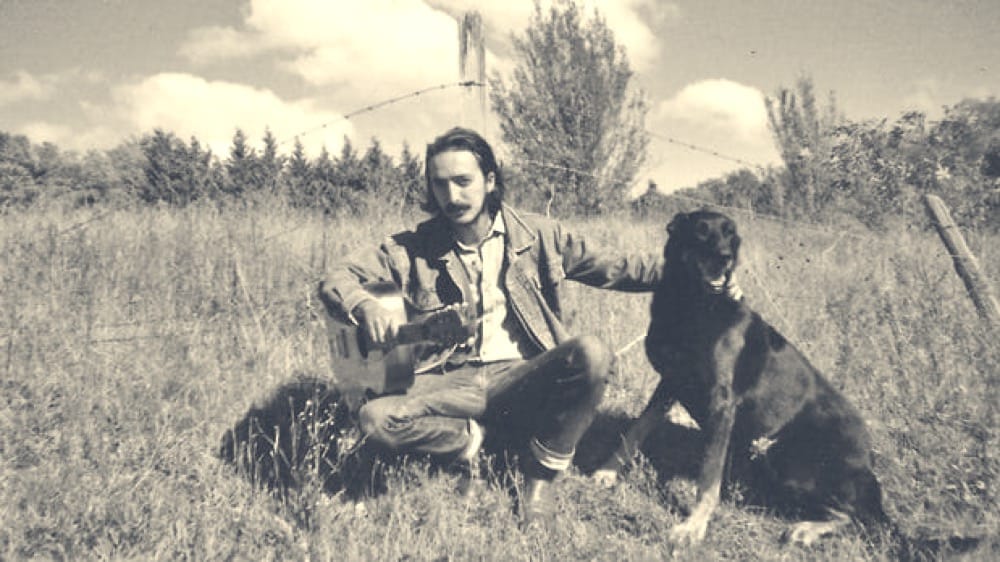
The places change too. On the earlier records you recover them from biography and studio credits; here they keep their names. "A Horse Named Fortune" comes from the chestnut fair on the Croix-Rousse plateau. "Canon Song" holds a Berlin morning and the news of a war breaking out a thousand kilometres away. "South, Brother" comes from Spain and a reunion with his brother.
It would be easy to call this a homecoming, and lazy, since Lyon works on the record as a base the songs keep leaving. "Deer Song" goes off to Sète, to a friend who was losing his hearing, and to the remembered cry of a rutting stag.
Last revised: August 2026