Polly Vaughn: A Ballad, Eight Recordings and a Ghost in Court
A dead woman clears the man who shot her: eight recordings of one ballad.

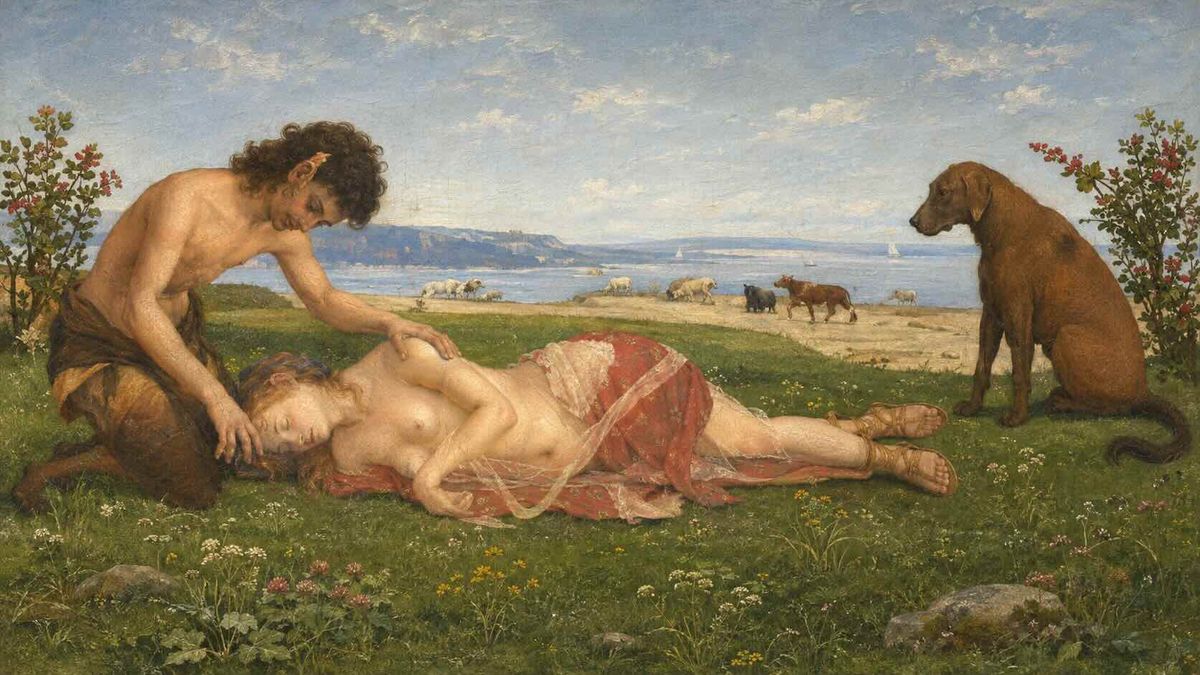
A girl shelters from the rain under an apron; her sweetheart takes her for a swan and shoots her. Then she comes back from the dead to tell the court he is not to blame.
The song has many names (Polly Vaughn, Molly Bawn, The Fowler, The Shooting of His Dear) and one number, Roud 166. According to Steve Roud it was already in songsters of the 1780s and 1790s. In 1806 Robert Jamieson printed a fragment in order to dismiss it: “a silly ditty, one of the very lowest descriptions of vulgar English ballads”. Francis James Child left it out of his collection, which still surprised Martin Carthy in a sleeve note.
Much of what has been written since Jamieson concerns the swan. A.L. Lloyd heard in it the myth of Cephalus and Procris and the swan maidens; Peter Bellamy wrote that Polly really had become a swan and only in more recent and less magical times had wrapped herself in an apron. Roud, faced with the same idea, notes that there is no evidence of any such connection. What interests me more is the part of the song the scholars hurried past: the courtroom. The uncle in some versions, the father in others, tells the boy not to run and to stay for the trial, because no one will hang him for a swan. The ghost arrives and speaks in his defence.
Of the twenty-three versions transcribed in the song archive I consulted, none records a sentence being passed. Judge and jury turn up in a few, and Florence Puckett in 1955 addresses the “gentlemen of the jury”, but the ballad always stops short of the verdict. Passing sentence falls to whoever is listening. Meanwhile each recording decides how far the trial may run, which is why the eight that follow should be heard as testimony.
I. Three charges
Alula Down are Mark Waters and Kate Gathercole, from Hereford, and in 2019 they released three mixes of the song under a title they do not explain, Polly Vaughan at the Radar Station. Their note is the most useful summary of the question: some versions explore the ancient mysticism of shape-shifting, some offer it as a murder ballad, some as a tragic mistaken shooting. The three mixes, by Jacken Elswyth, the duo and Sproatly Smith, move obliquely between them.
Metamorphosis, murder, accident: three charges, carrying different penalties. In the first nobody is guilty, because a woman has become an animal. In the second he is. In the third the apron is. The duo’s own mix adds a detail the note mentions without comment: it incorporates “Prickle Holly Bush”, Child 95, the ballad of someone waiting under the gallows for a relative to pay the ransom. That song is a reminder of what the boy stands to lose.
II. The family lawyer
Peggy Seeger learned “Molly Bond” from Michael E. Bush’s 1969 book of West Virginia songs: Bush had collected it from Rita Emerson at Cox’s Mill, Gilmer County. Her text has no guns; the boy throws down his bow and runs to his father. The father, grey-haired, offers a lawyer’s advice: stay in the county for the trial, they will not hang you for shooting a swan. Then the song goes back to its first verse, to the brightest girl in town, and ends there.
Seeger knows perfectly well that something is missing, and her note says so: in many other versions the ghost comes to clear the lover. Here no ghost is needed. Acquittal has already been promised at home, by an old man to a young one, before anybody has asked Molly. As in Walter Pardon’s version, recorded between 1978 and 1982, which also closes on the uncle’s reassurance, the trial is a formality whose outcome we know.
III. The witness
Harry Cox, a Norfolk farm labourer, sang it for E.J. Moeran, for Peter Kennedy in December 1953 and for Mervyn Plunkett in October 1959. In his text Polly appears in court, asks that Jimmy be cleared and supplies the technical explanation herself: the apron covered her, he took her for a swan.
It was from Cox that Lucy Farrell learned the song, and with The Furrow Collective recorded it in 2016 for Wild Hog: six minutes fifty-one, the longest track on the record, among “Prince Heathen”, “Barbara Allen” and “Queen Eleanor’s Confession”, a repertoire already full of women who pay dearly. Heard after Seeger, it leaves you waiting for one thing, Polly’s entrance into court, and timing how long she takes.
The least comfortable reading lies in the origins. Hugh Shields found the song in an 1845 collection by John Hume of Kilwarlin, County Down, where the surnames Lavery and Reynolds are common, and observed that locally Lavery was a Catholic name and Reynolds a Protestant one. Nobody has proved that any such shooting took place, and the ballad seems older than any event at Kilwarlin. But you only have to imagine it in that place to hear what the testimony is worth when a dead Molly Lavery acquits a living Squire Reynolds.
IV. Closing the court
Tia Blake was Christiana Wallman, born in Georgia in 1952, and she made her only record in Paris with two young guitarists; sources waver between 1970 and 1971, and the French pressing was tiny. Going by the circulating transcription of her “Polly Vaughn”, the boy here looses an arrow at sunset. He confesses to his father, and the father does not answer. The text has no advice, trial or ghost. He goes back to the place and sees a swan on the lake.
One image is enough to change the charge. That last swan may be any swan, may be her, and the recording does not resolve the doubt. You need neither Lloyd nor Ovid to get there: it is enough to remove the scene in which the men come to an arrangement.
The other great amputation comes from Shirley Collins, who recorded the song in 1959 and again in 1967. Her text halts the story on Jimmy’s grief and closes on an unexpected last verse: the village girls are pleased, now that the fairest is dead. The melody has an author too, a rare thing in this material: Jim Causley attributes the words to a Cecil Sharp collection in the Appalachians and the tune to Collins herself.
Marlais acknowledges the debt plainly. Warm at Last, recorded in Berlin between 2015 and 2016, uses that melody with her permission and thanks her. The note brings back Bellamy’s genealogy, the white hind and the dove, Christianity bringing in the apron as a rationalisation, and the sentence that counts most is the last: the grief of loss remains at the centre, beyond any explanation. It is a legitimate position, and it leaves the question of guilt outside the door.
V. Material evidence
With the last three recordings, what comes into court is how they were made.
Hag Leather recorded Eolian; A thousand leagues away. in a single day, in a house in Colwyn Bay, using a pair of headphones as a microphone while a storm blew outside. “Polly Vaughan”, credited to Caitlin Gilligan and Isaac I Ockenden, comes fourth, at four minutes thirteen. The song concerns a girl caught by bad weather, and here the bad weather was real.
Dave Heumann and Miles Gannett, of Arbouretum, released it on Christmas Eve 2023 alongside a version of “Peggy Gordon”. A line in the credits says the drums are a sample from a live recording of Mike Kuhl playing “Polly Vaughn”. An old performance of the song is called to testify inside the new one.
Craig Schenker, as a&h, put together two variations recorded at Art Farm in Marquette, Nebraska, in September 2018 and at the Crown in Baltimore in May 2019, thirty-one minutes in all, and titled them with great precision: “polly vaughn (in the form of a swan)” and “the fowler (when the night’s coming on / all in a shower of rain)”. The first title has the metamorphosis, the second the hour and the weather, the two excuses the song has been arguing over for more than two centuries. Schenker keeps both, fourteen minutes of swan and sixteen of rain.
VI. Record of proceedings
The song has existed for at least two centuries in forms that contradict one another, and those who sang it nearly always chose for themselves how many scenes to keep. The swan has had its advocates among the scholars, citing Ovid. The apron has been dismissed as a late, unimaginative addition. The courtroom, for all that it is the strangest part, has found almost no advocates.
Yet that is where the song does what no myth asked of it: it gives the dead woman the floor and has her say what suits the living. When I go back to these eight versions I check whether Polly gets to speak and who brought her. More than two centuries on, a sentence has yet to be passed.
Last revised: November 2026