Orban Wallace :: Our Land
Documentary on England's right to roam and its closed countryside.
In England 92 per cent of the land and 97 per cent of the rivers are not legally accessible. Our Land films them from the far side of the fence, which is the right side to watch from.
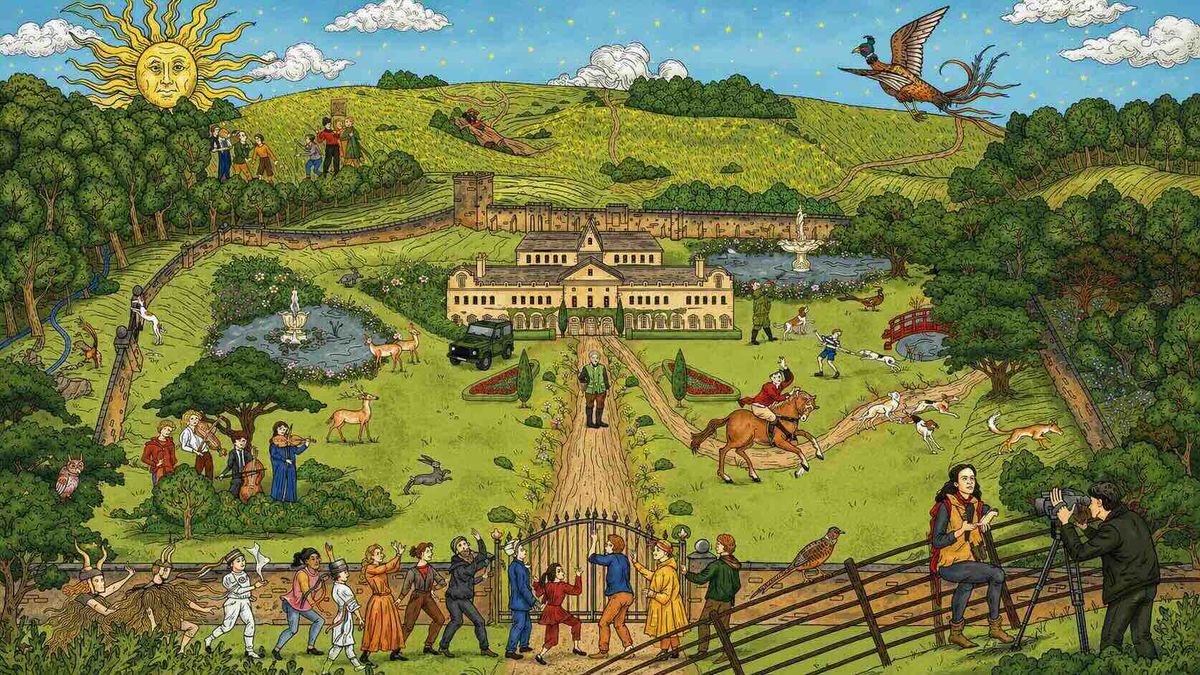
Orban Wallace's documentary reached cinemas in the UK and Ireland on 8 May 2026 through MetFilm, after a world premiere at Sheffield DocFest: ninety-one minutes, cinematography by Jamie Wolfeld, editing by Xanna Ward Dixon, music by Daniel Inzani. It began on a lockdown walk and turned into five years of work alongside the Right to Roam campaign, which is pushing for a Scottish-style right of access in England. It opens with an animated prologue by May Kindred Boothby, written by Robert Macfarlane: the Norman Conquest, enclosure, great houses built on colonial money. Then comes Dartmoor, the one place in England where you could camp without permission, until a court sided with a landowner and thousands of people walked up onto the moor in protest. In 2025 the Supreme Court restored the right.
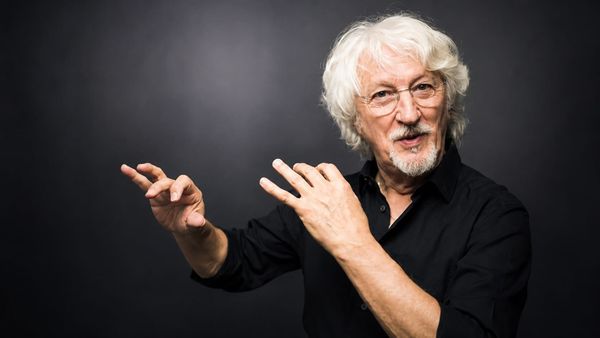
The decisive fact lies off screen. Wallace approached around thirty landowners: many shared Francis Fulford's views, and almost all of them declined to be filmed. Our Land is built on those refusals. Fulford, an estate owner and veteran television personality, ends up speaking for everyone who stayed away, and the film becomes partly the story of the one man who said yes. Wallace still manages to film the refusal, by writing it into the grammar of his shots. The landowners are filmed indoors, with strings swelling on the soundtrack and ancestral portraits behind them. The campaigners are outside, on the move, in groups, or in the kitchens where the walks get planned. The disputed land itself is almost always empty: gates, hedges, signs, meadows with nobody in them. The closed doors of the interviews that never happened and the deserted fields belong to the same archive.
The film's limit comes from the same place. With no real counterpart on the other side of the hedge, the confrontation never happens: the two sides meet only in the edit, never in a room, and the argument arrives already won. The film tells you how much land is closed off without telling you who owns it, whether estates, companies or funds. And a countryside lit almost always by polite sunshine starts to look like the estate brochure it is arguing against.
The proof comes at the end, in Scotland, on the Rothiemurchus estate, where the Land Reform Act has granted access since 2003 to anyone who behaves responsibly. The owner, John Grant, explains that you only have to tell visitors what their duties are. Around Loch an Eilein the frame fills up for the first time: tents, walkers, someone eating on the grass. After an hour and a half of empty fields, those people are argument enough.
Highclere at dusk, pale as a lamp inside a dark wood, and only ever seen from a distance, past the hedges.
Nadia Shaikh halts a group of trespassers to listen to the birds: for a minute the offence turns into listening.
John Mildmay-White's father-in-law, amazed the film is being made at all, tells the camera that films like this make men like him look foolish.
Our Land takes a side and doesn't hide it. Its most honest document remains those thirty or so requests that ended in a no.