Carmen Quill :: Harmless
Avant-pop and jazz built from double bass and voice.

Of nine tracks, only one holds them all: "B.O.K.", under three minutes long, the one place on Harmless where guitar, clarinet, viola and drums come together around Carmen Quill's double bass.
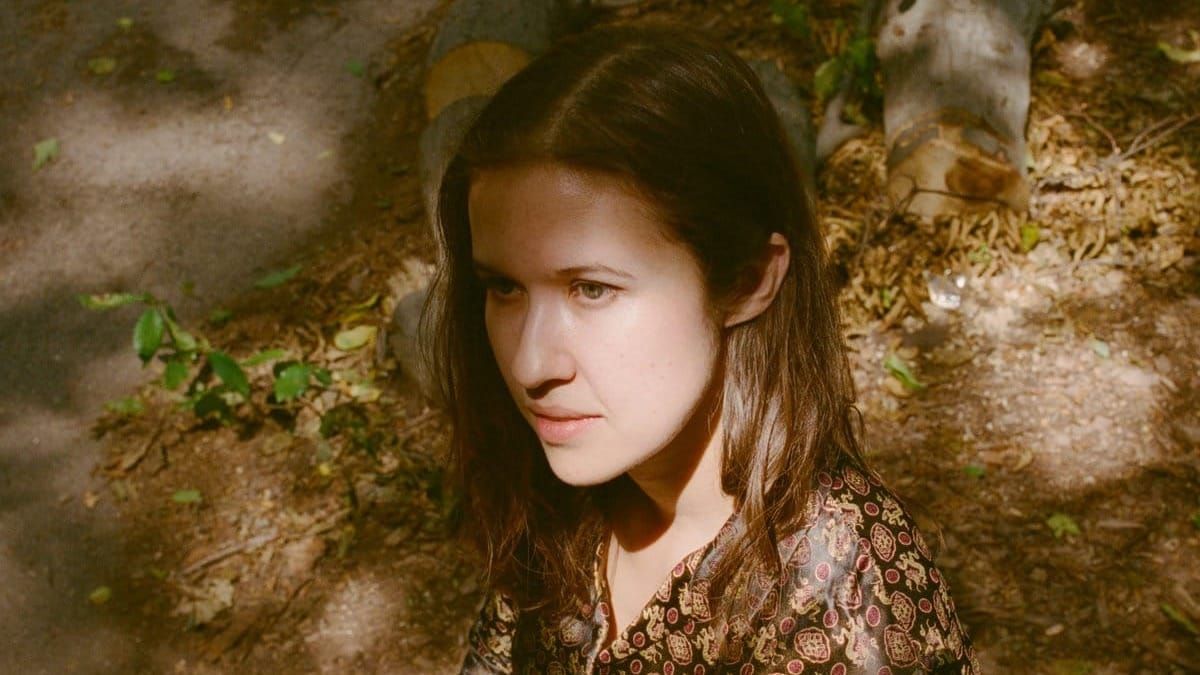
Harmless came out on 6 November 2026 on Ruination Record Co., the label that released Don't Get Comfy / Nowhere(2021), her first album, credited to Carmen Q. Rothwell, the name Quill still went by then. Also in 2026 the Brooklyn bassist and singer put out I'll Be Thinking of You on Thursday, recorded live at Close Up with Jacob Sacks and Billy Hart. Each record throws light on the other. In the trio the bass sits inside a rhythm section and answers piano and drums. On Harmless every song starts from the bass, and the other musicians are called in by turns.
Quill sings and plays bass on every track. The album was recorded at Candace Corner, with "Perseid Afternoon" partly recorded by Michael Coleman at Rocketship Sound. Four musicians join her: Ryan El-Solh on guitar and Jason Burger on drums, both her bandmates in Scree, Ivan Arteaga on clarinet and Dana Lyn on viola.
The method comes from jazz even where jazz can't be heard. In a quintet the solo passes from hand to hand over a rhythm section that stays the same; on Harmless what passes from hand to hand is the presence of the instruments themselves, and the only thing that stays put is the bass. Each track has its own line-up, picked the way you pick who takes the next chorus, and Quill ends up improvising with the arrangement, on a scale that usually belongs to the composer.
The double bass is best thought of as a body the voice shares. Quill sings and plays at once. The shape of the songs comes partly from there, from that physical pact between two lines coming out of the same person.
"Plaza" opens the record, and the voice, intimate, clear, chamber-scale, is what the album should be judged by. El-Solh's guitar steers clear of jazz cliché: in the verse it pares itself down to a seam, in the chorus it throws up something like a glitch, and there the voice draws air from the reverb, stretches out and feeds on elegiac overdubs, as if taking up the cosmic legacy of Linda Perhacs at her most psychedelic on Parallelograms. The voice brings mystery to a free form.
On "Something in the water" the guitar opens the way for the voice, and jazz's hesitancy drifts into post-rock ways of playing, which is no surprise with her Scree bandmates in the room. Soon Burger's brushes and the others make room for a chamber jazz close to The Innocence Mission.
Quill finds a balance between everything her music has tried on so far, and moves the work away from mood and colour towards weight and the architecture of the songs. On "Across the waves" the accompaniment thins almost to nothing and the form, left porous, edges towards the standard. The words come from Virginia Woolf's To the Lighthouse, a novel in which the trip to the lighthouse is put off for years and the house lives through time while the family is away; sung with so little around them, they hold the song in the same waiting.
Elsewhere comes a return to the experiments of some early progressive rock, when a voice turned itself into a loop with no machine to repeat it, and its pathos came from a creative imitation of nature. "Always in my mind" is a biological song: Burger's kit sits under a voice singing wordless lines with folk echoes in them, repeating its figure until it resembles something growing, a tiny organism working its way between mineral and cellular life.
The design has a cost, though: called in one at a time, the instruments stay guests, and more than one song leaves you wondering what the whole band would do.
"B.O.K." is where the record becomes its own verse and song. Until now the instruments had circled Quill one at a time, each showing a single facet; here, with nothing left to adorn, they find one another and go where their deepest nature takes them, which is jazz. Then, after two minutes and forty-three seconds, the track is over.