Opening the Drawer: Linda Perhacs and the Lineage of the Lost Tape
Psych folk, lost tapes, rediscovered women and the afterlife of quiet records
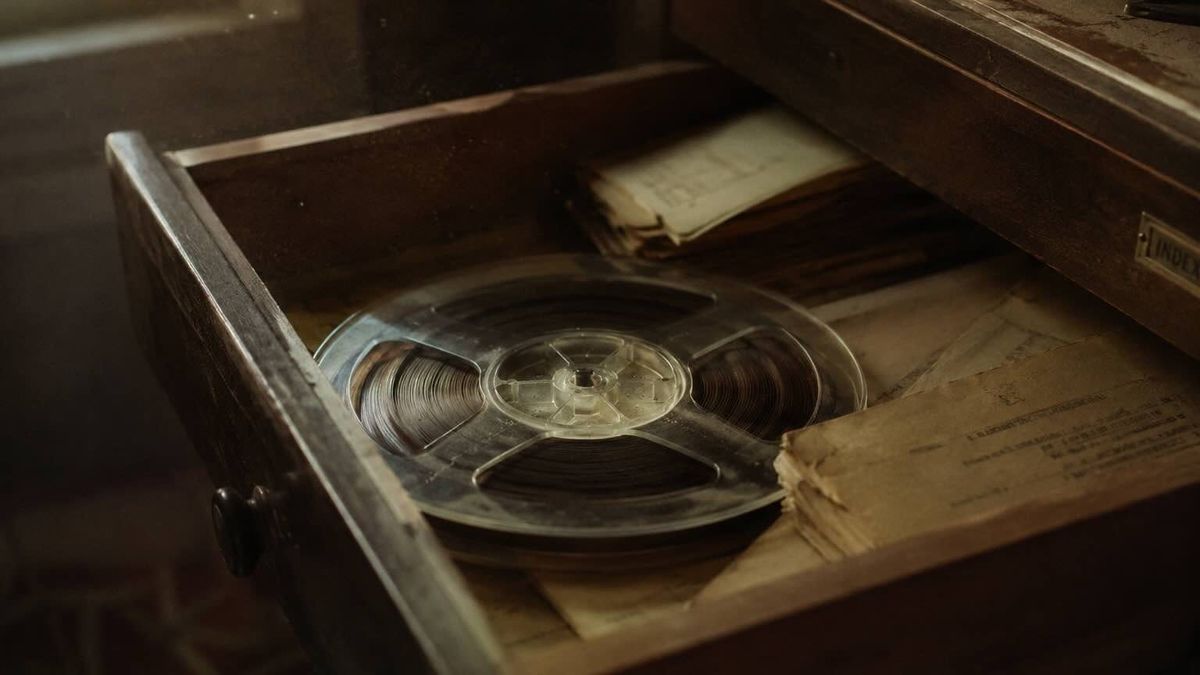
There's a drawer somewhere, and inside it a tape. You record it at home one evening, because it came to you and that was that, and then life turns some other way and the tape stays put. Years pass. Sometimes thirty of them. Then someone opens the drawer.
It happened to Linda Perhacs and to Parallelograms — cut in 1970 for Kapp, met with near-total silence, gone. Perhacs went back to working as a dental hygienist in Beverly Hills and stayed there for most of her adult life, while the record quietly became a cult object, passed from hand to hand, got reissued, and at some point had become the cornerstone of a genre that had meanwhile invented a name for itself.
This is a map of how a certain light keeps switching back on. Three times, in three different ways.
I. The Matrices
These are the records that lost the light for real. They resemble one another because they share the same fate: records that vanish and return. And that vanishing, from biographical accident, became over time a way of making music.
Sibylle Baier records Colour Green in her house in Germany in the early Seventies, voice and guitar, nothing else, and the tape stays in the family until 2006, when her son plays it around and Orange Twin puts it out, thirty-five years on, as if it had come from a room still locked.
Susan Christie cuts Paint a Lady around 1970 and nobody wants it; it too comes out in 2006, psychedelic folk that smells of the séance more than of Laurel Canyon.
Wendy & Bonnie are fifteen and seventeen when they make Genesis (1969), a bright, grown-up jazz-folk record the label buries for reasons that have nothing to do with the music; it will take decades to resurface.
And then Vashti Bunyan, who after Just Another Diamond Day (1970) vanishes so thoroughly that she finds out only by accident, years later, that she has become a guardian spirit.
Linda Perhacs belongs here, with them. Parallelograms (1970) is the record where the voice doubles and multiplies until it becomes a choir of itself, where the title track turns into a vocal abstraction that resembles nothing else of its time.
Beside her, Judee Sill — more baroque, more mystical, the harmonic ambition of a contrapuntist — whose light didn't fade into oblivion so much as detonate into overdose, a vanishing of a different order entirely. What holds these women together isn't a style. It's that the world missed them the first time, and that we noticed them once that world was gone.
II. The Transition
Then someone switches the light back on deliberately. Between the late Nineties and the 2000s a generation arrives that doesn't find Perhacs and Baier in a drawer: it makes a school of them.
Marissa Nadler brings the spectral ballad into dream-folk with Little Hells (Kemado, 2009);
Josephine Foster, on Hazel Eyes, I Will Lead You (Locust, 2005), digs into the German Lied and into American folk with the same voice out of another century;
Joanna Newsom, on The Milk-Eyed Mender (2004), blows the form open into a river-poem;
Diane Cluck on Oh Vanille / Ova Nil (2002) and Meg Baird on Dear Companion (Drag City, 2007) hold the thread barer, older.
This has stopped being archaeology; what's happening now is inheritance, taken up with open hands — the moment Parallelograms gets reissued and stops being a relic and becomes a living reference point. This is the middle shore, and crossing it lands you in today.
III. The Moderns
This is where they were born. And each one does something crooked with the light they inherited.
Jessica Pratt records Quiet Signs (Mexican Summer / City Slang, 2019) in her first real professional studio — and makes it sound like a found home tape from 1971. It's the most refined fiction on the map: the domestic grain kept on purpose, the false relic built at a desk, nine songs that seem to come from far away and are, instead, entirely of the present.
At the opposite end stands Mariee Sioux, whose debut Faces in the Rocks (2007) has nothing ethereal about it: the native flutes, the blood, the soil of the California Sierra — a chthonic light, rooted, that rises from below rather than descending from above. The same lineage, viewed from its underside.
Eleanor Murray, before veering toward synths, left in Olympia a handful of home-made records — Lost Songs (2016) is minimal folk, bedroom folk, voice and little else.
Jessie Monk, an Australian based between Berlin and Naarm, weaves on Continually Becoming (2023) the Celtic and Appalachian threads together with New Music and Butoh, and speaks of thresholds, of people met in the street — she inhabits the exact lexicon of the resurfaced without being one of them.
Ichiko Aoba, with Windswept Adan (Hermine, 2020), takes Perhacs's vocal overdubbing and transposes it to Japan, inside a soundtrack for a film that doesn't exist: it already sounds posthumous, as if we were hearing it again from a distance that isn't here yet.
Weyes Blood, who on Titanic Rising (Sub Pop, 2019) cites Perhacs openly but then carries her into a cinemascope production, the light swelled to lavish soft-rock — the furthest from the bareness of the source, and useful for exactly that reason, to measure the distance travelled.
Grouper, who on Ruins (Kranky, 2014) does the most literal thing of all: records it in Portugal, on a residency, walking every day among the ruins of old estates. She calls it a document of that walk. Living in the remains of love. The Seventies room becomes an abandoned house on the promontory, the home tape becomes a four-track in the middle of nowhere, and the record that returns from oblivion becomes a record that goes looking for oblivion to live inside it.
And in the middle of it all, Ruth Garbus. Profound (Orindal, 2026) — and Bandcamp Daily, reviewing it, tied it straight to Parallelograms: the same tremulous keyboard chords, the same spectral flights of melody. True, and yet only half of it. Garbus makes the strangest move in the constellation: she doesn't resurface from any drawer, and she fakes no relic. She ages inside the light. At forty she sings of being "ripe fruit," with the same suspended soprano as the matrices but with a body that cracks it — drum machine, crooked keyboards, lyrics that go places Perhacs would never have sung. Call it a third kind of return, neither archival nor invented: the person who stays, and changes, and keeps the light on while the rest of the body does its work of growing old.
Maybe that's what really binds the family — not a sound, but a way the light has of never quite going out, of switching back on always where you don't expect it.
Further Reading & Sources
Sources: interviews and reissue documentation on Linda Perhacs and Parallelograms; Orange Twin material on Sibylle Baier’s Colour Green; archival and reissue histories of Susan Christie, Wendy & Bonnie, Vashti Bunyan and Judee Sill; release documentation for Marissa Nadler, Josephine Foster, Joanna Newsom, Diane Cluck, Meg Baird, Jessica Pratt, Mariee Sioux, Eleanor Murray, Jessie Monk, Ichiko Aoba, Weyes Blood and Grouper; Liz Harris’s notes on Ruins; Orindal Records and Bandcamp Daily on Ruth Garbus’s Profound (2026).
Editorial Note
This essay reads the lineage through three temporal mechanisms: Recovery, where neglected recordings return through rediscovery; Reconstruction, where later artists deliberately recreate the distance and material signs of the found recording; and Continuance, where ageing and artistic persistence replace disappearance as the source of temporal depth. These categories are Hwael Mag’s critical framework, not genre labels or claims of direct influence.
Last revised: July 2026