Meitei / 冥丁 :: AGATE / 瑪瑙
Experimental electronica, Japanese memory, ritual loops and decaying voices

AGATE / 瑪瑙 is the new album by Meitei / 冥丁, released on 17 April 2026 through KITCHEN. LABEL. Seven tracks that deepen the world first opened by the Kofū trilogy (2020–2023), the "lost Japanese mood" Meitei has worked in for years: not a historical reconstruction, but a Japan observed from the present.
With AGATE, that sensibility takes the name Shinpu: a process of discovery in which memory becomes a foundation rather than a constraint. Five years of concerts across Japan, Europe and Asia — in underground live houses, listening rooms and sites of cultural significance — reshaped the music before it became a record.
AGATE is not simply a studio album, but what remains after years of performance.
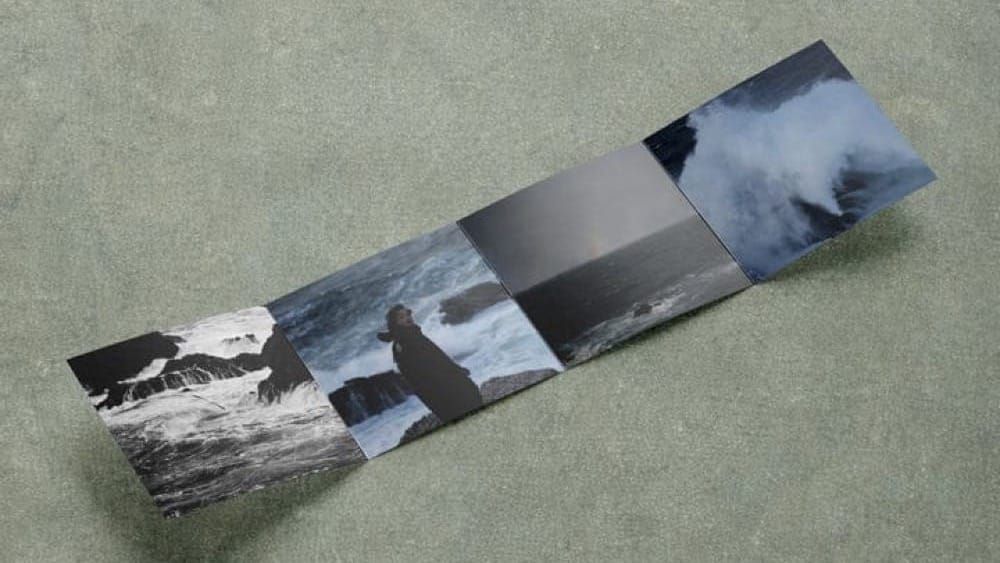
Its title comes from the stone, formed through slow accumulation, pressure and time, and the record quietly assumes the same qualities. Grain becomes form, form becomes narrative; vocal traces drift through decaying strata while ancient instruments are coaxed beyond their customary roles. The sleeve features a letterpress print by Kamisoe, the karakamipaper atelier in Nishijin, Kyoto; the title calligraphy is by Bio Xie, whom Meitei met in Taiwan, in an atmosphere that reminded him of Shitsunihon, the lingering memory of an older Japan existing outside ordinary time. The photographs are by Hiroshi Okamoto, whose winter seas and solitary cliffs reflect the decade Meitei spent living in Hiroshima. Mastering comes from Kelly Hibbert — known for his work with Flying Lotus, Madlib and J Dilla — a credit that says more about the album's sense of rhythm than any adjective could.
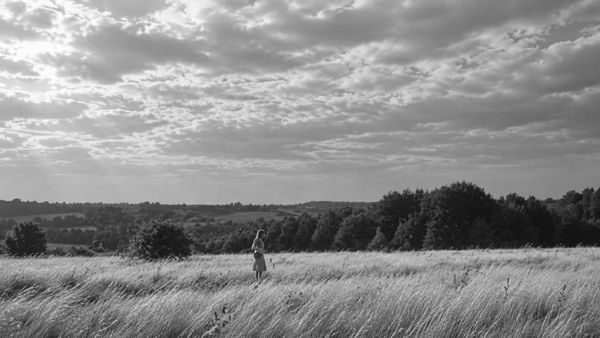
"HAŌ" begins almost as a rite. A loop resembling a Japanese flute seems to emerge from monochrome archival footage while a body of sound settles over it, slowly, under the weight of pressure and time. As the remaining instruments enter, a single thread runs through those geological layers without attempting to organise them, while the percussion resembles stones striking ancient timber, filling a space that feels at once physical and geological.
On "SHIN-OIRAN", the shifting pitch of the sampled voices reshapes the sonic fabric more than memory itself. The effect is almost tactile, as vocal fragments and traditional instruments merge into a single plane. Metallic overtones, percussive strikes and blurred drones drift in and out, leaving behind fractured vocal remnants, to the point where a gangsta rap beat could almost be grafted onto the piece — except the loop never quite completes itself. Just as the rhythm seems ready to settle into a groove, the pulse dissolves back into drone, slipping free of hip-hop's gravity and towards something closer to ceremony, where experimentation grows naturally from ritual and inherited sound.
"SHIN-WARŌSOKU" abandons any recognisable sense of development, moving instead through shifts in timbre and instrumental colour. Sampled voices and intersecting textures form a fractal kaleidoscope, constantly searching the vocal material for rhythm and coherence — the only remaining doorway into a demagnetised reality. In its closing minutes, what sound like disturbed Mellotrons quietly sketch the path ahead, for anyone who has not already lost it.
"KYŪGEKI" unfolds through accumulation rather than melody. Brief attacks settle beside low frequencies, sustained tones, blurred vocal traces and harmonic bloom until grain, density and decay become the piece's true narrative.
On "SHIN-EDOGAWARANPO", Meitei stops depositing layers and begins folding them back into themselves. Each new vibration bears down on the last until the voices cease to exist as recognisable presences, becoming veins embedded within the sound itself, crossed by a tension that never fully resolves. Gradually, the melodic cells are absorbed into an increasingly dense field of noise, until melody survives only as a buried vein beneath the surface.
A flute-like loop and percussion resembling stone against timber gather into a space that feels both ritual and geological.
Sampled voices and intersecting textures abandon conventional development for shifts of timbre, colour and a constantly unstable search for coherence.
Voices and melodic cells are folded into an increasingly dense field until melody survives only as a buried vein beneath the surface.