LULUC :: Sweet Thief
Folk, fingerstyle guitar, quiet arrangements and contemporary unease

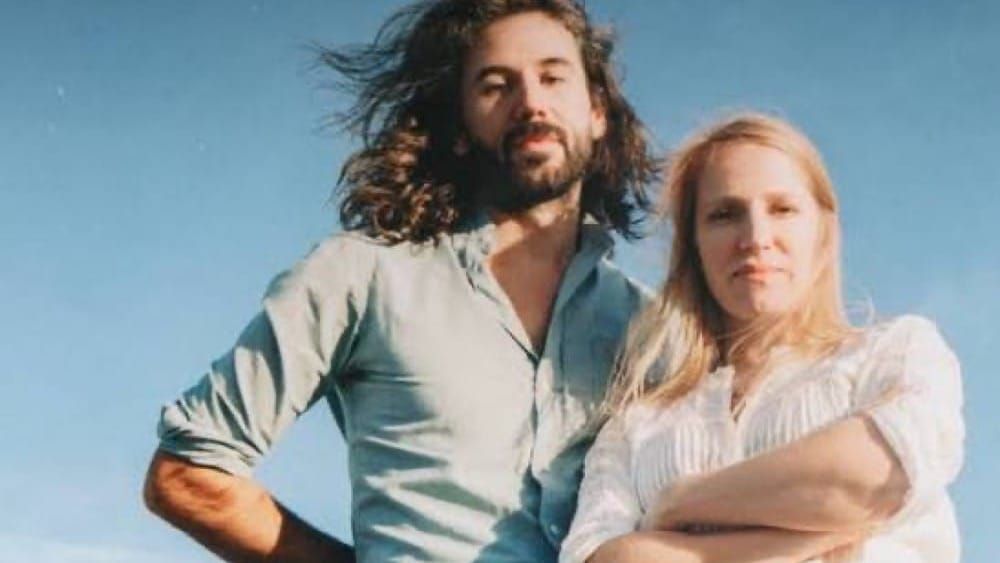
With Sweet Thief, Luluc turn silence into a lens through which to observe the fissures of contemporary life. Their sixth album seeks tenderness in every gesture, and it is precisely within that tenderness that unease slowly begins to take root.
For almost twenty years, Luluc have shown that silence can weigh as much as a note. Zoë Randell and Steve Hassett debuted in Melbourne in 2008 with Dear Hamlyn, the record that won over Joe Boyd; already relocated to Brooklyn by the time Passerby brought them to Sub Pop's attention in 2014, they built, over the years, an increasingly essential discography, guided by an ever-deepening art of subtraction, up to 2023's Diamonds.
Sweet Thief arrives after Luluc's return to Australia. The title of their sixth album comes from a line in Shakespeare's Sonnet 99, where a violet is chided for having stolen its scent from the beloved's breath: "sweet thief," as Shakespeare calls it, a theft that coincides with nothing less than the flowering of the world itself. Zoë Randell and Steve Hassett turn that image into a lens through which to read the present. Where in Shakespeare the theft still belonged to the poetry of nature, here it becomes a metaphor for everything contemporary life quietly takes: time, attention, beauty, silence, privacy, even the innocence of not yet knowing one has been slowly exploited. Ten songs held together by the compositional patience that in recent years has made Luluc one of the most discreet and precious folk duos of their generation.
The album is born of a double departure. The duo, raised in Melbourne and transplanted to Brooklyn for more than a decade, leaves the United States on the day of the January 2025 presidential inauguration, shortly after a Christmas spent at J Mascis's family home, and returns to Australia to record without outside voices mediating the process. Produced entirely by Randell and Hassett over fifteen months between Brooklyn and Melbourne and released via Community Music, Sweet Thief carries the weight of that choice: "I think this is really the first record we've made where it's about us and us only, where there are no competing voices," Hassett has said — a closeness made almost automatic by twenty years of duetting. The album was released on 10 July 2026.
"Honeyeater" opens the album in just over a minute: an acoustic guitar picked with a soft, almost timid insistence, recalling the pastoral Bibio of his earliest records, the one still tied to the garden before his folk went electric. Then comes "Rewarding Melody," the lead single, with a trace of the Beach Boys and J Mascis’s drums bent docilely into distant horns rather than into the noise one might expect from him; beneath the melodic caress lies a love lament that turns out to be intercepted, rerouted, as if even the messages between two people were now subject to an invisible toll. Mascis recorded his percussion at his family home on Christmas Day 2024.
On "Dopamine Slot Machine" the album takes its boldest gamble: piano, a hint of Rhodes, Randell's voice sliding toward the smoky register of Beth Gibbons before a saxophone drags the song into a jazzy coda, a glimpse of 1940s New York accidentally reopened in the twenty-first century. "No One Else's Pen" returns instead to the most classic fingerstyle of the early-Seventies folk revival, and here the writing convinces precisely through what it refuses: an irresolution held with a steady hand, as though the song refused the temptation to resolve too neatly what remains unresolved in life. "Leave the rest in the vanishing dust," Randell sings, letting the past scatter instead of burying it in an ending.
The rest of the album strips itself back to the essentials. "Which Way Now" burns through in under two minutes and vanishes with the same discretion with which it arrived; "A Better Truth" recedes to classical guitar, voice, and flute; "Lullaby" unspools a string arrangement stitched specifically to accompany the sleep of someone who still trusts the world; "River At Your Feet" stages a river addressing a mountain directly, within the same domestic animism that elsewhere has two ravens deliberating which route to take and turns an oak's roots into a promise. It closes with "Homesick in L.A.," the busiest track on the record and the only one that allows itself a real escalation: the guitar coils in on itself into a kind of trance, while the lyrics lay bare the raw homesickness of someone who left one home for another and no longer knows which of the two they belong to.
Twenty-six minutes, ten songs, four of them under two minutes: Sweet Thief refuses any bloat at the very historical moment when attention is measured in seconds, and it is perhaps here that its boldest political gamble is played out.
A trace of the Beach Boys and J Mascis’s drums sit beneath a love lament whose messages seem intercepted and rerouted.
Piano, Rhodes-coloured textures and Randell’s smoky vocal register open into a saxophone-led jazzy coda.
The album’s busiest arrangement lets the guitar coil towards trance while homesickness leaves the idea of home unresolved.
Randell has spoken elsewhere of an existence that wants to remain individual, withdrawn from the movements and allegiances imposed from outside: a claim that would risk sounding rhetorical if the record did not practise that subtraction note by note, entrusting to quiet the task that elsewhere falls to noise. Here, theft resembles Shakespeare's violet more than the common thief: what disappears is precisely what allows something else to bloom.