Kept in Japan
David Sylvian, Japan and who keeps a voice once its owner lets go.

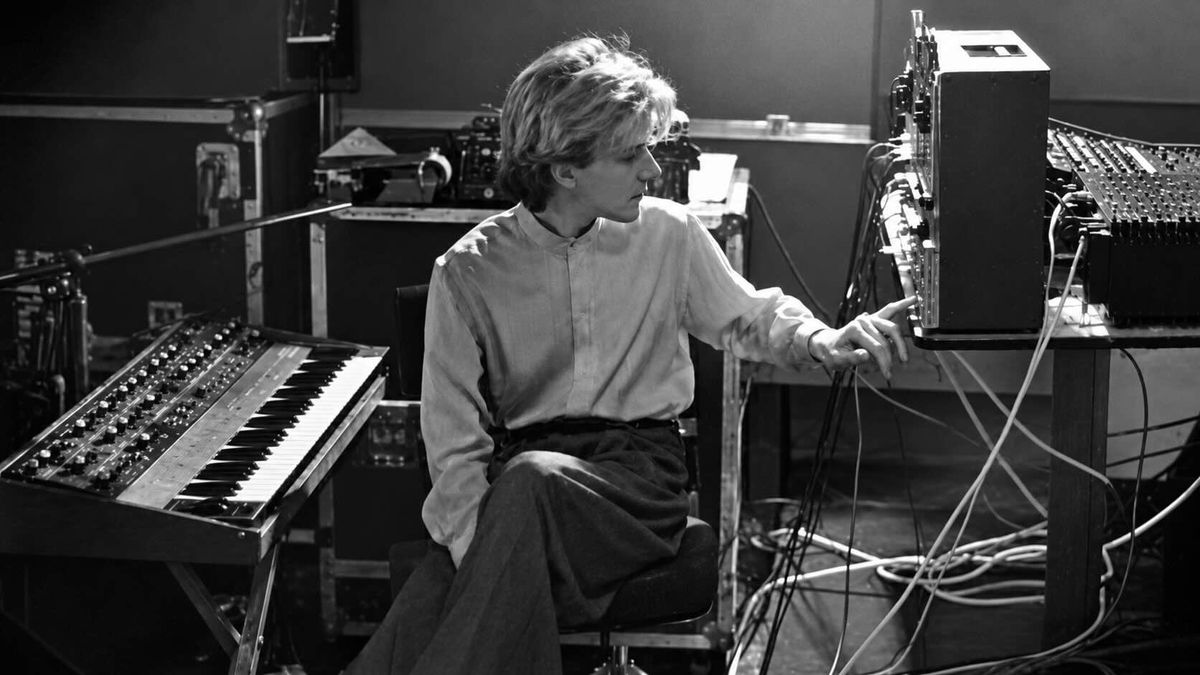
One afternoon at Onkio Haus in Tokyo, with a cold so heavy he could barely sing, David Sylvian put a vocal on Ryuichi Sakamoto's film theme and went home. Japan has looked after that voice ever since, often with more care than he has.
Ryuichi Sakamoto died on 28 March 2023. Some weeks later his management made public a playlist he had been assembling since the previous June for his own funeral: thirty-three tracks, opening with Alva Noto and moving through Bach, Debussy, Satie, Ravel and the film music of Morricone and Nino Rota. Writing for the Japanese site Real Sound, Yukimi Miyatani noticed the anomaly. Among the classical voices and the odd chanson, only one track is a song with lyrics, sung from beginning to end: David Sylvian's "Orpheus", from Secrets of the Beehive. Sakamoto had said many times that songs were not really his territory, and he could be severe about vocal music even when he admired the singer. At the end he made one exception.
Three and a half years later, on 30 September 2026, Sylvian announced The Distance Between the Killer and the Killing, due from the new label Nanoq on 26 February 2027 and described by its makers as his first album in fifteen years. It is a single forty-six-minute instrumental, recomposed from improvised sessions recorded between 2012 and 2025. Sakamoto plays piano somewhere in the source material, Otomo Yoshihide plays guitar, and the credits list Sylvian on guitar, electronics, treatments and, as though it were an instrument, radical editing. The record is dedicated to the memory of Ryuichi and of Holger Czukay. Sylvian does not sing on it.
Set the two documents side by side and an exchange appears. The friend who distrusted songs kept a song; the singer whose voice made that song has removed himself from his own record and kept the friend's piano instead. This essay follows the exchange backwards. Its argument is that for close to fifty years Japan has repeatedly held on to things Sylvian discarded, outgrew or cut — through teenage fans, magazine archives, record companies, collaborators and a museum foundation on an island in the Seto Inland Sea — and that his long practice of subtraction has leaned on other people's willingness to keep more than is usually admitted. The evidence is mostly small and material: a bonus track, an iPod, a magazine interview, a playlist.
It needs one working term, borrowed from his own credits.
Sylvian has described the impulse plainly. Talking to Keith Rowe for BOMB, he said that since the early 1980s he had been interested in dismantling the pop song, keeping its structure while pulling out the supports, and that his work kept returning to one question: how much of the frame can go before the familiar shape stops being recognisable. Every removal of that kind produces a remainder. Where the remainders go is the subject here.
I. A name nobody chose
Even the band's name arrived as a leftover. The most repeated story says it was taken from a travel brochure lying on a bus on the way to an early show; in a Japanese photobook of 1983 Sylvian said only that the sound of the word came to him; the guitarist Masami Tsuchiya, years later, suspected a late-night BBC series about Japan the members had watched as teenagers. Sylvian disliked the name. In 1999 he told Sylvie Simmons of Mojo that the band had been a disguise he wore to survive, and that the music itself had worn one too.
The country of the same name took the disguise seriously before anyone else did. While British critics treated the glam-era Japan as late and slightly ridiculous, the manager Simon Napier-Bell worked the Japanese market, and by the band's debut a fan club in Japan reportedly counted some thirty thousand members. Music Life, the Shinko magazine that had put Queen on its cover in 1974, printed Sylvian's first Japanese interview in 1978. In March 1979, on their first visit, they sold out the Nippon Budokan — two nights or three, depending on whose chronology you trust; Steve Jansen's own archive says two, opening the tour.
What those fans kept was precisely the person Sylvian was trying to stop being: the blond, made-up singer of Adolescent Sex and Obscure Alternatives, records he later dismissed. Tsuchiya, recalling the period at a Tokyo bookshop in 2017, said Sylvian would gladly have erased the first three albums altogether. He could not, because in Japan they had been bought, pinned to bedroom walls, transcribed into magazines and filed. The earliest archive of David Sylvian was assembled by Japanese teenagers.
II. Two accounts of one afternoon
In March 1980, during the band's second Japanese tour, Music Life arranged for Ryuichi Sakamoto to interview Sylvian. The two accounts of that meeting do not agree, and both have been kept. Sakamoto's version, as Japanese writers repeat it, is that within five minutes they were like old friends. Sylvian, speaking to Richard Vine of The Guardian in 2012, remembered the interview itself as a disaster in which neither of them said much; the friendship began after the tape was switched off. The magazine's side of the afternoon survived on paper and was reprinted in 2017 in Shinko's Japan 1974–1984, the band's first biography in Japanese. Sylvian's side survived as an anecdote about two men saying almost nothing into a microphone.
The debt ran deeper than friendship. Asked by Sound on Sound in 1987 where "Ghosts" had come from, Sylvian mentioned Stockhausen, and an album by Sakamoto's wife that set abstract synthesiser lines behind a ballad, and, first, the way traditional Japanese music gives space the same weight as the notes. He did not name the record. "Ghosts" sits on Tin Drum, the 1981 album whose sleeve photographs him with a rice bowl and chopsticks under a portrait of Mao — an Asia of props, and Chinese ones at that. One way to read the record: the China is on the sleeve, and whatever Japan contributed sits in the gaps between the synthesiser notes, where nothing is in costume.
"Forbidden Colours" took its title from Mishima's novel Kinjiki. The vocal was recorded at Onkio Haus in Tokyo, where Sakamoto worked constantly; Sylvian arrived when the soundtrack was already finished, sick, and did the whole thing in an afternoon. The single reached number sixteen in Britain. Sakamoto kept the melody for the rest of his life, usually without words; he was still playing the theme in his last streamed concert, in December 2022.
Then the band ended where it had been loved first. Japan's final concert took place on 16 December 1982 at the Nagoya Civic Hall. Tsuchiya, drafted in on guitar, has described the tour from the middle: Sylvian's and Mick Karn's dressing rooms placed at opposite ends of the corridor, his own between them, so that complaints about the bass level travelled through him. Sylvian, he said, preferred to put difficult things in letters rather than say them in the room. After the last show there were bunny girls backstage and a support band, Sandii & the Sunsetz, in party costume, and Yuka Fujii filmed from the balcony. Tsuchiya also remembered the one time Sylvian cooked for him in Kensington: rice, soy sauce, a block of tofu, more soy sauce. Sylvian loved it. Tsuchiya ate it, he said, because there was no way not to.

III. Playing quietly for the neighbours
Twenty years later, the room that mattered was smaller. Off Site opened in June 2000 in one of a row of flimsy wood-and-plaster houses about fifty metres from the NTT Docomo tower by Yoyogi station, run by Atsuhiro Ito and his wife as a gallery and performance space with a café upstairs. A neighbour complained; an inspector from the city's noise department came round; the musicians, who were already heading towards near-inaudibility, now had a municipal reason to play quietly. Toshimaru Nakamura, who had set his guitar aside to play a mixing desk with nothing plugged into it, wrote that the sounds were often so faint that the street came in — a tofu seller's whistle, the wooden clappers of the evening fire watch. Sachiko M played a sampler with no samples loaded, working with the pure tone the empty machine gave her. Otomo Yoshihide played the turntable as an object rather than as a source of records. Outsiders called the result onkyō; most of the people involved disliked the word because naming the music seemed to stop it.
Sylvian heard three of them at the AMPLIFY festival in Cologne in 2004, where Otomo told him he had admired Blemish. Two years later, in Japan to research a commission for Naoshima, he booked a session in Tokyo with Nakamura, Sachiko M, Otomo and the guitarist Tetuzi Akiyama, engineered by Toshihiko Kasai. He had asked Otomo to bring quartet music on vinyl; the session photographs suggest a recording of Betsy Jolas's Quatuor III, its run-out groove dust looping like a sample in the finished track. Afterwards came the method. He asked for acoustic guitar overdubs on the spot, later cut and pasted turntable activity from an alternate take, built an introduction from fragments of an earlier one, had John Tilbury add piano in London, then wrote a melody and sang.
The piece became "The Greatest Living Englishman", the longest track on Manafon (2009) and, by Sylvian's account, its centrepiece and its hardest vocal. Its subject is a writer who decides that he would rather leave nothing than leave something mediocre, and sets about removing his work and then himself; Sylvian called the song "a creative act of erasure" and allowed that the character was partly a self-portrait. A house kept at whisper level because of the man next door supplied the ground for a song about leaving no trace. What the session photographs preserve, meanwhile, is everything the track does not show: Nakamura bent over his empty mixer, the plectrum taped near Otomo's cartridge, the record sleeve on the floor.
IV. What the island kept
Not every removal on Manafon came out of an improvisation. Dai Fujikura, a Japanese composer based in London, had grown up as a classical student with no time for pop; at thirteen he heard Secrets of the Beehive, which he could enter because of its orchestration, and later asked London's Southbank Centre whether he might meet its author. Sylvian asked him to write string parts for several Manafon pieces, recorded in New York with the International Contemporary Ensemble. A month later Sylvian wrote to say the strings would have to go. Fujikura, who had never had a note of his removed, took the multitracks home and remixed his own parts for his living room. Sylvian liked the result and still left it off the album, judging the orchestration wrong for the record's minimal shape. Fujikura's version of "Random Acts of Senseless Violence" came out only in Japan, as a bonus track, and became the seed of Died in the Wool (2011). In the same interview Fujikura made a sharper observation. Sylvian cannot read scores, he said, so everything had to be played to him, and in the studio he worked like a very high-grade filter, knowing at once what he did not want.
Fujikura was one of several. When Blemish and Manafon were handed out for reworking, the lists of remixers leaned towards Japanese experimentalists: Ryoji Ikeda, Yoshihiro Hanno, Tatsuhiko Asano, Fujikura himself. Once Sylvian had finished subtracting, the material he had left over was repeatedly passed to Japanese hands, and what came back was released as variations, alternates, bonus discs — the scholarly apparatus of a catalogue whose author would rather have been known for the cuts.
The Naoshima commission went further, because there the keeping was written into the work. In the winter of 2006 Sylvian visited the island to record its sounds. When Loud Weather Buffeted Naoshima, commissioned by the Naoshima Fukutake Art Museum Foundation for the exhibition Naoshima Standard 2 (October 2006 to April 2007), was an audio work for iPod, meant to be heard while walking slowly through Honmura, the old port village where the foundation's art houses stand among ordinary homes. Sylvian said it was not complete until the town's own noise joined it: cars, wind, birds, other walkers, the sea. The ensemble was Clive Bell, Christian Fennesz, Arve Henriksen and Akira Rabelais, the music composed and recorded at Sylvian's own studio. A limited CD followed in 2007 with some island sound mixed in, as an echo of the walk; it was never offered as a download. The foundation then took the piece into its permanent collection, so that once the CD edition was gone the work would remain available on the island and nowhere else.
It was not the first time Japanese institutions had housed the parts of his practice that do not fit on a record. In September 1990 he built Ember Glance (The Permanence of Memory) with Russell Mills in a warehouse in Shinagawa; in 1994 came Redemption – Approaching Silence with Robert Fripp at P3 art and environment in Tokyo. By then Sylvian had written, in a text called "A Solitary Life", that Japanese culture had soaked so thoroughly into him that he could no longer measure its influence, and that in Japan he had found a community of peers he had not found at home.
V. The distance
The friendship with Sakamoto ran under all of this, never quite the subject of any one record. They made World Citizentogether in 2003. In April 2011, after the Tōhoku earthquake and tsunami, Sakamoto set up kizunaworld.org to raise money for the stricken coast and asked friends for music; Sylvian contributed a piece made with Jan Bang, and Sakamoto later said he had been glad of how quickly the answer came. In 2022, with Sakamoto living with stage-four cancer, Sylvian recorded his friend's "Grains (Sweet Paulownia Wood)" for the tribute album To the Moon and Back. When Sakamoto died, Sylvian marked it publicly in a three-part post. Then the playlist appeared, with "Orpheus" in it.
The Distance Between the Killer and the Killing cannot yet be heard, and what can be said about it comes from documents. The credits name the rooms: Vox Ton in Berlin, a studio in Merlo outside Buenos Aires, a home set-up in Victoria, British Columbia, Downtown Music in New York, and something called Samadhisound Global, engineered by Sylvian himself. They name the players: a contrabass recorder, a violin and voice, a clarinet, a microtonal saxophone, electronics, amplified objects, a pocket radio, field recordings, Otomo's guitar, Sakamoto's piano. Pauline Nadrigny's essay for the album describes voices that seem to belong to nobody, a violin worked until it loses its voice, choirs too far away to recover. Otomo, who appears in both the 2006 session and this one, wrote that hearing Ryuichi's presence surface here and there gave him a very particular feeling. Fennesz, who had introduced Sylvian to several of the Off Site players in Cologne, said every sound is where it belongs. Neither of them mentions a singer.
The arrangement of the credits does mention volume. At the bottom, after the dedication, they advise that the louder it is played the more it gives back — a long way from a house in Yoyogi where the same guitarist had to keep the music down for the man next door. And the direction of keeping has turned. For most of this history Japan kept what Sylvian let go of: the early voice, the strings he cut, the work that needed an island. Here it is Sylvian holding on to a Japanese musician's sound after the musician has gone, folding Sakamoto's piano into a forty-six-minute edit from which the one thing he has removed is his own voice. Whether that is generosity, mourning or the method simply reaching its far edge is something the record will have to show in February.
On Naoshima, meanwhile, the iPod piece is still listed in the foundation's collection. It was designed to be incomplete in any room but one: a slow walk through Honmura, between the art houses and the ordinary ones, with the weather doing the rest.
Last revised: October 2026