The Owl Service :: Tied to the Land
Psych folk: murder ballads slowed down by the slowcore of 1994.
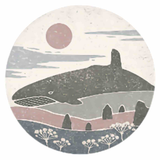

While arranging traditional English ballads, Steven Collins listened to nothing but three American records from 1994. Tied to the Land grows out of that strange graft: the old songbook played at the pace of those who had learned slowness in American halls and clubs.
The name still comes from Alan Garner’s novel and from the Granada series that, at the end of the Sixties, set an ancient Welsh myth inside a holiday house. Born in 2006 as a studio project for Collins, the group has passed through a long suspension, a label closed under the weight of its own workload, a two-CD retrospective, Always We Are Destroyed. Tied to the Land is their first record of new material in over a decade. Jason Steel, Diana Collier and Nancy Wallace are gone; in their place two voices, Dorothy Chappell and Rebecca Leivers, and around them Julian Overall’s saxophone, Joolie Wood’s violin and recorder.
The press release promises a body count higher than the average slasher film, and it is hard to argue with: drowned lovers, arranged marriages that end in mourning, a boy dragged beneath the sea.
“Bonnie Boy” opens the record as a folk rock anthem and holds that shape from the first bars, with something, strange as it may sound in this context, of “Another Brick in the Wall”. Julian Overall’s saxophone brands the moments where Rebecca Leivers’ voice closes the chorus, and the folk begins to give off progressive radiation.
In “Bonny at Morn” the vocal line, with its flavour of early music, is stretched over the gait of slowcore and works as a vehicle towards distant times; the guitars, in full chords, keep the song anchored to the New World instead, to the American clubs and studios of 1994.
The two interludes, “Revolt from the Monolith, Come Back to the Village” and “Herald the Blacksmith, Birdsong & Juno”, occupy a curious position in the architecture of the record. They carry the numbers 15 and 16, as if they were fragments of a longer sequence of which we are allowed to hear only a part. The first carries a title that reads like a programme, and inside there are squelchy synths, Mellotron strings and fragments of Penda’s Fen, the 1974 film by Alan Clarke and David Rudkin that turned the Midlands into a landscape of pagan visions. In the second, hauntological synths marry birdsong and bells, while a guitar undercuts the sentence they seem about to pass.
“Maids & Gentlemen” moves more than the rest: the drums run in double time, and for the only time on the record the singing bends to the rhythm of the music and follows it, like a fairground storyteller quickening the tale to keep up with the drum. The fuzz guitars, meanwhile, advance with good manners, respectful of the historic surfaces they rest on. The sax takes an experimental solo that escapes every genre named so far, but that is a reviewer’s label: inside the song everything stays in its place.
“The Mermaid of Zennor” almost closes the circle. Voice and organ are its backbone, and on that frame the piece holds like a folk operetta until the ending, when with unexpected naturalness an aside opens: sax, guitars and rhythm section digress without sliding into mournful liturgy, a craftsman’s interlude, in the best workshop sense. The band gathers itself again and finishes together, where the lyric line and the organ meet once more inside the group’s slowest gait.
The fuzz garage-folk register lives here alongside slowcore, folk, old tales and psychedelia, and none of these elements insists on being noticed. Everything is measured with balance, and it is the two voices that hold it together: without Chappell and Leivers, the record would seem smaller.
Tied to the Land comes out under catalogue number HHTE-028, on a label named after the wooden horse of the May festivals. In Cornwall, at Padstow, the Obby ‘Oss still goes out into the streets every first of May, danced by those who inherited it from their fathers, and returns to its room until the following year. These twelve songs share the same fate: brought out, played, put away with care, so that someone else will find them.