Juana Molina & Alejandro Franov :: A ∩ B
Argentine experimental folk-pop built on self-made synth sounds.
Alejandro Franov first got himself noticed by dancing oddly in the crowd at a gig in the basement of the Hotel Bauen in Buenos Aires. After the show he turned up at Juana Molina's house with a keyboard to play her something.
Until then Molina had kept keyboards at arm's length. Franov showed her that you could build your own sounds, and the credits of Segundo, from 2000, list many of her keyboard patches as his inventions. He stayed at her place for about three months. They wrote late into the night, plugging and unplugging instruments, and Molina remembers it as the happiest stretch of her musical life; later, from Los Angeles, she used to ring him so he could talk her through how to get certain sounds. The duo called themselves A ∩ B, and a label of the same name put the album out on CD in 2003. Since 30 October 2026 it has been back in print on Sonamos, which now releases Molina's records: twelve tracks, about forty-three minutes, plus a bonus track for Bandcamp buyers, in a new running order that opens with "Idioma" and closes with "Tororo".
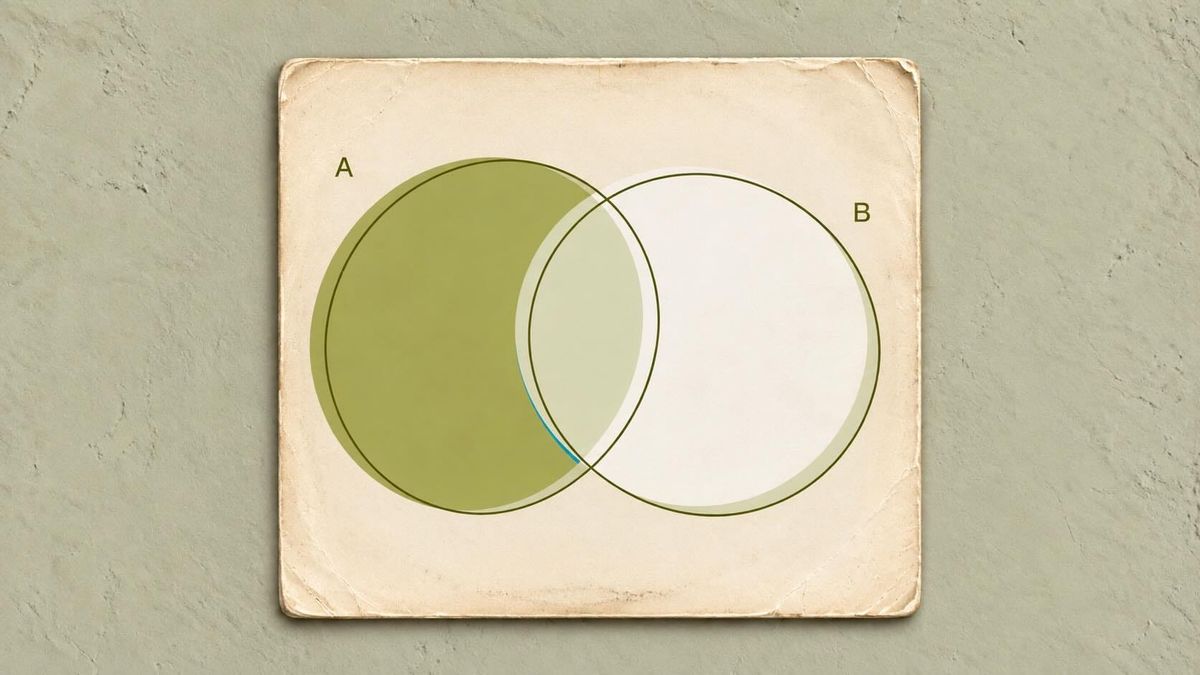
The intersection sign marks what two sets share, and the credits take it literally: vocals, synths, guitars, bass and effects are credited to both without distinction, with a single guest, Ezequiel Borra, on one guitar part. Mixing and production, however, carry Molina's name alone: the final say stayed with her. The album was originally mastered by Eduardo Bergallo.
You can hear the two hands in the way acoustic and synthetic keep trading roles. In "Idioma" the synths come first, puffed out like a soap bubble, and inside that film the voice hums along, nudged about by shifts in pitch; then the acoustic guitar comes in and the song turns simpler and fuller at once, over a lyric of only a few lines. In "Amigo" the synths take the folk part themselves, cycling through an arpeggio around the voice and little more than a kick drum sunk deep in delay, until the ending frays into a deliberately imprecise weave of bowed and plucked strings, scuffed by digital glitches.
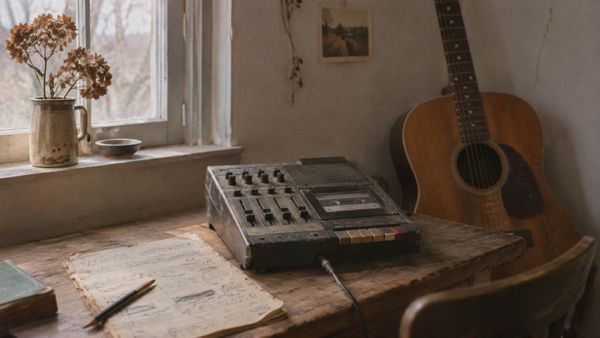
In "Árbol de pomelos", the most folktronic moment on the record, the acoustic side shrinks to the guitar, high in its register and the only thing that stays grounded. Everything else bends to the tape machine, which slows down and comes back up to speed, stretching and squeezing the vocal and setting its pitch wobbling.
Heard now, A ∩ B stands on its own, and at its best, in "Idioma" and "Árbol de pomelos", it bears comparison with the records Molina went on to make by herself.
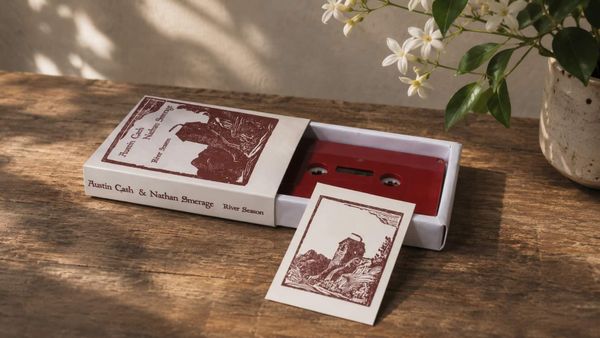
The sleeve comes from a pair as well: it is credited to Señoras de Rosamayol, a name that fuses those of Alejandro Ros and Federico Mayol.