Jaromil Jireš :: Valerie and Her Week of Wonders
Czech New Wave, folk horror, surrealism and political repression

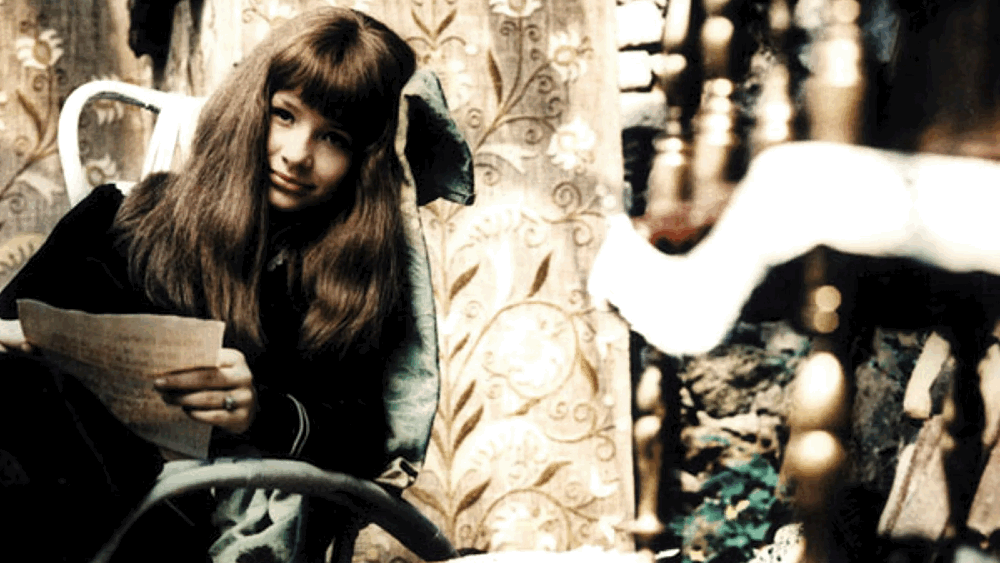
The film was never meant to fall to Jaromil Jireš. It belonged to Jan Němec, husband of the woman who designed it, until August 1968 arrived and the tanks of the Warsaw Pact settled the question of who in Czechoslovakia would be permitted to keep making films.
Němec was dismissed from Barrandov after the invasion and was no longer allowed to direct the project. Jireš inherited it fresh off the banning of his own previous feature, The Joke, and shot Valerie a týden divů between June and November 1969. It premiered in October 1970: a thirteen-year-old girl's single dreaming week compressed into seventy-seven minutes, at the exact moment the Prague Spring was finishing its long exhale. When it appeared, the Party newspaper Rudé právo delivered the verdict that mattered: too arty, it said, demanding instead films for the audience, films for today, films for the socialist person. The space that had allowed the Czechoslovak New Wave to exist was narrowing fast. Valerie is usually filed as one film among many in that movement. It might be truer to call it one of the wave's last exhaled breaths, caught on camera by a director who had inherited somebody else's film.
Call it, first, what it plainly is. A girl named Valerie wakes to her first blood and finds the ordinary furniture of her small town, grandmother, priest, cousin, travelling actors, a pale visitor with a polecat's face, rearranging itself into something closer to liturgy than plot. Faces recur wearing new relations to her. The line between grandfather, father and demon blurs on purpose, as does the line between the man who might save her and the man circling to devour her. None of it resolves into a story you could summarize twice the same way, and that unsummarizability is the film working exactly as intended.
Ester Krumbachová's formal credits only begin to describe what she did. She co-wrote the screenplay with Jireš, designed the costumes and worked deeply into the film's visual conception: the lace, the pale masks, the jewellery, the colour relations, the grammar that turns a small Bohemian town into something closer to an altarpiece left out in the weather. Her technical work extended into the script itself, with drawings and detailed instructions for compositions, props, colours and materials. She had already done comparable work across films including Daisies and A Report on the Party and the Guests, and the critic Jan Žalman described her as bringing philosophical abstraction and a Kafkaesque understanding of symbolism into Czech cinema. History has been content too often to file her under wardrobe. A magazine with any interest in getting these things right owes her the correction.
The novel underneath the film goes back further still, to 1935, written by Vítězslav Nezval after his years in the Czech avant-garde and around the formation of the Czechoslovak Surrealist Group. Nezval himself described the book as a kind of irrational psychic collage borrowing freely from popular Gothic literature and the lower regions of the unconscious. The lineage remains legible on screen: Gothic machinery, fairy tale, erotic threat, resurrection, family relations turned unstable. What makes the novel's afterlife bitter is that Nezval himself did not stay a surrealist. By the later 1930s his political and aesthetic allegiances had shifted sharply toward Moscow. The film made from his earlier heresy would eventually appear under a regime demanding exactly the kind of ideological usefulness that the book had refused.
Call the vampire in Valerie by its local name too, and the film gains a genealogy the word “vampire” alone tends to flatten. Slavic traditions had their own revenants long before Dracula fixed the popular image elsewhere in Europe: upír, upyr, related forms moving across languages and centuries. The often-cited 1047 appearance of the Old East Slavic word belongs to the name of a scribe, Upir Likhyi, so it cannot safely be treated as the first written record of the folkloric creature itself. The later tradition matters more here than a false claim of priority. Its cruelty is domestic. The returning dead feed through kinship, household, proximity.
The threat in Valerie wears the face of a grandmother bargaining away her granddaughter's blood for her own lost youth, of a priest who is also, somehow, kin.
The horror is not an intrusion from outside. It is what the family was already keeping in the house.
The score belongs to Luboš Fišer, gossamer strings and clockwork harpsichord under a boys' choir that sounds, by design, like a liturgy nobody remembers commissioning. It has aged into its own second life. Broadcast's “Valerie”, on Haha Sound in 2003, openly returns to the film and borrows from Fišer's melodic world; Trish Keenan's attachment to the film remained visible later in the Broadcast and Focus Group collaboration Investigate Witch Cults of the Radio Age. Which puts Valerie, whether it asked for the job or not, inside a lineage this magazine has already spent real ink tracing: hauntology's suspicion that the past never quite finishes happening, that a lost future can go on broadcasting long after the transmitter is switched off. Fišer's choir was already singing something close to that in 1970, in a country about to have its own future narrowed by people who preferred films for the socialist person.
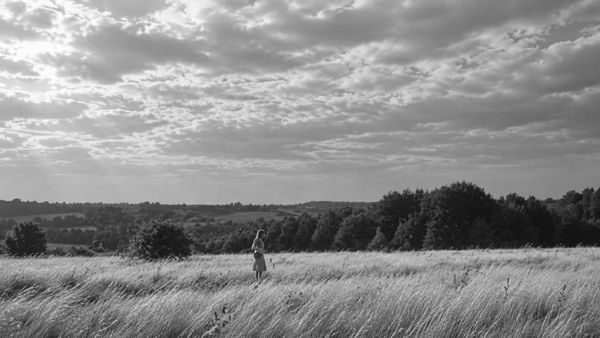
Valerie wakes to menstruation and the ordinary furniture of the town begins rearranging itself into something closer to liturgy than plot.
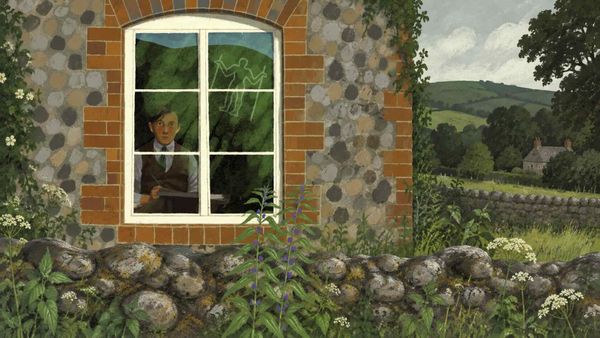
A polecat-faced figure enters a world where grandfather, father and demon refuse to remain separate identities.
She bargains away her granddaughter's blood for lost youth, turning the household itself into the source of the threat.
None of this needed to survive. A film orphaned from its intended director, adapted from a surrealist who changed course, scored by a composer whose music could easily have disappeared into an archive, released into a country actively narrowing what art was permitted to say: on paper it reads like a list of ways to disappear. Instead the tanks came, the Party wrote its verdict, and Valerie kept dreaming anyway, on a reel of film nobody managed to confiscate in time.