Heron & Crane :: Migrations
Pastoral Downtempo, Instrumental psych folk and dream travel.
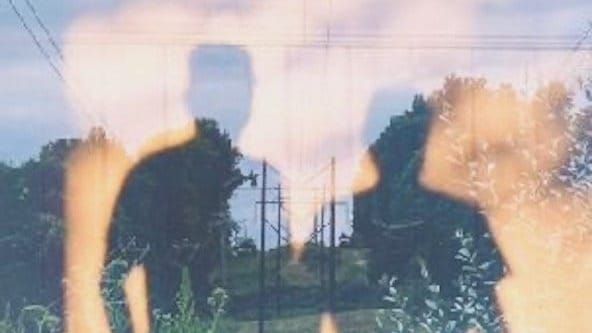
Heron & Crane’s travel record was written mostly standing still, each of them in his own city, sending tracks back and forth between Virginia and Ohio.
Migrations is the fourth album by Dave Gibson and Travis Kokas. It comes out on 2 October on Hibernator Gigs and was recorded between October 2024 and March 2026, in Charlottesville and in Columbus. The previous record was called Nestings; after the nest comes the migration, and for a duo carrying the names of two birds the sequence has a logic of its own, almost zoological.
It is also the group’s first entirely instrumental record. Kokas puts the choice down to wanting to keep only the best material, without adding sung pieces out of habit.
“Kudzu Moon” opens the record by weaving Celtic harp into synth lines. The guitars and the harmonic frame recall, with a light hand, the wave melancholy of the 1980s. Here, though, that melancholy loses its nihilism and stays outdoors, on the embankments of Virginia, where kudzu, the Asian vine planted in the 1930s to hold eroded soil, ended up covering everything: trees, poles, fences.
“Biscuit Basin” lays lap steel over Moog sequences, well into cosmic country territory. The title points elsewhere. Biscuit Basin is a thermal area in Yellowstone where, in July 2024, a hydrothermal explosion starting from Black Diamond Pool threw mud and rock onto the visitors’ boardwalks and broke them apart. The press release doesn’t say whether the track has that place in mind. Still, it is curious that a record of sound postcards should take its name from a landscape capable of blowing up under tourists’ feet. What comes out is library music wearing a borrowed pop suit.
“Modern Calling” owes an obvious debt to Air’s Moon Safari, who surface elsewhere on the record too; here, though, the journey is made acoustically. The choice says something about the way the album imagines distant places, looked at from a room. It is pure pleasure, frictionless, and one of the best things here.
“Soft Cycle” gives memories a shape, with the ease of a tune that stays in your head without asking. Around it, the sound opens towards an instrumental stillness: warm, luminous electronics crossed by a sensibility made of woodwinds, which come in with the slightly naive grain of the new age that in the 1990s you bought on cassette at the herbalist’s, next to the teas.
The declared reference to Windham Hill and ECM is where the record exposes itself most. In the 1980s Windham Hill built a music of landscape meant also to furnish the interiors of the people listening. ECM sleeves, meanwhile, taught a whole generation of graphic designers the empty sky and distance. The photograph of clouds over the New Mexico desert chosen for Migrations enters that tradition knowing full well where it puts its feet.
Deciding which way the record leans, though, are probably “Haven of Exiles” and “Heart Shake”. There the announced hauntological folk takes shape with very little: a guitar, a vibraphone, a Moog.
“Slightly California” closes the record, a California approximated already in its title, dreamed from afar like the album’s other places. The record sometimes repeats itself, but Heron & Crane have clearly found a formula you grow fond of easily, and one we needed. It has something of the music 1970s television used to fill the gaps between programmes: the Rai Intervallo, with its postcards of hill towns, sheep and ruins set to harp. It also recovers the meditative side that, in the 1980s, Hearts of Space sent out late at night from Berkeley, for anyone who wanted to listen to space without leaving the house.