Helen :: Linda's Head
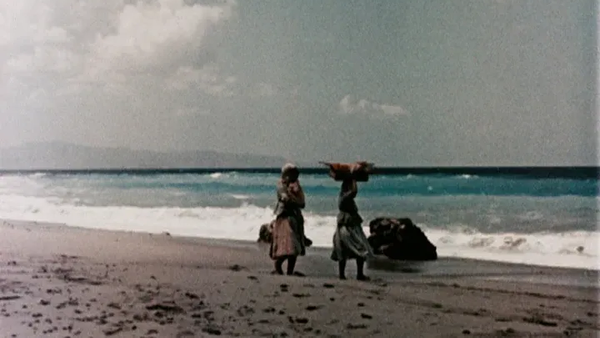
Shoegaze pop, eleven years on: short songs facing a coast that isn't there.


A minute and nine seconds is enough to open an album, if the bass does the walking.
"Faraway" is all bass pacing a room while Liz Harris sings downward into an echo. The drums come in out of courtesy, and the song is gone before anyone can ask it to explain itself.
Eleven years separate this from The Original Faces, and the trio is the same: Harris on guitar and voice, Scott Simmons on bass, Jed Bindeman at the kit. Simmons lays down bass lines that seem to know where the songs are going before the guitar does. Harris lets her chords spread around them, sometimes leaving the voice barely distinguishable from the sound of the strings. Bindeman keeps the drums close and unhurried. Even when the guitars grow thick with reverb, the three instruments remain oddly easy to follow.
The songs keep to about two minutes, give or take a second: "Starline" 2:00, "endless Sky" 2:02, the title track 1:59. Guitars are stacked into the reverb until the chords almost lose their shape, the voice sits inside the wash, and the rhythm section holds a plain pulse so that nothing drifts off entirely. Then "darkblue" arrives at 5:57, twice the length of anything around it, and the shorter songs start to look like sketches for it. "black and quiet love" lets the fingerpicking come forward, which is as near as the album gets to Harris's solo records.
Everyone will check New Zealand first, the Flying Nun end of the dial, and the address is not wrong. I would shelve it somewhere further off. Fishmans' Long Season (Tokyo, 1996) is a single piece of thirty-five minutes in which a pop song is allowed to melt into dub and air; Helen work at a fraction of that scale and share the habit of stopping a song just short of landing. Tenniscoats sing in Japanese at the volume of people who have not noticed the microphone, and the same small-room manner turns up here beside a very large reverb. I cannot document an influence from either, only a recurrence: songs made small enough for a kitchen, sung toward something enormous and out of sight.
The two "Dead shark" songs move from loose acoustic strumming into something faster and more abrasive, a kind of acoustic pop-punk. By the time "Canyon" arrives, the bass has settled into a repeating figure beneath the overlapping voices, and the arrangement gradually thins into a long, low electronic hum.
I kept going back to the first minute and nine seconds, the bass still pacing when the song runs out.