Geology Disco :: Where God Came Never
Experimental folk, field recordings, ritual textures and Staffordshire landscape

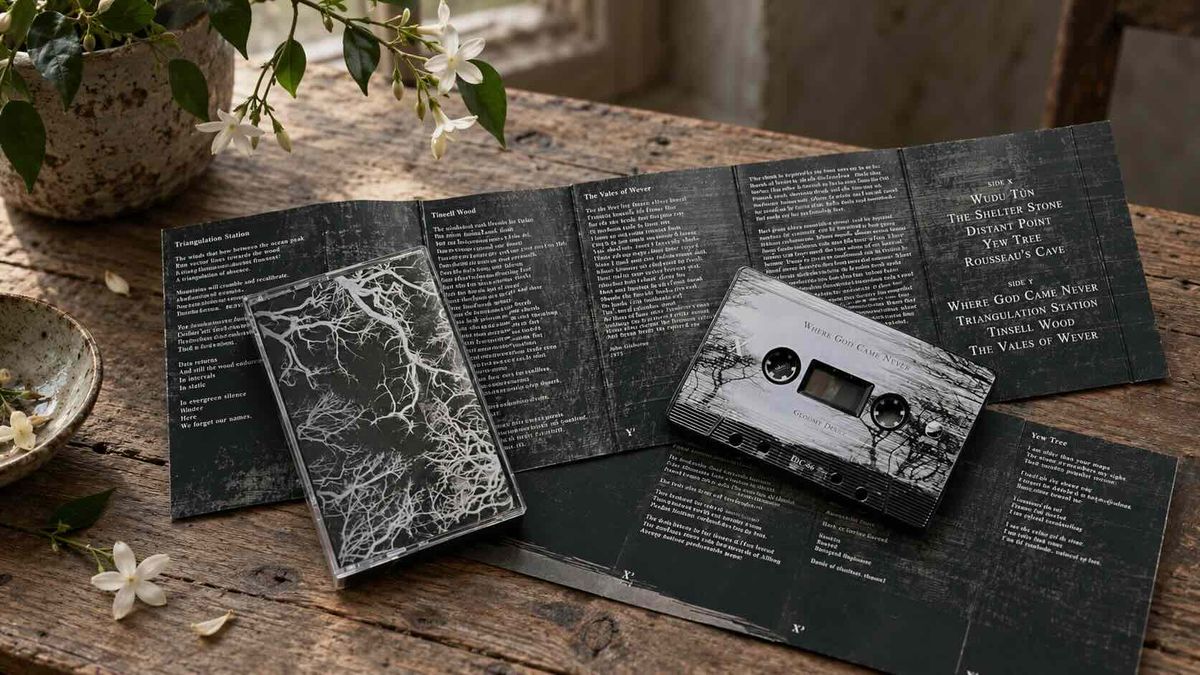
Wootton does not need to be invented. It is already strange enough: a village beneath the Weaver Hills, an old couplet that says “where God came never”, a cave associated with Rousseau, a yew that seems to outlive everyone who ever gave it a name.
Where God Came Never, Geology Disco’s debut, was released on 31 July 2026 by Dustopian Frequencies and was written, played, produced and mastered by Matthew Green, with additional production and mastering by Robert Shaw. The record grows out of the places of Green’s childhood around Wootton, Staffordshire, and uses harmonium, accordion, winds, guitar, percussion, electronics and field recordings. The cassette, issued in forty copies, contains shortened versions of the tracks: an almost perfect detail for an album that treats landscape as something to cross, compress, misremember.
“Wudu Tūn” opens in a language reconstructing Old English in ceremonial form; “The Shelter Stone” piles up Beltane, runes, dog-stars, May Queen and a pagan England so heavily loaded that it comes close to costume. This is one of the record’s risks. Green works better when he lets Wootton stay concrete and slightly wrong, rather than turning it into folk-horror scenery.
When folklore is named too clearly, the mystery begins to leave.
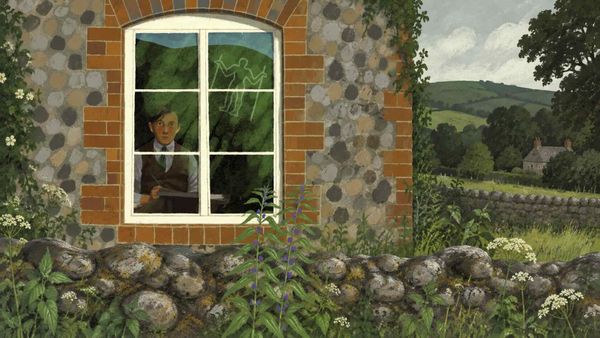
“Rousseau’s Cave” is the strangest point. Rousseau really did live at Wootton from March 1766 to May 1767, working on the Confessions; Green reduces that episode to isolation, cold, snow, a provisional hermitage. The acoustic guitar advances with an almost ceremonial gravity, sometimes percussive, then suddenly more open and pastoral; flutes, harmonium and percussion do not build the ritual, they blur it. They seem to describe the landscape, leaving the ground itself — more than any declared symbolism — to carry the unease.
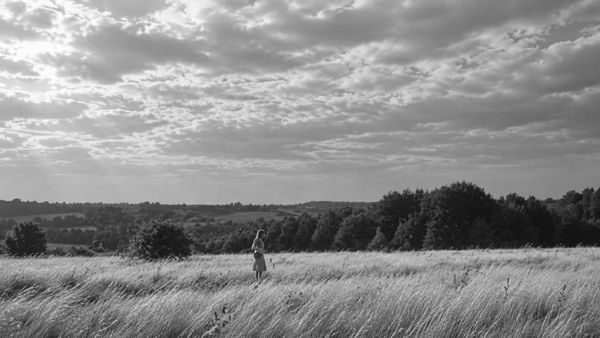
The title track runs past ten minutes and is where the record becomes least interested in explaining itself. Birdsong, wind, woodland and electronics stop behaving like atmosphere and begin to occupy the same space. Before long a drone takes control and uses its full density, as though the place were keeping something you will eventually have to notice. Then a crooked ritual orchestra takes possession of it, difficult to decipher: heard closely, it sounds like Walt Disney cracked from within, with small acoustic recesses opening in the surface and letting something still wild show through, almost indifferent to the ritual constructed around it.
“Triangulation Station” is harsher, almost meteorological: the acoustic guitar gives way to divergent events, little episodes of almost theatrical place music, then returns as though nothing had happened. “Tinsell Wood”, instead, works on cold, removing warmth while making the landscape sharper; it may be the most cinematic moment on the record, if the word can be made to fit it at all.
The closing “The Vales of Wever” uses a text by John Gisborne from 1797: a memory of the place that predates the recording by more than two centuries. Across its twelve minutes the piece moves slowly, until the conditions of the air themselves begin to change; the landscape seems to become more remote, and for a few moments even medieval.
“Rousseau’s Cave”
Acoustic guitar, flute and harmonium leave the historical episode suspended between hermitage and landscape.
“Where God Came Never”
Birdsong, woodland, drone and electronics occupy the same space until the landscape begins to resist interpretation.
“The Vales of Wever”
John Gisborne’s 1797 text carries Wootton backwards through two centuries without turning it into reconstruction.
Where God Came Never is strongest when its materials are allowed to remain slightly out of alignment. Old instruments, field recordings, local texts and electronics do not reconstruct an older Wootton; they allow several versions of the place to occupy the same ground at once. Green is far more convincing when the folklore is simply there — embedded in the sound, the language and the local memory, difficult to separate from the present.