D. Rothon :: Angel Pavements
Hauntological folk, pedal steel, working-class London and forgotten novels

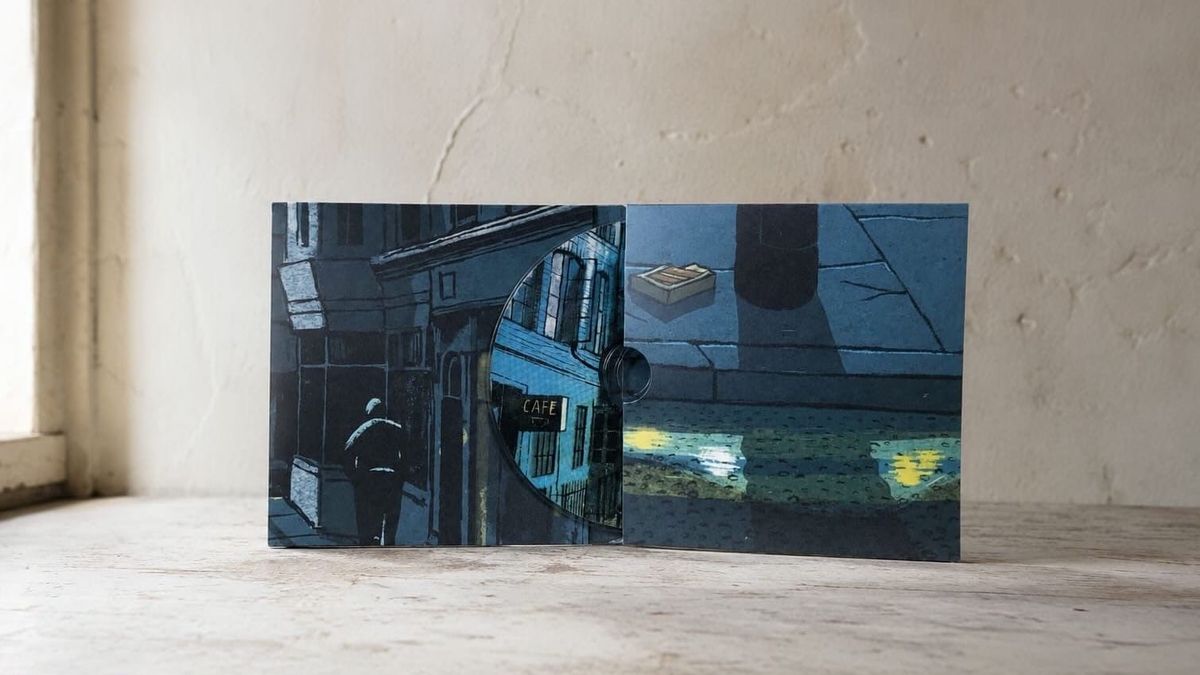
Angel Pavements is an EP of just eighteen minutes, released in 2026, and yet it opens with an unlooked-for graft: Clay Pipe Music, a label raised on hedgerows, state-issued radioactive afternoons and BBC serials, lets the road from Nashville in through its own front door.
D. Rothon's pedal steel sounds like metal that has taken on brine for years in the wrong harbour: technique beyond reproach, a tone that never turns postcard-pretty, and every note still gives back the pavement of London. A melodica-like line walks beside it like a voice breathing within an odd quartet of piano, bass and drums: the rural American South lends Soho its own accent, and does so with startling naturalness — apparently a combination Clay Pipe had never attempted before in a decade of releases.
"In the Racket Too" opens the record by declaring its method outright: stories picked up at the bar, told with the confidence of someone who has already heard them told by somebody else, maybe twice, maybe worse the second time. It is the English proletarian novel — Curtis, Hamilton — finding in the pedal steel a foreign accent that is credible, and surprisingly natural.
Rather than drawing on the futures English hauntology has so often imagined, Rothon fishes from a British proletarian novel, Curtis found by chance in a secondhand shop — still readable today only thanks to small revival presses — then hunted down book by book. Hamilton, chased alongside him, had a kinder fate: rehabilitated by NYRB Classics, brought to television in 2005 with Sally Hawkins in the cast. Not every ghost stays buried to the same degree, yet the record treats them the same regardless: here the ghost is not a missed tomorrow, it is an already archived today, canonised or not, and that difference is what shapes the listening.
On "Plains of Cement" the piano marks out the stairs of a nighttime apartment block: someone is coming home from a shift that has devoured the whole day, and the piano follows that footstep like a stern schoolmistress, note after note, with the obstinate patience of someone who has repeated the same gesture for years. An unlikely memory surfaces here: the scoring written for RAI's television drama serials, soundtracks that were already telling the story before the picture ever arrived.
Making a single day of working-class exhaustion feel epic is an enormous ambition dressed up as a small one.
"Her Own Shadow on the Wall" holds its breath for almost four minutes — livid synths, brass, a delayed bass — then a noise throws the door open to drums and bass, and the space expands: from back alleys to open squares, right up to the exact point where running means losing your own shadow.
Closing the record is "London Lights the Clouds Up," a liturgical synth opening onto a solo melody that seems to have issued from the night unarmed. In synthesisers so translucent they owe a debt to the seventies, London arranges itself in strata — earth, houses, spires, sky — like a geological core drawn up in a single motion, with every era still attached to it.
Piano turns a single working day into something almost epic, with the severity and narrative function of incidental music for an old television serial.
Translucent synthesisers stack London into strata of earth, houses, spires and sky, leaving every period still attached to the one beneath it.
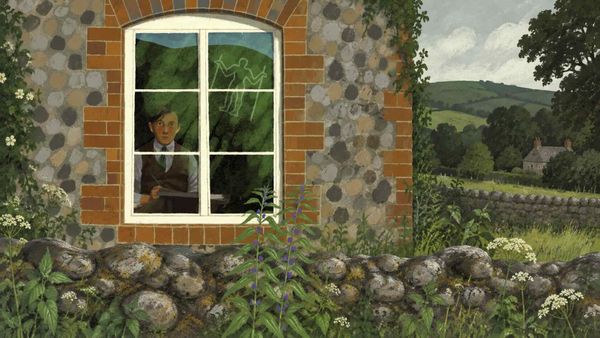
The risk with a record built on novels almost nobody reads anymore was the bibliophile's fetish. Rothon avoids it by playing those novels rather than citing them, with an instrument born elsewhere that, on this record, puts down roots. One last question remains, unasked by the press release: the title credits only Curtis and Hamilton, but Angel Pavement is also — since 1930, under J.B. Priestley's name — one of the great London novels of economic precarity, set in a small import office on the eve of the Great Depression. No source confirms it; for now, it remains only a hypothesis, but the coincidence is too precise to let fall into a footnote. Whatever the answer, it is Frances Castle, once again, who illustrates these same streets.
Editorial note
"sonorizzazioni per gli sceneggiati Rai" refers to the incidental music written for Italian state-television drama serials, mostly from the 1970s — a functional and aesthetic equivalent of English library music (KPM, De Wolfe): music written to accompany serialised storytelling, often more memorable than the stories themselves.