Cajupitanga :: Ubā (2019-2024)
Ambient folk, field recordings, acoustic guitar and rural memory

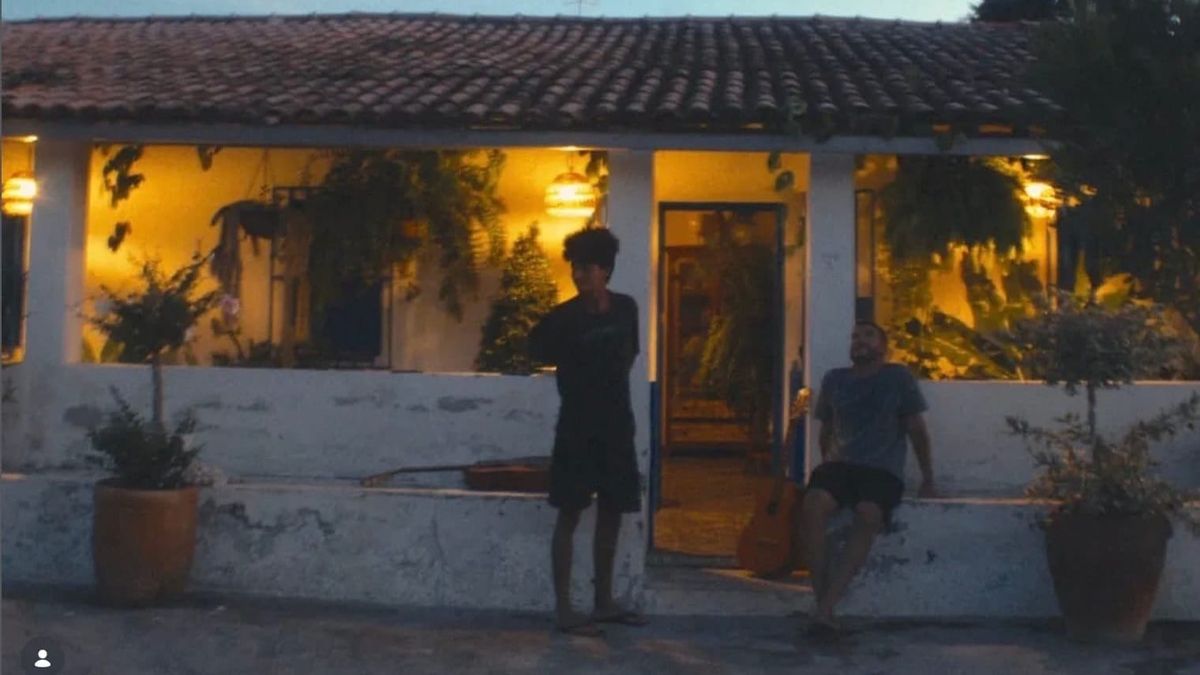
In August a fog rises from the streets of Vitória da Conquista, erasing the corners, bleaching the oxen white.
It's their fifth album, and also, paradoxically, the oldest, an EP imagined in 2021 and then left to age. cajupitanga call it Ubá, the great canoe, the vessel in which the memories of a project now more than half a decade old float together. But the word that truly counts is another: ghost. For years Ubá was an absent presence, the mirror each new work went to look at itself in. It existed before existing, dictating contours and directions while remaining without a body. Now that it has one, we find sediment where we expected a beginning: eighteen images, nearly all of them a minute or two long, home and field recordings hand-stitched into a tapestry of ideas that had always run through the duo without ever taking finished form.
And here lies the method, which is the most surprising thing about the record. Ubá raises atmospheres with care, then cracks them from within, every stillness carrying its own interruption already inscribed. "Lida" and "Quermesse" are two phrases of acoustic guitar that evaporate the instant the ear recognises them — like a name that vanishes as you say it. In "As coberta" the humming and the guitar move along, interlaced, for thirty seconds or so, until a coarse frequency severs them all at once: a crack running across the plaster of the white summer, and for a moment you are elsewhere. It isn't an accident, it's the rule. The record lives on opposing forces, on detours, on pieces thrown off course by incursions that contradict their air.
Even when it allows itself form, it allows it only to belie it. "Payaso que mira" disguises itself as a Brazilian standard, wearing the brass and the song-form like a suit found in an old trunk. And it's precisely the excess of completeness that gives it away as a mask. "Sobrado", by contrast, is a classical guitar walking at low-tide pace, slow and melancholic, while the sea stays at the bottom like a breath. "Sete Bicos" gathers everything you'd expect from ambient folk, but its calm is only apparent. Where the form should be, only the empty cast remains, the one it has just been pulled from. And "Enterro" sets a scarred voice stumbling against a guitar of untouched pastoral grace — the burial of the title is this friction between what is spoiled and what has stayed pure. Even "Bailarim", toward the end, is an organ filtering the drama through a membrane, drop by drop.
The record lives on opposing forces, on detours, on pieces thrown off course by incursions that contradict their air.
The album's thesis is not musical. It is perceptual. It's the longing for a place you never truly lived in, turned inside out. Here the place was lived in, and thoroughly, but memory has rewritten it until it's out of reach. And as in that vein of daytime, agrarian hauntology where the past resurfaces in full light instead of in the dark, Ubá summons no nocturnal ghosts: its fog is the seven-in-the-morning kind, its haunting made of oxen and dust and a canoe that carries you back to a home — a home, in their own words, entirely invented, old and new.