Andrej Tarkovskij :: The Mirror
Soviet cinema, memory, family, landscape and a house rebuilt from childhood


The wooden house in Yuryevets had been gone for decades, nothing left of it but a depression in the ground where the foundation once sat.
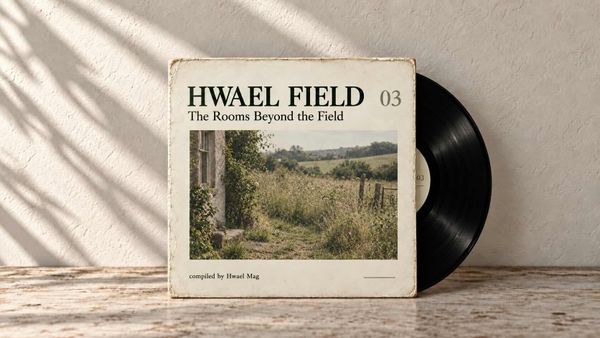
Andrei Tarkovsky had it rebuilt there, on that same hollow, from photographs and as close to memory as a construction crew could manage, and had the field beside it resown with buckwheat because that was what had grown there when he was a boy. Then he brought his own mother to see it. Tarkovsky later recalled that she was deeply shaken by the sight of the reconstructed house, and that her reaction convinced him they had found the right emotional ground for the film.
That gesture is the whole of Mirror in miniature, so it is worth starting there rather than with the plot, which resists being started with anyway. A dying man remembers, or half-remembers, his mother and his wife, played by the same actress so that the two women blur on purpose; his own childhood war years; his father's absence; newsreel footage of Sivash, of Spanish refugees, of a stratospheric balloon, spliced in as though memory kept its own archive next to the personal one. Chronology gives up early and does not come back. The film asks to be entered the way memory actually works, not the way stories are usually told.
Goskino chief Filipp Ermash rejected the completed film in July 1974 as incomprehensible. By the autumn, however, Mirror had been approved without cuts. Its Soviet release remained severely restricted: few prints, little promotion, screenings beginning in Moscow in spring 1975. The state did not ban the film so much as give it as little room as possible. Yet reports from the period describe full houses where it did appear.
There is a story from an early discussion after a screening that says more about the film's supposed difficulty than many later essays. Critics had been arguing at length over what the film meant when a cleaning woman, waiting to clear the room, intervened. She had seen it too. To her the structure was simple: a sick man fears death, remembers the pain he has caused and wants forgiveness. Tarkovsky repeated the anecdote approvingly. Its survival makes sense. The difficulty was never necessarily where the critics kept looking for it.
The father the whole film aches around, mostly absent from the frame, is present nonetheless in a way fiction cannot fake: the voice reciting poetry over several of its most exposed passages belongs to Arseny Tarkovsky, the director's actual father, a major poet in his own right, reading his own work. A film about a father's absence carries the father's real voice inside itself.
A film about a father's absence carries, inside itself, the father's real voice.
That detail matters because Mirror keeps allowing documentary material and reconstruction to occupy the same emotional register. Newsreel, remembered interiors, family bodies, an actor playing the mother in youth and Tarkovsky's actual mother appearing in old age: none is given automatic authority over the others. The reconstructed dacha may be a set, but it stands on the place where the original had stood. The buckwheat was planted because memory insisted upon it. Tarkovsky's realism is sometimes closest to fabrication when the fabrication has been forced to answer to something remembered exactly.
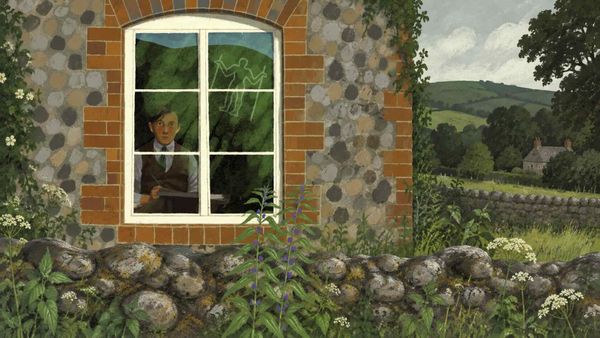
This is why the house matters more than any attempt to decode the film scene by scene. Its boards are replacements. The crop has been planted again. The mother has aged. Yet the place is neither replica nor symbol in any simple sense. It is a piece of memory given weight, weather and distance.
A childhood home reconstructed on the place where it had stood, with memory treated almost as an architectural specification.
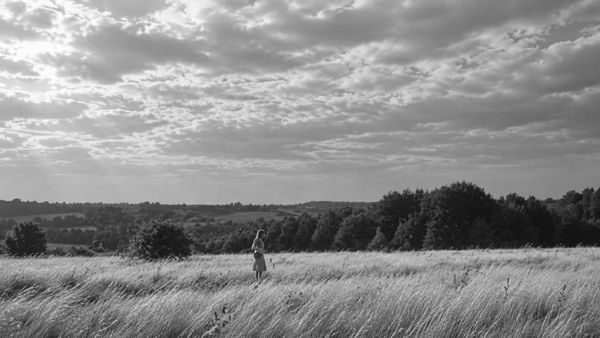
The crop is planted again because Tarkovsky remembered its white flowers there; landscape is made to repeat one private detail.
Arseny Tarkovsky reads his own poems over a film structured around paternal absence, placing documentary presence inside remembered loss.
None of the film's difficulty required solving in the end. A mother stood in front of a house that no longer existed, in a field that had been made to remember its own crop, and nothing about her face needed subtitles.