Agnieszka Holland: The Secret Garden
Gothic children’s drama about grief and a walled garden in Yorkshire.

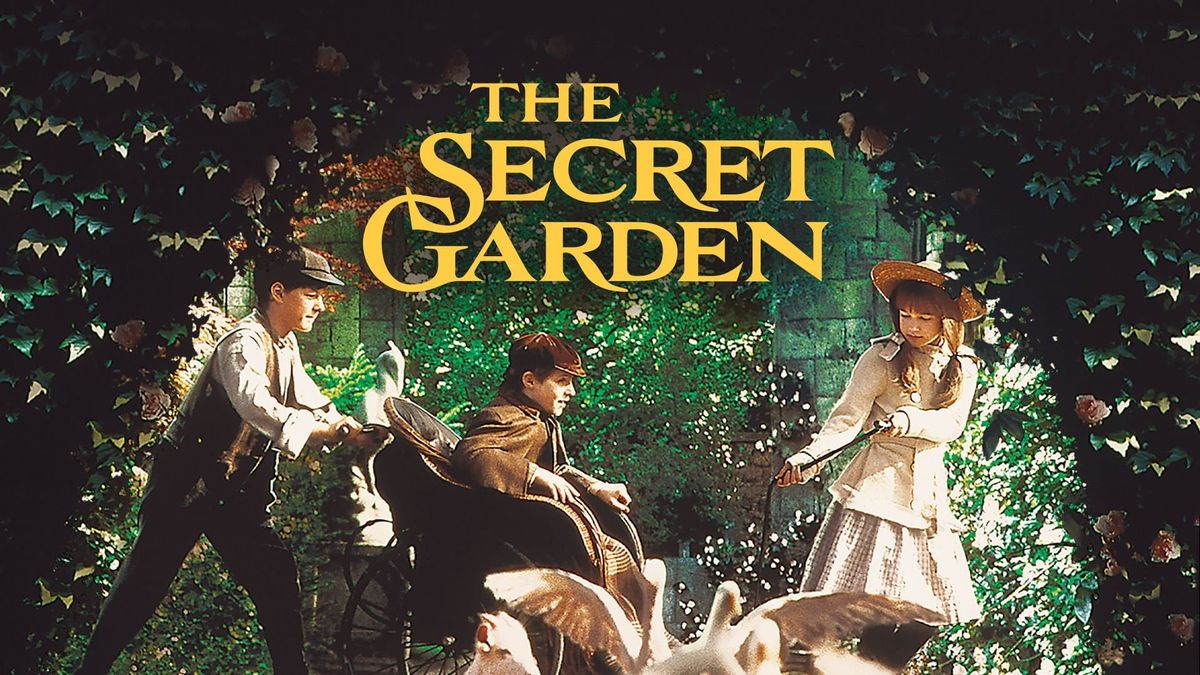
In 1993 Warner Bros. was expecting a family film with a garden in bloom. Zbigniew Preisner had written his score in a minor key, and he was asked to rewrite it in a major one, to sweeten it.
Agnieszka Holland remembers the production as miserable: the studio pictured something out of Disney, and she was making a darker film. The Secret Garden, written by Caroline Thompson, produced by American Zoetrope with Francis Ford Coppola as executive producer and released in the United States on 13 August 1993, shows the join. Grief rules the house, and the sweetness the studio wanted ends up at the margins.
It opens in India, with an earthquake that takes Mary Lennox’s parents. Burnett used cholera, a quiet death that empties the house and leaves the child forgotten in a room; the earthquake makes a spectacle of the loss and gives up that forgetting. Mary is ten, and Kate Maberly gives her the tight mouth of a child nobody has ever held and the hauteur of a little memsahib. Maberly plays the nastiness without apology, a rare thing in a child actor, and Holland keeps her unlikeable long enough for the thaw to cost something. At Misselthwaite, in Yorkshire, the house borrows the façades of Allerton Castle and Fountains Hall and the grand staircase of the former Midland Grand Hotel at St Pancras, and Roger Deakins keeps the corridors in a sacristy half-light. Maggie Smith’s Mrs Medlock wears her ring of keys at the belt. The first half-hour is pure Gothic, with its locked doors, a child’s crying that carries through the walls at night, and adults who look in only to say no.
Holland came to it from Europa Europa and Olivier, Olivier, films about children exposed to a world that does not shelter them, and here she keeps the camera at Mary’s height, inside her resentment. Her best stroke, though, is a piece of casting. Irène Jacob, whom Krzysztof Kieślowski had split in two in The Double Life of Véronique in 1991, and to a Preisner score at that, plays Mary’s mother and also Lilias Craven, the dead aunt whose garden it was. In the film they are twins; in Burnett, Lilias was the father’s sister and no blood relation of the mother. The mother who never looked at Mary thus comes back as the woman whose death locked away a whole world, and Mary, digging, puts together a face she has lost once and another she never knew.
Colin (Heydon Prowse), the bedridden cousin convinced he is dying, is sick above all with his father’s fear. John Lynch plays Lord Craven as a man who travels so as not to be where his wife died, and the pale boy kept in the dark upstairs is the form that grief has taken in the house. Dickon (Andrew Knott) comes in from the moor with his crow and a body used to rain, something nobody at Misselthwaite can claim. The film, though, keeps his mother off screen, the Mrs Sowerby whose common sense the whole moor leans on in the novel, and with her goes most of the home behind him.
Stuart Craig had the garden built at Pinewood with tens of thousands of plants in hidden pots, many of which had to be replaced every evening once the day’s shooting had trampled them. The film hides that labour and shows effort elsewhere, in the children’s black fingernails, in the spade breaking up the frozen ground clod by clod. The fairy tale still creeps back in: one night the three children chant a spell around a fire to call Lord Craven home, and Holland leaves the awkwardness in plain view.
The same compromise returns in the ending, where the studio gets its due. Craven finds his son on his feet, and the reconciliations all arrive within a few minutes, with unseemly haste. Mary, left outside the embrace, cries for the first time, and Holland’s restraint keeps one child beyond the happy ending just long enough for it to count. That unresolved join is the film’s achievement, and a smoother one would have lost it.
The first Russian translation of the novel I can trace dates from 1992, and the film gave the book a face almost at once: some who watched it as children, on an unlabelled videotape, spent years looking for it, convinced they had dreamt it.
Over the end credits Linda Ronstadt sings “Winter Light”, which she and Eric Kaz fashioned from two of Preisner’s themes: the sweetness the studio was after finds its voice once the film is over. Years later Holland caught the film again on a plane, on someone else’s screen, and by the last scene she was in tears. She had become, she says, just another viewer.