Yoal :: Gloaming
Ambient folk, chamber textures, spoken word and transnational distance

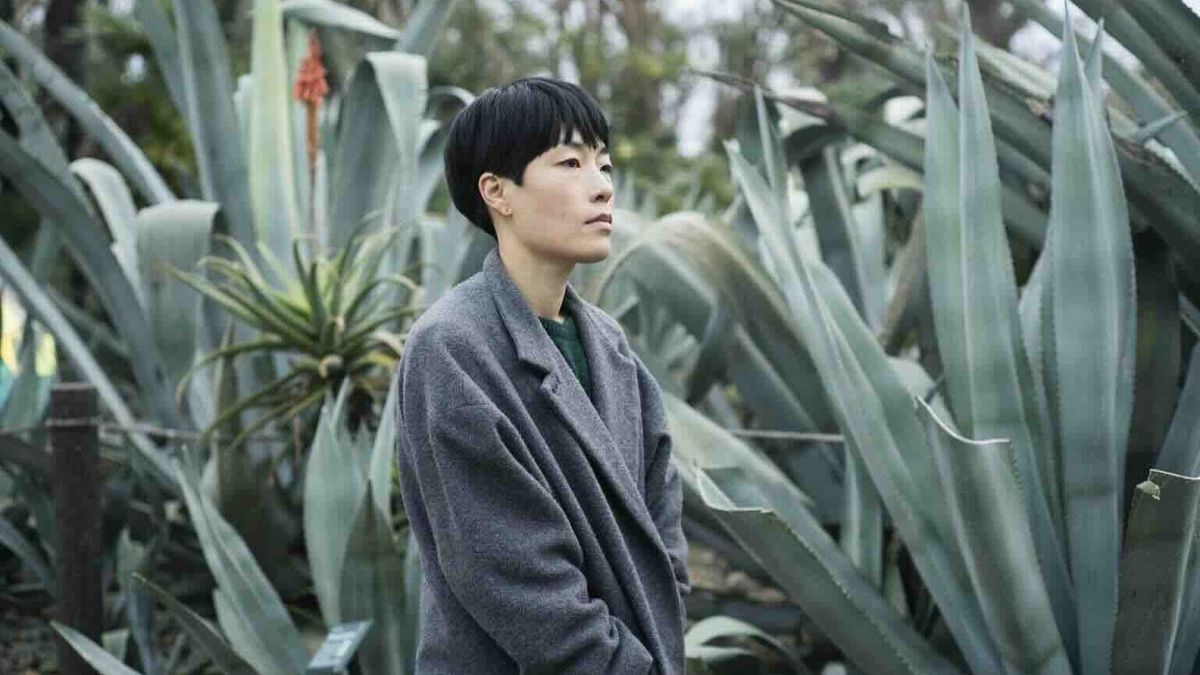
With Gloaming, Yoal moves through intimate, rarefied folk-ambient country, turning twilight into a space where acoustic arrangement and ambient texture drift with an almost weightless delicacy.
Yoal took shape through a long-distance exchange between the Scottish musician Euan Alexander Millar-McMeeken and the Japanese artist Satomimagae. It began when Euan invited Satomi to reinterpret a Glacis piece for Interpretations — a minimal gesture that widened into a slow, almost diaristic correspondence, and it was from that correspondence that Gloaming eventually surfaced. More than a collaboration, the album is built around the idea of distance: not as separation, but as fertile ground, a space in which two languages and two landscapes can reshape one another without either dissolving. British tradition and Japanese imagery pass continuously through each other inside the same sonic flow.
"Tori" opens the record like a slow litany, close to certain intuitions in Grouper — a single chord seems to hold the whole piece up while the voice, layered in reverb, thins into the surrounding space. Around it gather tiny synthetic figures with an almost childlike quality, small fragments clustering like luminous cells until they form an organism in constant mutation. "The Sea of Gold" then reduces the language to essentials: piano and Satomimagae's voice advance with a delicacy that keeps refusing to break, and a deeply elegiac register rises through them. When the guitar enters it does so cautiously, careful not to fracture the silence the piece has built, guiding the listener toward Euan's spoken-word passage — the album's first moment that genuinely takes the breath.
A chamber thread runs beneath much of the record. "The Sun's White Wind" drifts around Euan's voice while the piano traces sparse lines and Peter Hollo's cello expands the composition toward near-neoclassical territory; the occasional acoustic guitar surfaces as if from deteriorated tape, a dusty patina at the edge of contemporary tape-ambient. The same instinct returns in "Kizashi," where a string timbre close to Japanese tradition rises under subtle electronic interferences, and in "Imagine What Her Eyes Have Seen," which advances on cello, piano and double bass like a slow, gently crooked march, poised between chamber elegance and sedimented melancholy.
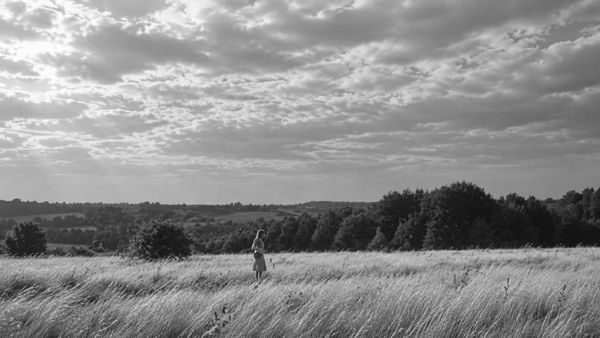
The emotional centre is "Actias Aliena." It approaches the shape of a traditional song through Satomimagae's sensibility — circular fingerpicking unfolding with the ease of an everyday gesture — until the piano opens the chorus into a current that blurs the piece's contours. In the accompanying video the melodies seem lifted from old home movies: faded colours, childhood games, wind through fields, running by the sea, improvised dances in the countryside. It is a longing for memories we may never have lived, a form of anemoia turned into images already vanishing as we watch them.
It is a longing for memories we may never have lived, a form of anemoia turned into images already vanishing as we watch them.
Elsewhere the voice itself becomes the instrument of dislocation. "I'll Give You the Sun" opens over a granular-synthesis texture, the vocal moving with inflections that recall the most ethereal register of Elizabeth Fraser, pulling the track loose from fixed time before the piano and Euan's spoken word draw it toward an early-twentieth-century chamber feel; two very different sections end up completing each other, like two readings of one memory. "Miles Apart, Seconds Away" strips everything back to a handful of piano notes and the frail dialogue of the two voices, becoming the sonic double of the album's cover — the heron mirrored in water, a presence suspended between two worlds, unable to belong fully to either.
Midway the record darkens. "Drifting Like a Leaf into the Flames" circles an impassive piano while the two voices barely touch and synthetic interferences and drones begin to corrode the surrounding quiet; "I'm Still Hollow" pushes further into restless, near-cinematic tension, one of the album's most intense stretches; and "Creeping" answers it with a piano marking time in a playful lightness already shadowed by melancholy, folding less than two minutes into a small adolescent suspension.
The last movement consoles. "Ohayo" returns to Satomimagae's Japanese sensibility, its light melodies carrying the listener through a nearly consoling tenderness after the long emotional passage, sounds chasing one another through soft, worn layers. "Tulips" closes the record where it comes nearest to Japanese tradition reinterpreted through ambient means — folk surviving here not as a recognisable instrumental form but as a way of relating sounds to one another — and ends with Euan and Satomimagae joining their voices for the album's final seconds. The distance the two of them started from is still audible in that meeting; it has not been erased so much as made habitable, dissolved into a single breath.