Western Skies Motel :: Trails
Ambient folk, fingerstyle guitar, post-rock tension and imagined Americana

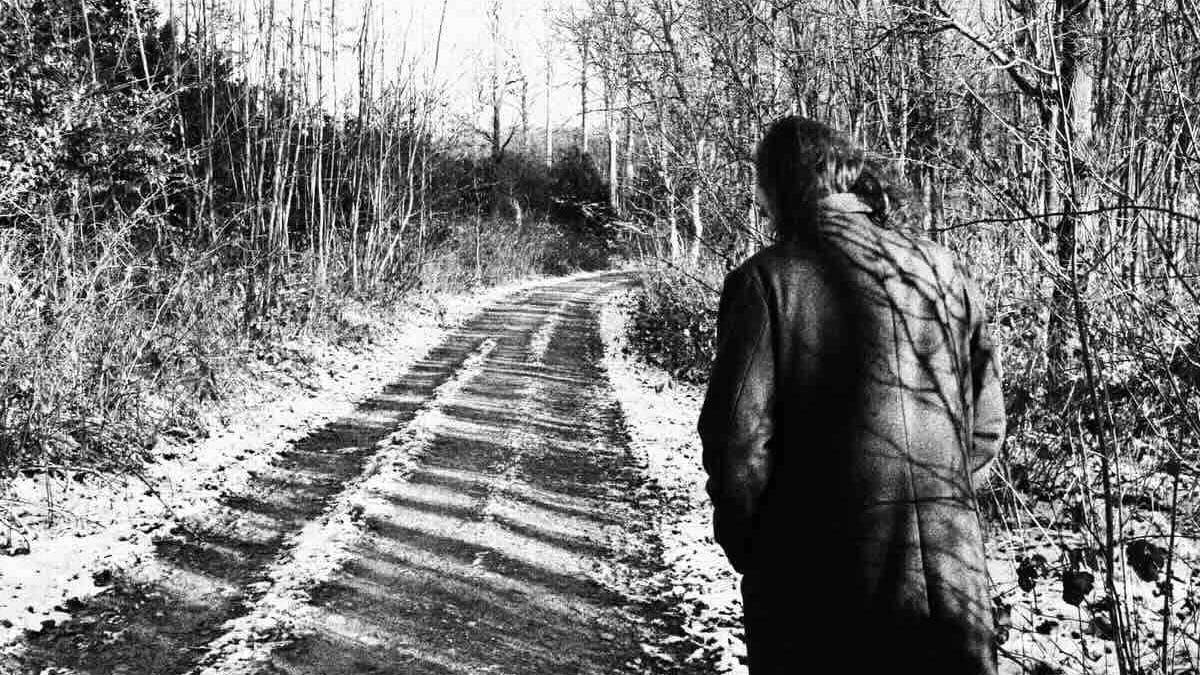
Between instrumental folk, ambient texture and the slow-burning tension of post-rock, Trailsturns the myth of the American journey into something quieter — a long meditation moving through dust, distance and fading light.
Here is the detail that reframes everything: Western Skies Motel is the solo project of René Gonzalez Schelbeck, a Dane, and Trails — his fourth album, and first for The Point of Departure Recording Company — was assembled not in Arizona but in a Copenhagen studio, the one Jakob Høyer shares with Trentemøller. The American West of these tracks is a West imagined from the North, approached as an imaginary landscape rather than a travelogue. That distance is the record's real subject: its deserts arrive through inherited images and old musical vocabularies, closer to anemoia — nostalgia for a place one has never been — than to documentary travel.
Nearly a decade separates Trails from Settlers (2016), and the silence shows. Where Settlers still carried open horizons and the pull of discovery, Trails is weathered and turned inward, as though the myth had aged in storage. "Road" opens with sparse acoustic figures and an almost ritual slowness, every note measured against distance; from there the hypnotic circular fingerpicking that once defined Schelbeck's writing keeps giving way to slower, more spacious forms. A few pieces ("Caravan", "Fragment") send up brief signals from the earlier landscape, remnants resurfacing years later, while "Lullaby" and "Fountain" hold a fragile pastoral warmth before the light goes.
"Nightfall" and "All Is Gone" drift outward instead of forward, unfolding through atmosphere rather than momentum — the record's clearest gesture, the exchange of motion for space.
The materials stay minimal — acoustic and electric guitars, warm drones, faint tape textures, traces of piano — and even when Høyer's drums and a low bass enter on "Stranded" and "All Is Gone" the pace never breaks. Everything stays suspended in a heat that was, in fact, engineered under Danish rain. The desert imagery narrows and darkens as it goes, reaching its lowest point in "Black Desert", where Høyer's heavy drums and a Morricone-shadowed guitar conjure a survival-western at dusk. Then "Coda" closes the album like a tape wearing out into silence — the imagined West decaying on the very medium that carried it.
By the end, Trails feels like an American West remembered at several removes: films, photographs, records, old guitar vocabularies, all carried north and reconstructed under Danish weather. Schelbeck never needs to convince us that he has arrived there. The distance is what gives the record its melancholy. The road remains somewhere inside other people's pictures, close enough to desire and too far away to mistake for experience.