Shearwater :: The New World
Art rock, field recordings, ecology and the friction of global assembly

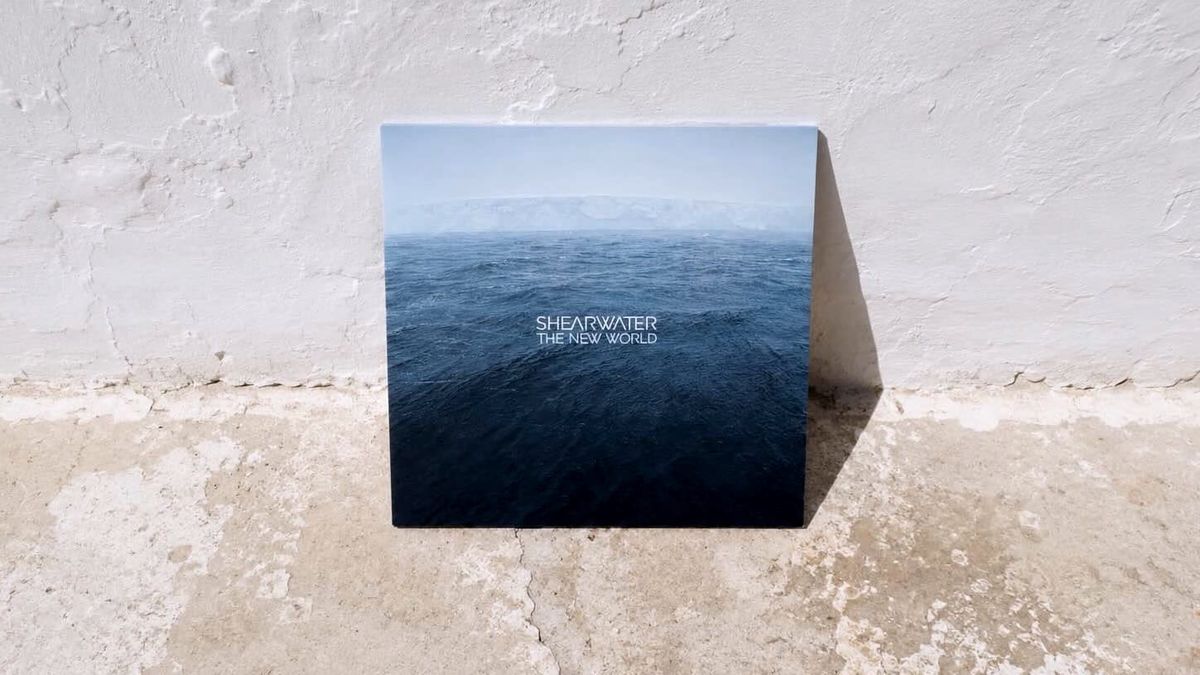
The New World arrives already burdened by its title. The phrase came ashore with charts, instruments and men convinced that seeing something gave them the right to rename it.
Jonathan Meiburg understands the abrasion contained in those words. Part of the record reaches back towards Yuquot, on Nootka Island, where European sailors encountered Indigenous communities of the Pacific Northwest; elsewhere the title belongs firmly to the present: ecological damage, war, digital accumulation, the old appetite for possession in newer clothes.
The album took four years and several addresses to complete: a rammed-earth house outside Austin, Figure 8 in Brooklyn, Leo Abrahams’s studio in London, then Danny Reisch’s final mix in Los Angeles. It has not concealed the travel particularly well. Good. Earlier decisions keep showing through the later ones.
“Even Song” opens with muted impacts, phantom voices and small noises whose origins are difficult to place. A taut guitar figure carries Meiburg’s falsetto while the percussion refuses a regular footing.
“More and More” is more porous. Firas Zreik’s qanun makes short, bright incisions across the longer guitar and vocal phrases, while field recordings introduce another geography altogether: bells and blackbirds from Berlin, bees and birds from Yuquot. Rain, agriculture, extinction and appetite pass through the lyric without being arranged into an ecological sermon. The rhythm remains almost graceful.
That contradiction suits Shearwater. Ruin rarely prevents them from making something beautiful out of it.
Sometimes too beautiful.
“Daydream Unbeliever” begins with a piano that seems unable to decide where to place its weight. Around that hesitation, the band builds something increasingly ceremonial: bass and drums raise the pressure, strings enlarge the proportions, until the initial uncertainty assumes something close to the posture of a dance. This is where Shearwater’s skill begins to become suspicious. Nothing is allowed to pass without consequence. Every detail already seems to know the effect it is meant to produce.
Shearwater are more interesting when a little dirt remains under the nail.
“A Mink in the Dusk” does exactly that. Members of Ngoni Ba enter with bass ngoni, calabash, tamma and yabara; the percussion continually shifts the point of emphasis while plucked strings rub against piano, guitar and woodwinds. These instruments have not been imported to certify the album’s cosmopolitanism. They interfere with the song’s existing grammar.
Otherwise field recording becomes taxidermy.
“The Only Sound I’m Afraid Of” moves closer to the ground. Tongue drum and congas establish a series of cautious footholds rather than a regular rhythm; guitar and piano seem to move through the intervals left open between them. Behind this, the calls of Tasmanian forest ravens remain audible. They do not illustrate the landscape or provide atmosphere. They simply continue to exist while the song attempts to organise itself around them.
Meiburg’s field recordings often retain the limitations of the machines that captured them: phones, portable recorders, mono blur, clipped distance, environmental debris. Inside such an expensive production they behave like paper scraps pasted onto varnish.
“The High Ranges” begins with the piano circling a figure just unstable enough to make repetition feel provisional. The percussion nudges rather than drives it. Then two saxophones arrive: Doug Wieselman brings decades of experience to one, while fourteen-year-old Henry Lettre, recording his first take, brings almost none to the other. Peter Lettre’s double bass gives them darker ground. There is no need to turn the pairing into a parable of innocence and experience. You can simply hear that the two instruments contain different amounts of lived time.
“Slugs in the Marigolds” quickens without ever becoming truly light. The baritone guitar keeps something earthy beneath the more agile pace, while woodwinds appear almost incidentally. More interesting is the contraction of scale: after oceans, extinctions and continents, there are wet leaves and something that has eaten the marigolds. Ecology immediately loses some of its nobility when damage is measured in a flower bed.
“Anamnesia” removes almost all of that movement. Memory deteriorates within a family by increments: recognition fails, routes disappear, ordinary knowledge is lost one piece at a time. Beneath the song sits an especially prosaic fragment of environmental sound, the hum of an airport baggage carousel. Few images of memory could be less picturesque. That is precisely why it works.
“More and More”
Qanun crosses the longer guitar and vocal phrases while bells and blackbirds from Berlin, bees and birds from Yuquot enter the recording.
“A Mink in the Dusk”
Bass ngoni, calabash, tamma and yabara shift the point of emphasis while plucked strings rub against piano, guitar and woodwinds.
“Anamnesia”
Family memory deteriorates by increments over the prosaic hum of an airport baggage carousel.
Then somebody else takes possession of the record.
Meiburg sent “You and Your Dog” to Laurie Anderson after abandoning his own attempt to sing it; two of her readings were braided into a single performance. Piano and clarinet leave broad areas unoccupied around her voice. Later, a hurdy-gurdy enters, its mechanism dry enough to resist sentimentality. Anderson describes a journey to a beach and a friendship that, as she speaks, is already being converted into memory.
The long fade continues after the human story has finished speaking. Coyotes recorded in Los Angeles begin to call. It may be the album’s most truthful moment.
The New World is lavishly made, at times lavish enough to become suspicious of its own accidents. At its weakest, the craftsmanship begins admiring itself. At its best, something refuses the polish: Ngoni Ba disturbing an existing rhythm, an adolescent saxophonist beside a veteran, a cheap recording left cheap, ravens remaining outside the studio, Anderson declining the expected emotional temperature.
The title therefore acquires a second difficulty. Shearwater have assembled sounds from places whose histories cannot become interchangeable simply because they now occupy the same recording. A qanun does not become American because it enters an American song. Yuquot does not become ambience when its birds are raised in the mix.
That desire produces some of the record’s beauty and almost all of its excess. What keeps The New World alive is whatever remains awkward after the assembly is complete. Something local. Something badly recorded. Something outside, waiting for the humans to stop.