Portland Vows :: Cuckoo
Ambient electronica, rural calendars and damaged seasonal memory
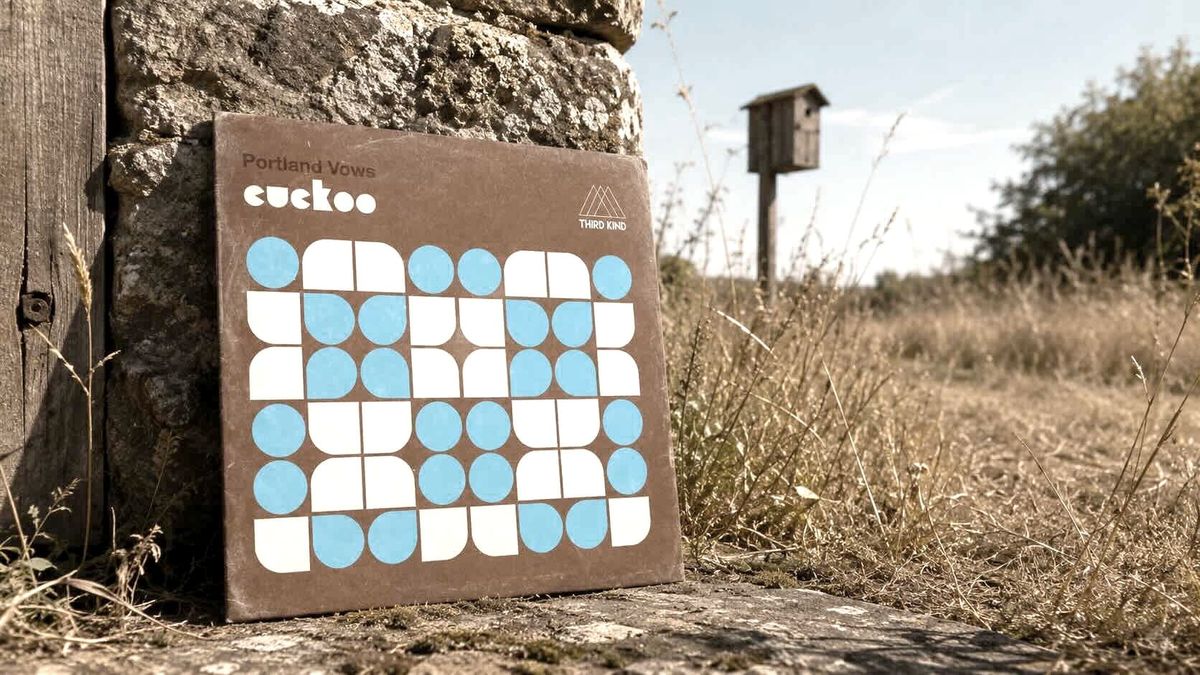
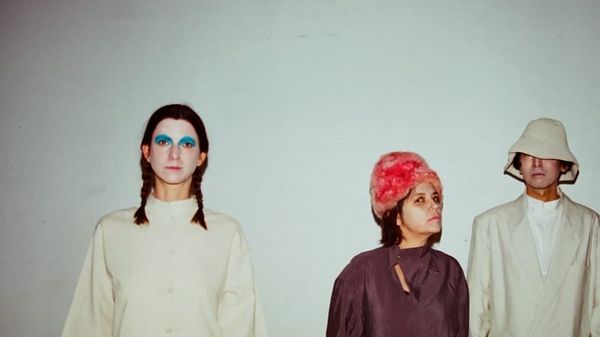
Portland Vows began in the Midlands and is now based in Scotland, releasing music since 2016 and working with Third Kind Records since 2020.
Issued on 17 July 2026, Cuckoo follows 2023's Plastic Alice and The Witches of Hopwas Woods, drawing the same electronic language into a darker part of the year, where renewal remains possible without ever becoming a promise.
The tracks move slowly, with no dominant pulse beneath them: unstable pads, notes held a little past comfort, harmonies kept half-veiled, minute timbral events appearing at the edge of perception. Portland Vows imagines a seasonal music made after the calendar that once gave the seasons their meaning has fallen out of use — what remains is the first cuckoo, the state of a hedgerow, the arrival of blossom, forms of temporal knowledge now stripped of their almanac.
This was local knowledge, practical and rarely written down, preserved through the repetition of attention: a call crossing a field, rain beginning on stone, the altered weight of evening air. Cuckoo enters that diminished territory knowing the old coherence cannot be recovered.
Its synthesisers resemble instruments prepared for an observance whose rite has been forgotten.
“Here Is Where It Starts” opens with a spring figure that retains something of the cuckoo's measured interval. A coarser drone soon occupies the surrounding frequencies, until the call persists only as a small reverberant trace. Spring announces itself over a landscape already under pressure. Its return offers no particular mercy.
On “Remains”, a synthesiser with the colour of tuned percussion sets down a simple loop while less obedient shapes gather beneath it: muted brass, processed shadow, contours slowly hardening. The music seems to find a chamber ready to receive memory, though what enters belongs only partly to us. This is one reason the record escapes the exhausted vocabulary of hauntology: its past survives in the spaces where such sounds may once have been heard, rather than arriving catalogued through recognisable equipment or period detail — a back room, an unheated hall, a radio left low while other work went on. The memory is domestic, but the object that held it has disappeared.
“Impossible Strangers” carries Tangerine Dream in its blood, but the sequencer pulse that once drove those records forward arrives here already split at the seams — segments of a fruit pulled apart before they were ready, still fused at the core. A pattern gathers toward the old Berlin-school momentum and then stutters, drops mid-phrase; the glitches aren't damage to be repaired, they behave like weather.
The title track passes through a calendar whose divisions are becoming difficult to read. Voice, imitated birdsong and onomatopoeia briefly occupy the same acoustic shelter. The cuckoo's call was once counted, interpreted and folded into rural forecasting, a date borne through the air rather than printed on paper.
“From What Tomorrow” opens on piano notes that fall the way condensation falls off a leaf before the sun has fully decided to rise — not a performance of morning but morning itself, caught mid-occurrence rather than staged for the listener. Across the record Portland Vows has managed something harder than depicting nature: the tracks don't describe a landscape from outside it, they behave the way a living system behaves, indifferent to being watched, continuing whether or not anyone is there to receive it. Here that quality reaches its clearest statement.
“This Was The Boy” may be the record's most convincing piece of electronic vernacular. The synthesiser assumes something like a compass function, its needle passing over fields, roads and repeated labour, like fragments of common knowledge surviving the community that once kept them in circulation. Human voices lie low in the mix, carrying the weight of testimony without yielding a transcription. Above them, a melodic drone works through small figures inside a close lattice of sound. The track hardly moves in the conventional sense; what sustains it are changes of pressure within the material — a frequency thickening, a voice briefly exposed, a tone shifting its place in the field. From the road, cultivated ground can appear motionless. Under the surface, roots divide, damp moves through the soil, insects continue their obscure labour.
A spring figure retains something of the cuckoo’s measured interval while a coarser drone gradually leaves the call as a small reverberant trace.
A Berlin-school sequencer gathers momentum, then stutters and drops mid-phrase; the glitches behave less like damage than weather.
Voices, melodic drone and small shifts of pressure make the track feel almost motionless while its internal field remains continuously active.
“December” closes the record by climbing gradually towards a distant ridge. Piano chords arrive with their attacks softened by reverberation and slow oscillation, each one seeming to have crossed open ground before reaching the listener. Delayed sound gathers around them like pale weather.
“Hauntological classicism” is useful here only when returned to ordinary perception: an old harmonic language heard through air, damp and distance, altered by the shape of the land through which it travels. The piano remains beyond reach. December provides the interval.
Portland Vows has made a record for those prepared to remain beside a modest phrase until its surroundings begin to disclose themselves. Its ruralism resides in recurrence, attenuation and the slow alteration of tonal climate. The countryside is approached here as a damaged system of attention, still carrying signs whose uses have been mislaid, rather than as a scene of pastoral completeness.
Cuckoo resembles a rural calendar left for years in an unheated building. Its divisions remain visible; a few feast days can still be deciphered. Rain has entered along the fold and taken several names with it. Beyond the wall, the bird continues to call at its appointed hour, though fewer people now know what appointment it is keeping.