Ichiko Aoba :: 15th Anniversary Concert
Ambient folk, fingerstyle guitar, live acoustics and shared stillness
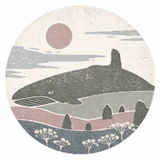

15th Anniversary Concert documents the fifteenth anniversary of Ichiko Aoba's artistic journey through a performance that intertwines folk music and finely detailed soundscapes.
Aoba does the one thing hardest to engineer on a large stage: she creates proximity. Not the spectacular kind that big performances chase, but a smaller, tangible presence that seems to take shape directly in the listener's hands. The live album captures the complete main set performed on 20 January 2025 at Tokyo Opera City Concert Hall, retracing her path from the earliest songs to the most recent.
Fifteen years in, that path has become wholly recognizable. Her guitar technique stays almost invisible beneath the ease of the gesture, while her voice occupies the room with a disarming grace. Rather than reaching for spectacle, the concert keeps redirecting attention toward listening, stillness and a plain human vulnerability.
The performance changes shape with the arrival of Anmi Yamada — a decisive figure in Aoba's formation — who steps onto the stage and opens new harmonic directions, making "Amatsubu" one of the most deeply human moments of the evening. The evening does more than mark an anniversary; it makes a fifteen-year continuity audible, as if the concert were guiding Aoba back toward the place where her music first took form.
"Realm of the Heart" opens like a quiet entrance into the immense space of the hall, where voice and guitar turn the venue's acoustics intimate almost at once. With "Fuwalin" the set finds an almost circular form: delicate harmonic movement, weightless arpeggios, a voice that follows the breathing of the guitar until the line between instrumental gesture and human presence can no longer be drawn.
Anmi Yamada's solo performance of "Sirius" becomes water, stars, landscape — the sense of a world being built, the music constructing complete imaginary environments rather than describing feelings. "Space Orphans," dedicated to those who carry a persistent sense of distance and disorientation, takes on a cathartic charge live; for a few minutes that distance stops being a private wound and becomes something shared.
Performed live, the compositions shed their original chronology and settle into the same emotional present — existing, it seems, only for that evening, only for that room.
Even across songs written at very different points in her career, the concert holds a remarkable cohesion.
The calm Aoba conjures spreads through the whole theatre. Her voice is elegiac: the top of her register has the transparency of illuminated glass, while the lowest notes scarcely read as a human voice at all, closer to a breeze carrying petals through the air. Around them the small, literal textures of her music — birdsong, the rasp of dry grass, the tick of shell chimes — seem to move on the current of that voice.
What the record leaves behind is the memory of a rare thing: an entire hall holding a single, shared attention — and an artist who asks for nothing louder than that.