Hiraeth :: Kasteiung
Dark ambient, ritual noise, religious doubt and penitential landscapes

Kasteiung denotes mortification, ascetic discipline, privation embraced as a path towards purification.
Sarah Košicki carries the word into a personal conflict: raised in a conservative family, she says she practises no religion, though she cannot quite deny the presence of something beyond herself.
Kasteiung moves between pastoral space and devotional ruin, where water, voice and noise keep changing the conditions under which the music can be heard.
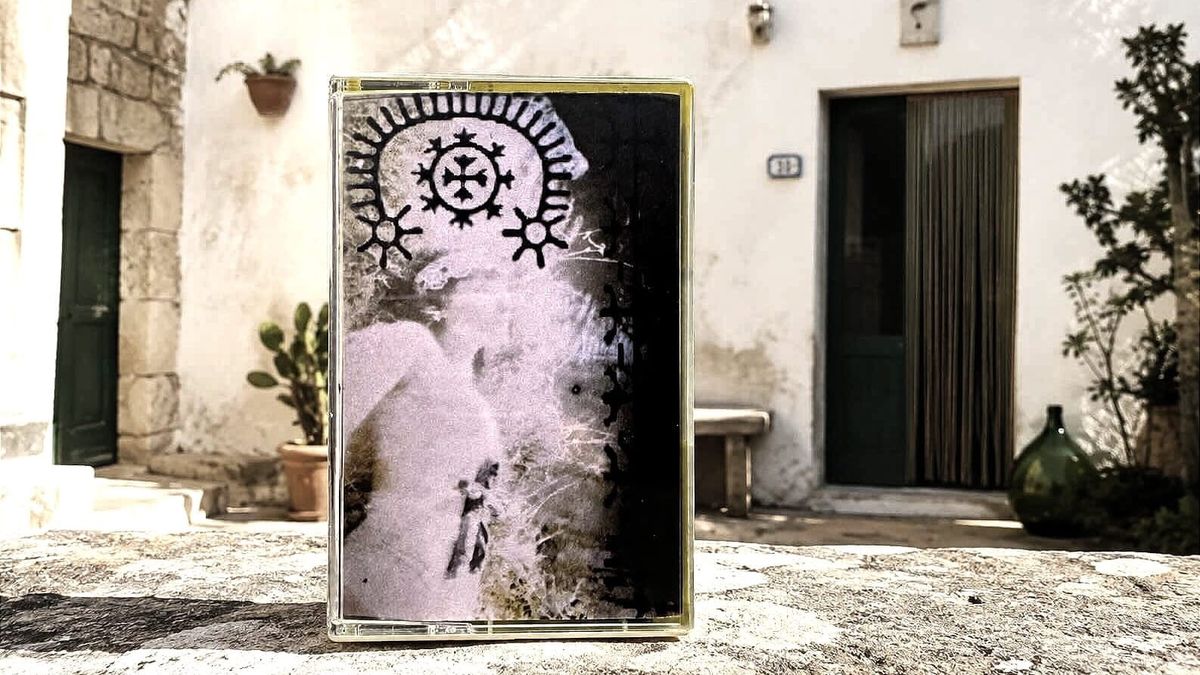
Released on 11 June 2026, with its physical edition issued by Venalism, the album takes shape within that fissure. The cover itself seems like the music's photographic negative: it removes any recognisable period, leaving a pale body inside vegetation that has almost turned liquid.
"Kazna" opens with an unaccompanied voice, pushed into the distance by reverberation that seems to issue from an abandoned nave. The acoustic space strips the singing of ceremony and leaves it as an artefact. When the synthesisers emerge, reality loses substance, and Kasteiung begins to move like countryside crossed in a fever, recognisable in its details, uncertain in its distances.
In "Wasser im Atrium", water enters first as a domestic presence, then gains ground until the architecture of the piece comes under pressure. Liturgical chant is stretched into a drone, as though prayer had lost its words and retained only its breath, while a synthetic current rises beneath it, slowly altering its contour. Once the water seems to have submerged everything, another layer of noise descends, dense enough to cover even its flow, and the voice tries to surface again, broken and intermittent. The atrium in the title ceases to be a space built by human hands. It becomes a flooded cavity where nature acts with indifference, erasing the boundary between rite, body and ruin.
Anton Stammsen's zither introduces "Satan Panonski" with a melody resembling a folkloric warning misremembered in transmission, deformed by time yet still able to draw the listener closer. A pagan ritual gathers around that summons: percussion searches the space through the muted thud of skins and the cold resonance of metal, while the voice proceeds through invocations. A dark dance takes shape on a night-time threshing floor, turning in a circle that leads nowhere but deeper into the rite. Repetition offers no reassurance here. It works as a lure, until the piece assumes the form of a ceremony without witnesses, surviving long after the meaning that once justified it has disappeared.
"Vrag i Isus" keeps the voice as its centre of gravity, but strips it of any shelter: it moves among insects, revolving distortion and remnants of prayer, never rising above the soundscape, staying exposed within it, vulnerable to every element that might corrode its outline.
"Bauch und Baustelle" drives the album towards collapse. Its walls of noise expose the cost of the delicacy that came before.
Drones, organ, zither, violin and recordings of running water compose a pastoral stripped of innocence. Nature itself seems to have absorbed a penitential discipline: it flows, germinates and decays, granting no absolution.
The landscape offers no shelter.
An unaccompanied voice recedes into reverberation before synthesisers dissolve the stability of the surrounding acoustic space.
Water, liturgical chant and accumulating noise gradually place the architecture of the piece under pressure until voice and flow become difficult to separate.
Zither, percussion and repeated invocations gather into a ritual whose repetition works as a lure rather than reassurance.
The duration allows the pieces to deform from within. Some passages flirt with self-satisfaction in their own opacity; across its fifteen minutes, "Wasser im Atrium" briefly threatens to lose its way. Even so, Kasteiung retains a rare necessity. Suffering remains refractory matter, something Košicki moves through without asking it to be redeemed.