Hana Stretton :: tiarn
Ambient folk, field recordings, communal voices & absorbed memory
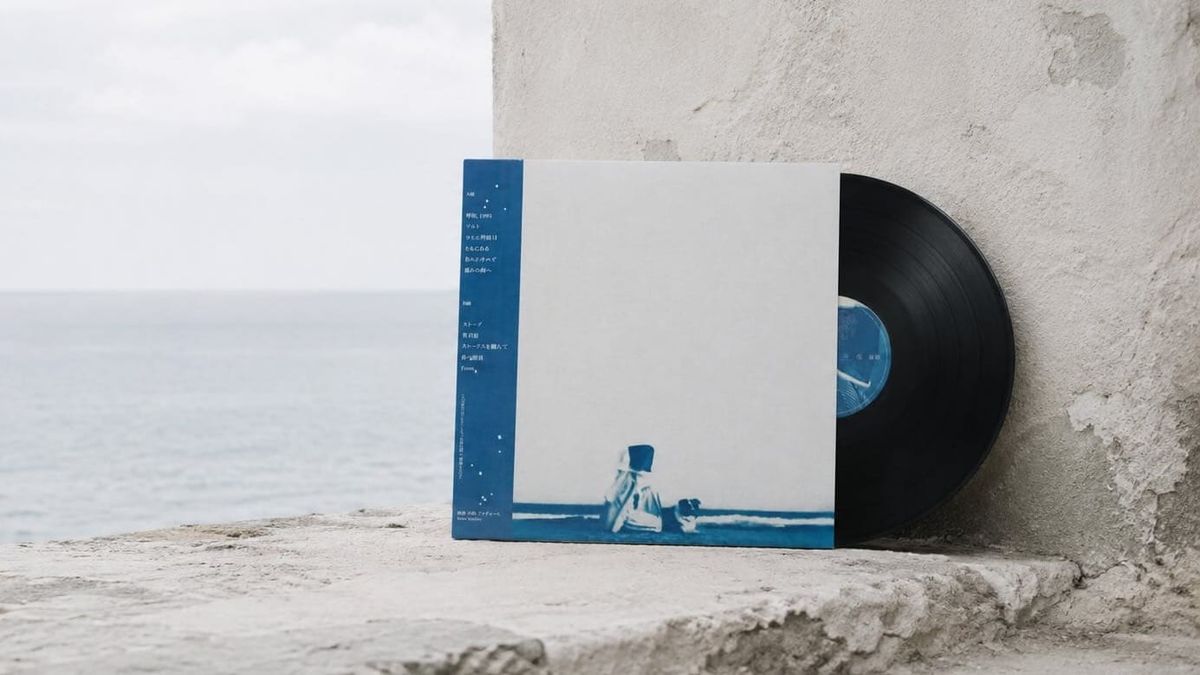
With tiarn, Hana Stretton returns to recording largely on her own, this time in Lake Tabourie, on the New South Wales coast.
The place can be heard, though it is never openly described: birds, air, domestic sounds, harmonium, guitar and voice often arrive on the same plane, without any clear hierarchy between what Stretton plays and what happens around her. It is a music made of small presences, recorded closely enough to retain their imperfections. The album was self-recorded while Stretton was living in the small coastal town, near the ocean.
The songs are there, but sometimes you have to wait for them to emerge from what surrounds them.
“Nojiri 1993” opens the album by making this principle immediately clear. The harmonium holds a few notes, recordings of birds remain open in the background, then those operatic voices arrive, too large and too distant to truly belong to the same space. For a few minutes it is unclear what is music and what has simply remained inside the recording. The album begins to take shape from this confusion, rather than from any real introduction. The operatic voice is Teresa Duddy; Stretton asked her to improvise and later selected the fragments she wanted to use.
In “Salt”, the voice finds an almost motionless position, as though it had finally located the point where human presence and the surrounding world can touch without becoming confused with one another. Around it, sounds divide and repeat in small forms, while the singing seems to entrust itself to a physical memory.
In “Seagull Theory II”, the brushed percussion suggests footsteps on the ground. Above it gather voices that move from an almost gospel register towards older, harder-to-place forms of communal singing, carrying into the piece a memory of rural orality, of circumstances in which song, place and daily life could still inhabit the same gesture. Stretton does not attempt to reconstruct such a continuity. What remains is the sense of its distance from us.
In “As It Was Before This”, Forest Creek Folk enters, a local choir of sixty people, bringing a collective, almost village-like presence, which until then the album had only allowed us to glimpse. Beneath them, the guitar preserves a simple movement, old enough in feeling, and for a few minutes tiarn draws close to music understood as a common practice. Forest Creek Folk is indeed the regional sixty-person choir Stretton later joined.
“Stove” has something of the physical presence of an old family home movie: children crossing the frame too far away to be recognised with certainty, the slight doubt that those figures might belong to one’s own childhood or to someone else’s. The operatic voices that surface in the piece complicate any easy nostalgia. They arrive like music caught from a radio left on elsewhere, or from a television broadcast half-heard during childhood, when certain sounds entered memory without ever having been chosen. This is where “Stove” acquires its strangest quality: it does not recall a precise episode, but the way memory can absorb anonymous fragments of sound — themes, arias, voices, stray noises — until they become indistinguishable from one’s own biography.
“Night Swimming” is perhaps the moment in which Hana Stretton comes closest to the recognisable form of a song, without ever fully surrendering to it. The guitar moves through diaphanous chords while synthesizers, woodwinds, small organic noises and traces of brass enter the sound field for only a few seconds at a time.
Other voices surface intermittently, difficult to place, like fragments of a vernacular tradition that have travelled this far without enough documentation to reconstruct their genealogy. Stretton does not turn them into relics. She lets them pass.
Harmonium, birds and distant operatic voices make it difficult to tell what is music and what has simply remained inside the recording.
Children, operatic voices and stray noises accumulate like fragments absorbed into memory without ever becoming a precise episode.
Guitar carries the nearest thing here to a recognisable song while other instruments enter the sound field only briefly.
This may be tiarn’s rarest talent: understanding how little time a sound needs before it becomes part of us.