Connie Converse :: How Sad, How Lovely
Folk recorded in two rooms: the singer-songwriter already had listeners.

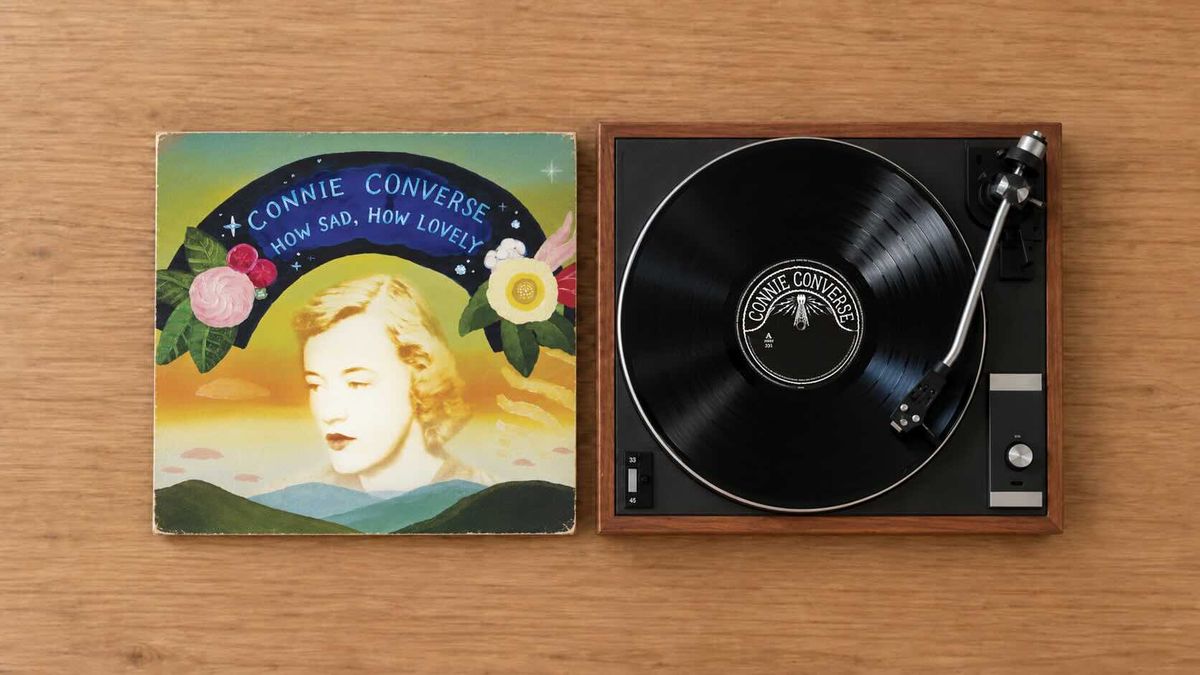
In August 1956 Elizabeth Converse signed the cover of an album recorded for her brother: “With love and modest pride”. Fifty-three years later, the first record released under her name would be presented as the discovery of a voice nobody had heard.
From 1950 to 1955 Converse would record a song in her Greenwich Village apartment and post it to Phil, her younger brother, and his wife. About three dozen songs for voice and guitar, which in 1956 she gathered into two volumes, Musicks, for the same recipients. Before there was a label there was already a sequence, a format, an audience of two and a delivery schedule.
How Sad, How Lovely took a different route to release. In 2004 Gene Deitch, animator and recording enthusiast, played “One by One” on the radio. Dan Dzula and David Herman traced the tapes, kept for half a century in two separate places, and in March 2009 released seventeen tracks on Lau Derette. The story that came with the record had been ready for years: a woman whose music was considered uncommercial, who drove off in August 1974 in a Volkswagen Beetle and was never found. On 27 March this year the Third Man edition came out.
Played again now, the record contains two rooms. Some of the songs come from the tapes Converse made on her own; the others Deitch recorded at his house outside the city, at the gatherings his family hosted. On Deitch’s tapes there are scraps of talk between songs, a murmur in the room, a song begun in the wrong key and started again. On the other tapes the room has gone. She is alone with a machine she runs herself, singing for whoever will play the reel.
The point where the record’s documentary nature shows most clearly is its shortest track. “Unknown (A Little Louder, Love)” lasts little more than half a minute: a fragment from Deitch’s tapes, listed without a title of its own and followed by a phrase in brackets. The sequence places it just before “One by One”, and for a moment you hear the room before the song.
Taken this way, the songs stop sounding like private confessions never meant to reach anyone. “Roving Woman” borrows the chord changes of familiar standards to tell of a woman walked home by strangers, and it ends with the narrator glad to have been “saved from cards and drink”, a joke that assumes somebody is there to laugh. “Father Neptune” moves with a shanty’s lilt, a tune made to be taken up in chorus, sung here by a single voice that stays ashore. The wife likes to know that when he goes below, it is only below deck. In her mouth, the sailors’ tune lets the woman on shore keep time with the absent man. The intimacy comes from the precision of the address.
That carefully assembled sequence smooths over a difference the record itself documents. Nothing in the running order marks the move from one room to the other, and thirty-seven minutes pass as a single evening in a single place. Subsequent editions have added more recordings; the Third Man reissue includes a remix of “Playboy of the Western World”.
In 2009 the record ended on “Trouble”, with the question of where to find another soul to tell her troubles to, and then the tape stopped. On the cover of Musicks the signature was Elizabeth Converse. The name she had taken in New York was Connie.