Bow and Arrow :: Bow and Arrow
Devotional folk and electronics: repetition has to earn every return.

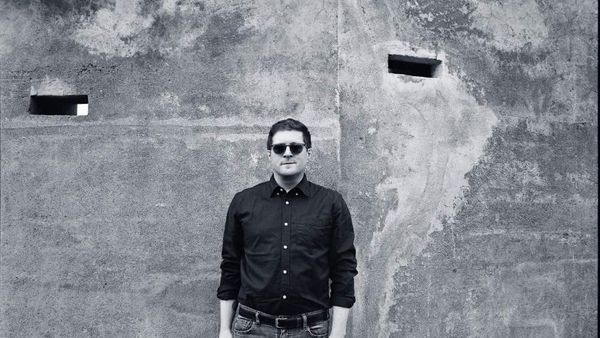
In 2017 Lea Bertucci was playing alto saxophone inside a grain silo in Buffalo. With Bow and Arrow, her duo with Michael Beharie, questions of space become questions of composition too: how long to let a sound ring, when to break off, where to begin again.
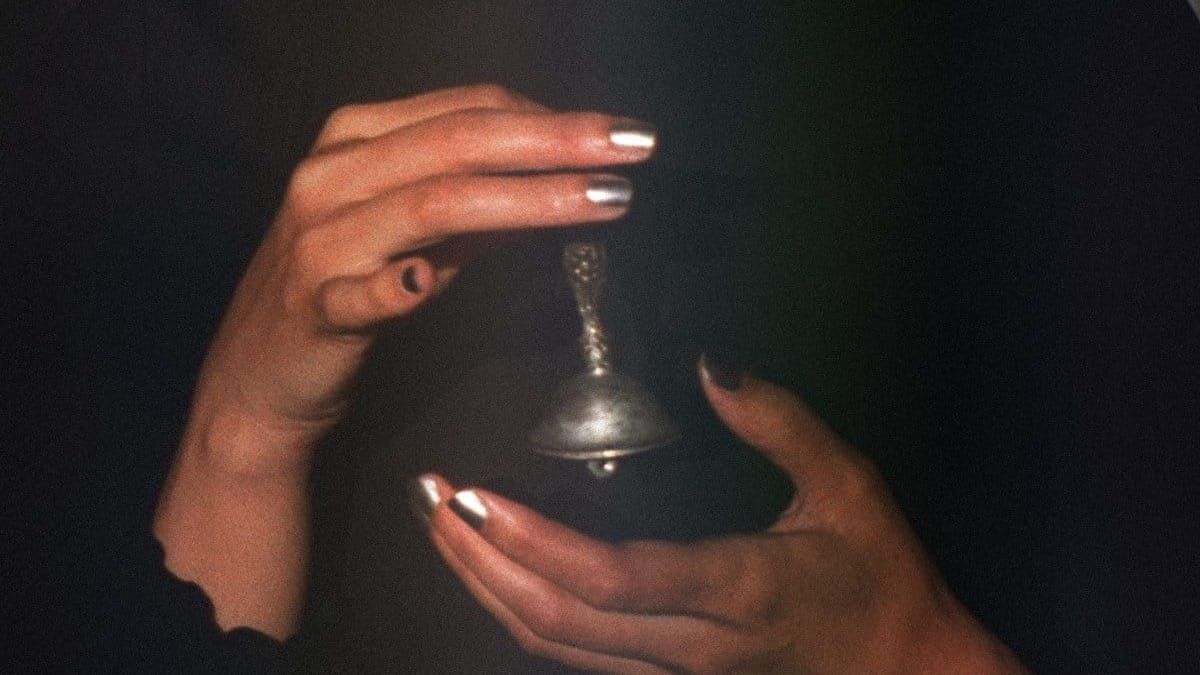
Bertucci has long treated buildings as instruments: rooms to be set vibrating, resonances to be followed, recordings later reassembled. Resonant Field, released on NNA Tapes in 2019, grew out of the Marine A Grain Elevator at Silo City, a space with twelve seconds of natural decay. That earlier work offers a way into Bow and Arrow, a record built from voice, bells and electronics that openly calls on devotional music.
A liturgy organises other people’s time. It settles when to enter, how long to wait, which words to repeat; it lets you know the next gesture in advance without making that gesture redundant. To carry those forms into a record is to remove them from their setting and hand them to someone who can stop at any moment. Repetition has to find, each time, a reason to go on.
The vinyl sequence makes the question concrete. Six tracks, some thirty-four minutes. “Lux” opens the first side in under two minutes, then “Gem” and “Last Wish” take almost ten each. Most of the time is handed over at once to two pieces. On the second side, “His Knees Are Rocks” comes before “Regina” and “Coco”: three shorter spans, a different way of spending attention.
It is a telling imbalance. The record asks for patience at the start, when the listener still knows little of its language; in the second half it changes surroundings more often. Turning the record over imposes a pause just after the longest stretch. On vinyl you have to make a gesture to carry on, and that brief interruption belongs to the experience as much as the recorded minutes do.
“Gem” opens on a rural landscape built from flute and classical guitar. A wavering close to the wow and flutter of tape is handled almost as an instrument in its own right: the unsteady pitch enters the writing of the piece and carries a sense of contact with the land, of the intimacy a person can find there. From this pastoral core the piece soon moves into a magical, ethereal register, and then a darker one, the register of ancient rites and of what reaches us from far back, deep and at times obscure. Hisses appear, voices that keep withdrawing and return to take the centre without finding rest, held in the bonds of devotion. The two voices become the heart of the piece, scattered into hollows and fragments, and the whole arrives at something psychedelic and ritual, an experience pagan in conception. The short version at the end of the digital edition cuts the length, not the form.
“Last Wish” is another ten-minute piece and takes up the structure of the one before it, in a less forbidding shape: at moments it gathers itself into a song, so much so that the digital edition adds a three-minute version, sung slightly differently. I’ll admit to the pleasure of it, and for long stretches I lose track of time. Beyond words, that is what counts in any art.
“Regina” is the closest thing here to liturgical chant proper, its voices frayed as though by corroded tape, which seems to have kept part of the material for itself and gives back what might never have come through in live performance: deformations, spectral sounds, voices with a human body overlaid by others that have less and less of one.
“Lux”, “His Knees Are Rocks” and “Coco” act as joints: the first opens, the second is an interlude, the third, with its gently distorted tones, is a true crack in the wall, and closes the vinyl. The first two introduce the pieces that follow them and work like mortar between stones, barely visible and essential to holding the whole together.
A contemplative state can grow from the time a composition occupies, from the ways out it offers, from how its returns are laid out. The ancient, on its own, explains little: even a familiar sound can remain a stranger to the life of the one who hears it.