Cinder Well :: A Blooming Body
Urban folk, piano, grief, brick, washing lines and landscape moving indoors
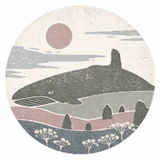
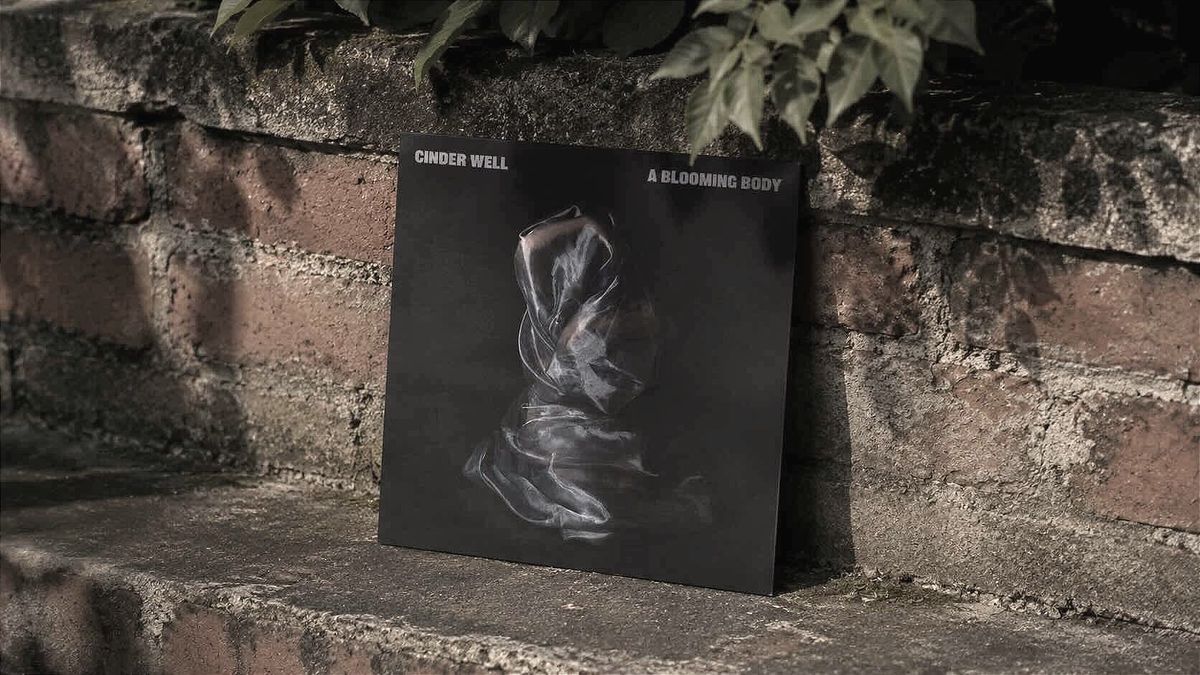
A Blooming Body takes place closer to the window than the horizon. Amelia Baker’s older songs measured distance through weather and terrain; here the world presses inward through streets, rooms and human proximity.
“Beyond the Pale” brings guitar and drums forward. A clarinet moves somewhere inside its darker register, while the violin seems to carry an older narrative memory through the song, running alongside its present-tense unease. The rhythm gives the track an unfamiliar physical weight. Baker describes traffic, metal, a city turning briefly grotesque, then the song contracts again toward private culpability. The old expanses have narrowed down to streets, machinery, whoever happens to be standing too close.
“Ashes” is where the narrowing shows up clearest. Coffee, dirty dishes, washing, clothes on a line, neighbours glimpsed through windows — materials too ordinary to announce themselves as symbols, and Baker doesn't try to dress them up as anything else. The guitar keeps returning to a narrow figure, its notes and chords gradually taking on the inevitability of a funeral procession, while viola and flugelhorn keep changing how much space seems to exist around it.
“Signals” strips further back. Guitar and bass leave a lot of air around Baker's voice, and the song registers departure through whatever's nearest — pavement, weather, a platform, movement. These aren't quite images arranged into a scene. They keep the provisional quality of things noticed on the way out the door, the half-attention given to something at a bus stop.
“The Color of Earth” spreads wider than anything before it. Drums, bass, synth and sampler thicken the low end, violin and electronic textures keep the perimeter unsettled, and for once the music exceeds the dimensions the song hands it at the start. Earth arrives here after five tracks of increasingly built, occupied space, and by that point even the title has picked up a faint displacement — soil as something remembered rather than stood on.
“August” barely has time to settle before it’s gone. Guitar and Baker’s voice are joined by C.P.N. Hollywell in an urban ballad edged with electricity but carrying the spirit of someone already moving away from the city; the two voices stay close without quite consoling each other. What surrounds them are the small chores by which life keeps going after something has gone missing — bills, a load of washing, the school run. The smallness is the point. Grief doesn’t get the world to stop for it.
“Shadows of Leaves on Red Brick” takes nearly seven minutes to discover its own gravity. Baker begins in an almost hushed voice, while the guitar leaves notes suspended long enough for their aftersound to acquire a life of its own. New layers enter obliquely: bowed tones, electric abrasion, low harmonic pressure. Nothing quite swells; the song thickens by accretion, like soot gathering on masonry. By the final minutes, Baker’s voice is no longer simply set against the arrangement but half-buried inside it, forcing its way through a sound field that has turned from diaphanous to sepulchral. The title contains the album’s whole visual logic in miniature: leaves are present only as fugitive shadows crossing brick.
Vegetation survives as an afterimage on a manufactured surface.
“Ashes”
Coffee, dirty dishes, washing and clothes on a line; guitar returns to a narrow figure while viola and flugelhorn keep changing the space around it.
“The Color of Earth”
Drums, bass, synth and sampler widen the scale; soil arrives as something remembered rather than stood on.
“Shadows of Leaves on Red Brick”
Suspended guitar, bowed tones and electric abrasion accumulate until Baker’s voice is half-buried inside the arrangement.
These six pieces are enough to reveal the album’s governing scale; the two that remain do not sit outside it, but deepen its quieter margins.
By the end, the horizon has not disappeared so much as moved indoors. What remains of landscape is carried by brick, glass, washing lines and the shadows of leaves crossing them.