Anemoia: The Nostalgia with No Cure
Synthetic memory, algorithms, retro culture and unlived pasts

Nostalgia was once a disease you could cure. Anemoia is the strain that has no cure — and the internet has made it an epidemic.
In 1688 the young Alsatian medical student Johannes Hofer coined nostalgia — Greek nóstos, homecoming, and álgos, pain — to name what was killing Swiss mercenaries far from their valleys. For much of the next two centuries it remained within the language of medicine, the Mal du Suisse, treated with opium, with bloodletting, and, when nothing else worked, with the only reliable remedy: sending the sufferer home. The wound was real, but it had an antidote. You could return.
Three centuries later, in 2012, the American writer John Koenig gave that old sickness its strangest heir. In The Dictionary of Obscure Sorrows — a project that invents words for feelings the language has left unnamed — he defined anemoia — a word fashioned around the Greek ánemos, wind, and the suggestive suffix -noia — as nostalgia for a time one has never lived. There is something fitting in an invented word for an invented feeling.
Its stranger implication is clinical: anemoia keeps the sickness and removes the possibility of return. You cannot go home to a place you never left. Homesickness for a home that never existed has no nostos, no return, and therefore no remedy. The old diagnosis has survived, but its cure has disappeared.
I. The Synthetic Memory
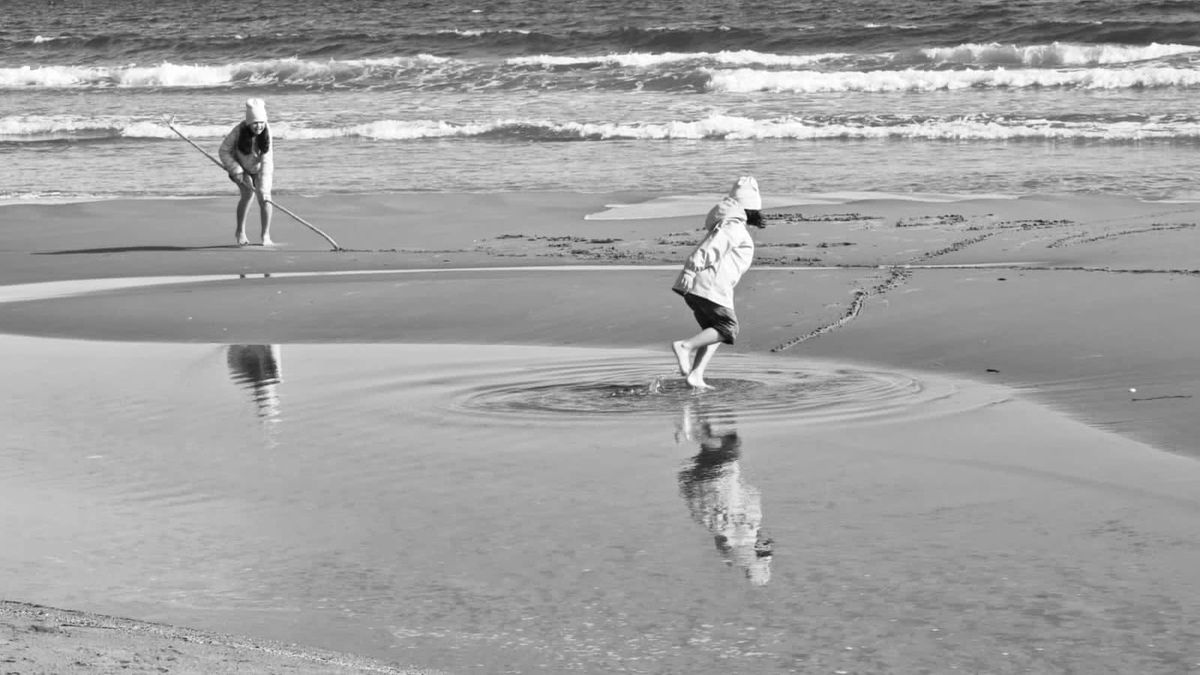
The girl running through an English garden in 1976, the overexposed Super 8 beach, the sunlit kitchen with a radio beside the hiss of tape — the mind does not file these as documents but as atmospheres it might once have inhabited. Memory, after all, is reconstructive rather than archival: since Bartlett we have known it rebuilds the past each time, filling the gaps with borrowed images. Anemoia is what happens when the borrowed images arrive faster than any life could supply them — a synthetic memory, assembled from exposure. Robert Zajonc gave the mechanism its name, the mere-exposure effect: repeated familiarity alone can generate attachment. See a thing often enough and it stops being external; it settles inside as if it were yours.
II. The Supply Side
That raises another question: how did a private, incurable ache become a mass condition? Part of the answer lies in distribution. Simon Reynolds named the machinery — Retromania, pop culture's addiction to its own past; Svetlana Boym supplied a vocabulary for the diagnosis. Anemoia might be placed at the far edge of her reflective nostalgia, the kind that lingers in the ache without believing it can return, because here there is nothing to return to.
Mark Fisher offers a neighbouring idea in hauntology, with its lost futures, the tomorrows that never came. Anemoia looks in the other temporal direction, towards yesterdays that were never personally lived. The internet did not discover the feeling. What changed was its circulation: images, sounds and periods once encountered by accident can now be encountered repeatedly, until an unlived past begins to acquire the familiarity of experience
III. The Wrong Face
Nothing shows this more exactly than a single song. In 1984 Mariya Takeuchi recorded "Plastic Love," a glittering piece of Tokyo city pop. Released as a single in March 1985, it reached number eighty-six and sold around ten thousand copies, and then it vanished. Thirty-odd years later YouTube's recommendation algorithm, for reasons no one fully understands, began serving it to millions of people who had never heard of Takeuchi, never been to bubble-era Tokyo, never lived a single night of the world the song describes. It passed twenty-two million views and dragged an entire genre back into the light. A generation became homesick for a Japan it had never seen — anemoia at industrial scale, distributed by a machine.
And the detail that seals it: the image the world attached to "Plastic Love" was not from "Plastic Love." The iconic upload used a photograph belonging to another single and another year — "Sweetest Music," from 1980 — borrowed without permission. Millions pinned their invented memory to a face that never belonged to the song. Here Walter Benjamin returns, inverted: mechanical reproduction was meant to strip the artwork of its aura, yet the degraded, misattributed upload grew a new one — the aura of time having passed through it. We did not want the past; we wanted proof it had worn something. The analogue could give us that. Decay already lives inside its material: images vanish, tapes demagnetise, prints yellow in drawers. The digital file does not display age in the same way. It may disappear or become corrupted, but it never yellows visibly in the hand — and a feeling that cannot be mourned can never quite be laid to rest.
None of this is Western property; if anything Japan named the warmer half of it long ago. Natsukashii is a nostalgia grateful rather than grieving, less the wish to return than gladness a thing once was, bound to mono no aware, the pathos of impermanence. But the unlived version is native there too: Heisei-born teenagers pine for a Shōwa era they never saw, and "Plastic Love" is only its loudest instance. The phantom summer speaks Japanese as fluently as English.
So the sickness Hofer described has completed its mutation. It began as homesickness with a home, curable by the road back; it ends as homesickness without one, incurable by design and epidemic by algorithm — spread by machines that never forget and never let anything decay in peace. A life we might have lived, a country house that was never ours, an afternoon in 1974 surviving only in the grain of film. Perhaps anemoia is finally this: the melancholy produced not by what we have lost, but by what we never had the chance to lose at all.
Last revised: July 2026