The Country Between Programmes
British television, regional lives, lost plays and an accidental archive

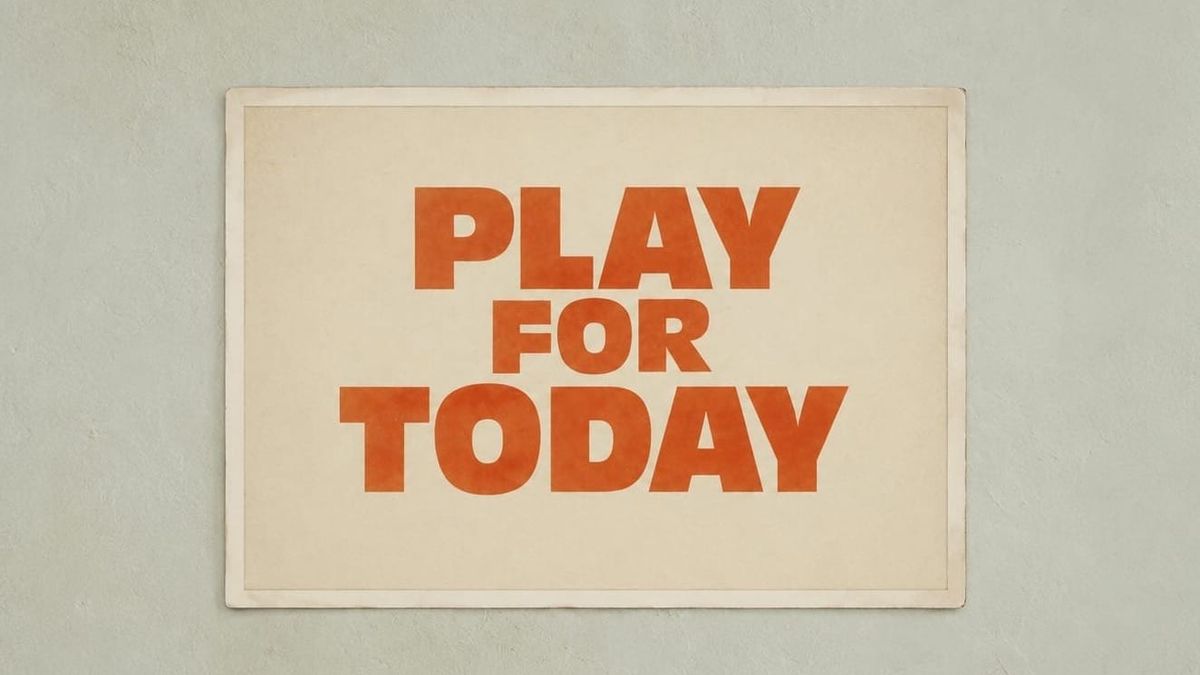
Nobody was thinking about archives. They were thinking about Thursday.
None of it was preserved as heritage. It was simply there, doing its job, being used up.
The actors move through a Britain still being worked, argued over, altered, while the television recording it hadn't yet worked out that television itself might one day need preserving.
I. The country at 9.25
On Monday 15 January 1973, BBC1 broadcast Panorama at eight, the Nine O'Clock News at nine, and at 9.25 went to Hull. That was it. Went to Hull, as if that were an unremarkable thing for a national broadcaster to do.
Alan Plater's Land of Green Ginger concerned Sally Brown, back from London, trying to work out whether Hull could still hold a life for her. There was a trawlerman. The possibility of leaving for work abroad. The Humber before the suspension bridge joined its banks, a detail I keep returning to because it means the geography itself was mid-sentence, not yet finished being built. Streets still carried the debris and habits of the fishing trade. The Watersons supplied the music, and they belonged to Hull in a way that can't be arranged by a production office; you either have that or you don't.
The premise doesn't need dressing up to sound strange today. A national channel gave a substantial slice of its evening to a woman wondering whether she wanted to go on living in Hull. That's the whole pitch. Try selling that now.
For fourteen years this was roughly the wager behind Play for Today. The BFI counts 306 one-off dramas transmitted on BBC1 between 1970 and 1984, a number so large it stops meaning anything until you start walking through it title by title. Alan Bennett, Caryl Churchill, Dennis Potter, David Rudkin, Jack Rosenthal, Alan Bleasdale, Willy Russell, David Hare passed through it. So did Alan Clarke, Stephen Frears, Mike Leigh, Michael Apted, Roland Joffé, John Mackenzie, Mike Newell, names later absorbed, tidily, into the history of British cinema, as if television had merely been where they served their apprenticeship.
The famous works have gradually come loose from the strand that made them. Penda's Fen, Abigail's Party, Scum, The Spongers, Blue Remembered Hills, Bar Mitzvah Boy, Robin Redbreast: these now circulate as classics, cult objects, restoration projects, DVD extras with commentary tracks. Fine. But the strand makes much less sense if you only remember it through that shortlist. Play for Today also meant an obscure domestic comedy nobody quotes any more, a drama about a watchmaker, three miners going fishing for no better reason than they fancied it, an Orkney triptych, a child waiting for her father in Belfast, two unemployed men hiding in the hills above Greenock, a trans woman trying to live an ordinary life, and a studio play that literally cannot be watched now, by anyone, because the tape got recorded over.
II. 306 chances to begin again
The strand inherited the territory of The Wednesday Play, the BBC anthology that gave us Cathy Come Home and other work sitting somewhere between journalism, theatre and cinema without ever settling comfortably into any of the three. Play for Today kept the single-play format and dropped the obligation to build a continuing world. Next week could start from absolutely nothing.
It sounds like a small administrative point and turns out to be everything. A writer had, say, seventy-five or ninety minutes and no further debts to pay. The protagonist didn't need to remain useful next season. A marriage could end mid-play and stay ended. A factory could close. Someone could go fishing and simply come home, unchanged, the way people mostly do. A death didn't have to generate six more hours of plot management. An experiment could fail on a Thursday and the slot would reopen the following week for somebody else.
Writers stayed unusually central to this culture, partly by accident. British cinema in the 1970s was in a genuinely peculiar condition, and a lot of serious dramatic work migrated into television as the domestic film industry more or less seized up. Mike Leigh later said there was scarcely an indigenous serious British cinema at all; the old joke, funnier the more you think about it, was that the British film industry was alive and well and living in television.
Almost immediately the programme became hard to file under anything. Strikes and marriages. Speculative futures and sectarian politics. Unemployment and witchcraft. Schools, borstals, immigrants, retirement homes, hospitals, farms. Bergman's The Lie turned up in the first season, translated into a British setting, as if to announce there was no ceiling on ambition here. Later there was even Play for Tomorrow, six speculative dramas in 1982. The title only makes sense once you realise how completely Today had stopped meaning a date and started meaning a method: a way of treating the present as raw material, however unstable or ordinary that present happened to be.
Fifty years later, though, we no longer encounter those 306 plays on equal terms. Some survived, some disappeared, and the distinction was not always artistic, political or even deliberate. Sometimes it came down to something as ordinary as whether a production had been shot on film or recorded onto videotape that could later be reused. That accident now sits quietly inside the canon.
III. Pebble Mill opens another door
One of the important changes happened off screen, in a building. BBC television drama was still overwhelmingly metropolitan, no point pretending otherwise, but the opening of Pebble Mill in Birmingham in 1971, and David Rose's leadership of English Regions Drama, built a production base with an actual, stated interest in material from outside London. Research into the strand shows the regional balance widening across the decade, Scotland and northern England becoming much more visible after the early seasons, though Wales and the north-east stayed thin on the ground throughout. Its own small story, that, about whose ordinariness gets funded.

One result was Peter Terson's loose sequence about three Derbyshire miners, Art, Ern and Abe. In The Fishing Party they go to Whitby for cod. In Shakespeare or Bust they take a canal boat towards Stratford. Then Three for the Fancy. Their journeys are modest, deliberately, almost stubbornly modest. The men have jobs, habits, jokes, embarrassment, money to count out loud. They get boarding houses wrong. They meet Shakespeare as working men rather than as schoolchildren being improved by Culture with a capital C. A national drama strand decided a fishing trip could carry a whole evening on its own.
Pebble Mill also produced stranger, quieter things. Barry Collins's The Lonely Man's Lover (1974) — almost nobody talks about this one — follows a young farm woman getting involved with an outsider, a published poet who's arrived with his son. Village voices hover around the affair the way village voices do. Social change reaches a rural community through attraction, gossip, and the eternally unresolved question of who actually belongs there.
Julia Jones's Back of Beyond, from the same year, goes further into isolation. Rachel Roberts plays Olwen, a widow on a Welsh hill farm whose relationship with the twentieth century is, let's say, negotiable. A local schoolgirl enters her life; affection curdles into dependence and then into damage. Decades on, the film survives with a material clarity that a lot of studio work made right beside it simply never got the chance to keep.
IV. Orkney, three times
A stranger object had already appeared, in May 1971. Orkney runs about ninety minutes and adapts three George Mackay Brown stories — A Time to Keep, The Whaler's Return, Celia — through John McGrath, directed by James MacTaggart. Past and present pass through island lives without flattening the place into picturesque remoteness.
The running time does real work. It gives island life enough density to stop functioning as an exotic day-trip from London, and lets work, religion, marriage, departure, return, and the slow pressure of older forms of community simply exist, locally, on their own terms.
In Orkney, as elsewhere across the strand, the sea is being worked. The farm has to continue. The hill belongs to somebody in particular. The road joins two places for economic reasons.
Place arrives through use before it ever gets to atmosphere.
V. The hills above Greenock
Peter McDougall found another shape for escape in The Elephants' Graveyard (1976). Bunny's wife believes he's going to work. He has no work. Every morning he leaves the house anyway and spends the day up in the Scottish hills, where he meets Jody, played by Billy Connolly. Their temporary territory sits above Greenock; some of the filming was done near the Cut, the nineteenth-century aqueduct engineered to carry water down towards the town and power its industry.
The Cut matters because the men appear to have walked away from industrial life while standing right next to infrastructure built for industry. Bunny is hiding his unemployment inside the daily choreography of employment: he leaves the house as though he still has a shift, then spends the day above the town pretending otherwise, to himself as much as to her.
Three years later, McDougall and John Mackenzie made Just a Boys' Game, around Greenock and Port Glasgow. Frankie Miller plays Jake McQuillen, whose idea of being a man was inherited from an older generation and then hardened, deliberately, by drink and violence and reputation. Shipyards, cranes, bars, the Clyde: all of it sits inside the drama as something that actually made these men into who they are.
Read together, the two films keep circling back to the same town from different heights. Bunny spends his day above Greenock, pretending to be at work. Jake stays down among its bars and shipyards and inherited codes, convinced this makes him the more honest of the two. It probably doesn't.
VI. The land keeps accounts
John McGrath's The Cheviot, the Stag and the Black, Black Oil made the relationship between ground and power completely explicit, no subtext required. The original 7:84 stage production toured Scotland through community halls; its television version, 1974, refused the smoothing-over you'd expect from an adaptation into a bigger, glossier medium. Village-hall performance, songs, historical reconstruction, documentary interview, Gaelic material, political theatre — all of it collides as the story moves from the Highland Clearances through sporting estates and on towards North Sea oil.
The structure is simple enough to stay brutal: the same land gets reorganised, again and again, according to whatever form of value can be most efficiently extracted from it at that particular moment. Sheep, deer, oil — different centuries, same ledger, same handwriting really.
A few months earlier, David Rudkin and Alan Clarke had used Worcestershire quite differently in Penda’s Fen. Elgar, King Penda, sexuality, religion, military power, an England that refuses to stay one single idea — all of it gathers around the Malvern Hills. Stephen begins with a country already fully explained to him, by adults who mean well, and slowly discovers that several incompatible countries have been standing on the same ground the whole time, unnoticed.
Put next to The Cheviot, the usual folk-horror reading of Penda's Fen starts to feel a little too narrow, a little too convenient. Both plays eventually arrive at the same awkward question and refuse to answer it cleanly: who gets to define the land, its inheritance, and who's actually entitled to belong there.
VII. The countryside develops bad habits
Robin Redbreast had already supplied an earlier version of that problem. Norah leaves London for a country cottage and discovers that rural privacy is largely a metropolitan fantasy, sold to metropolitan people. The surrounding community has purposes for her, for her body specifically, and for what her future might produce. John Bowen's village runs on tacit agreements that are hard to separate from ritual and harder still from something worse.
Its later promotion into the folk-horror canon makes sense, but Play for Today originally gave the work a much stranger neighbourhood to live in. It sat among social work dramas, marriage dramas, labour disputes, ordinary domestic misery. Nobody had yet invented a prestige category called “folk horror television” for it to be safely filed under, with its own shelf and its own fans.
A few things now almost entirely absent from the conversation complicate this further. Bowen's later A Photograph opens when an unexplained photograph arrives in the post and starts pulling apart an already precarious relationship. Commuting, class, sexuality, town versus country, all moving through a drama whose flat studio-video surface actually adds to the discomfort rather than dating it. The brightness, oddly, makes the unease harder to hide.
Vampires (1979) relocates supernatural contagion into childhood and the city. A boy watches a late-night Dracula film; children start seeing vampirism everywhere; a cemetery becomes the destination for collective belief that nobody in charge is willing to properly interrupt. The supposed monster might just be a strange-looking adult, and the play never entirely resolves that possibility. Broken family life, Hammer Horror, playground rumour, sharing one nervous system.
This eerie material runs through the strand without forming its own department. It turns up next to social work, family breakdown and unemployment, and that proximity is part of why the old genre labels never quite contain it. By the final season, David Pirie's Rainy Day Women sends an army officer into wartime countryside to investigate rumours of espionage and finds a village thoroughly contaminated by stories about witches, women, and patriotic concealment. Charles Dance walks into something Pirie called a ghost story without ghosts, perhaps the best short description of the eerie strand within the strand. It aired in April 1984, months before the whole thing ended.
Earlier that year, Z for Zachariah moved Robert C. O'Brien's American post-nuclear novel into a Welsh valley. Geography protects a small farm from fallout. Sheep, vegetables, clean water: suddenly the most strategically important things in the country.
VIII. Work leaves fingerprints
The remembered politics of Play for Today is mostly about work, unions, the state — and fair enough, that reputation is earned. The actual range is finer-grained than the stereotype lets on.
Jim Allen's The Rank and File (1971) draws on the 1970 Pilkington glass workers' strike. Colin Welland's Leeds — United! follows women textile workers fighting over unequal pay, turning the city into meeting room, factory floor, street and political body at once. Jim Allen and Roland Joffé's The Spongers (1978) sets welfare administration against the Silver Jubilee. Pauline tries to hold together a family that needs public support while local-government cuts quietly determine what care can actually be afforded. The national celebration carries on next door.
Work shows up just as vividly where there's no strike at all. Cries from a Watchtower (1979) concerns a watchmaker being overtaken by cheap digital watches — a whole craft going obsolete while the man who practises it is still standing there, still alive, still able to do the thing that no longer matters. That's the detail I find hardest to shake off: one man's hands still knowing a skill nobody wants any more.
Carol Bunyan's Ladies (1980) follows women through a day in a department store — sales work, appearance, sexual hierarchy, friendship, class. Her Sorry, the following year, turns towards workplace subordination and sexual assault with considerably more severity. Paula Milne's A Sudden Wrench (1982) takes an apparently modest premise — a housewife acquiring a trade — and follows what happens once that practical competence starts disturbing the men arranged around her, who had rather assumed she'd stay incompetent.
All of them appear while their work is still current, not yet historical, not yet safely reconstructed for a museum display.
IX. A television sufficiently large for small lives
The political canon can obscure how often this strand spent its time on things that barely qualify as events.
Mike Leigh understood this better than most. Hard Labour (1973) follows Mrs Thornley, a housewife and cleaner whose entire life is consumed by service to other people, quietly and repetitively, without a single dramatic incident to hang it on.
Nuts in May sends Keith and Candice-Marie camping in Dorset. Keith carries his private bureaucracy with him into the countryside and starts managing birdsong, food, other campers, historical sites, permissible behaviour of every kind. The comedy gets most of its force from the collision between an open landscape and a man who cannot leave a single thing unregulated. First broadcast in a snowy January, its warm Dorset countryside acquired an accidental seasonal dislocation for anyone watching at home in the cold, a small joke the play didn't plan for itself.
X. Britain does not fit easily inside Britain
Any nostalgia for Play for Today turns dishonest the moment it imagines the BBC of the 1970s as some egalitarian institution just waiting to be rediscovered and restored. It wasn't that.
Fewer than one in ten of the strand's writers were women. People of colour were severely underrepresented behind the camera, full stop. Regional production expanded unevenly. Queer lives could be handled with real sensitivity in one play and grotesque cliché in the next, sometimes within the same production year. The institutional judgement was that uneven.
Andrew Taylor's Even Solomon (1979) centres a young trans woman, and the BFI has identified it as the first television drama built around a trans lead. It also carries the period's limitation of casting the role with a cis male actor, progress and failure held together in a single production. Its interest survives because Solomon gets to have ambitions beyond an abstract “issue”; identity enters the machinery of an ordinary life rather than sitting on top of it as a topic.
The strand's queer history is otherwise, frankly, awkward to sit with. The Other Woman and Coming Out contain attitudes that now read as punitive or caricatural, while still putting lives and conversations in front of a mass audience that British television rarely addressed head-on. There isn't a tidier version of that contradiction.
The scarcity is sharper still on race. Barry Reckord was one of only a handful of writers of colour to contribute to the strand at all. His In the Beautiful Caribbean (1972) addressed Jamaican unemployment and Black Power with an all-Black cast.
It no longer exists.
A contemporary newspaper reported that Reckord planned to watch his own programme at a friend's house; he didn't own a television himself. A writer makes a programme for millions of sets he doesn't own one of, borrows someone else's living room to see it, and half a century later nobody, anywhere, has the tape. Of everything lost from this strand, this is the loss I keep coming back to.
XI. Passage
Leon Griffiths and John Mackenzie's A Passage to England (1975) makes another unusual object out of national belonging. An Asian man attempts to negotiate passage to Britain for himself and his relatives aboard a fishing boat. He quotes Betjeman, of all people. The British skipper starts out understanding his passengers through imperial stereotype and gradually reveals his own greed and prejudice, dressed up until then as simple business sense.
For once the English coast gets approached from the other direction: the distant country being negotiated, rather than the unquestioned centre everything else orbits around.
XII. Belfast cannot always be filmed in Belfast
Northern Ireland put the entire enterprise under a different, harder kind of strain. BBC Northern Ireland initially lacked the network drama infrastructure that BBC Scotland or the English Regions unit had; early Play for Today treatments of the Troubles were commonly commissioned from London, and their political content attracted unusually intense institutional scrutiny — nervous scrutiny, the sort that shapes a script before a single frame gets shot. The strand still became one of the first sustained television-drama spaces to confront the Troubles with any regularity.
Your Man from Six Counties (1976) begins after Jimmy's father is killed by a Belfast bomb. The boy is sent to relatives on a farm in the west of Ireland, where distance conspicuously fails to remove politics from his life. The farm becomes an attempted refuge crossed by competing inheritances and loyalties that don't stop at any county line.
The Dandelion Clock is stranger, because its production history completes the story on its own. Wilson John Haire's play concerned a young girl afraid for her father's safety. Belfast location shooting had been planned, but conditions during the Troubles made that unsafe, so the production was recreated in London studios.
Then its videotape was wiped.
Had the production gone to Belfast and been shot on film, its odds of survival might have been better. Political violence kept the camera out of the real place; safety moved the drama onto reusable tape; later, ordinary institutional reuse erased even the safer version. Nobody intended this as a chain of consequences. It happened one decision at a time, none of them looking dramatic on the day.
XIII. Television destroys television
Around thirty Play for Today productions are now regarded as completely lost. Most of the rest survive somewhere — in the BBC Archive, the BFI National Archive or related holdings — though survival and public accessibility turn out to be very different conditions.
The striking archival fact is that the completely lost productions are overwhelmingly studio works recorded on videotape. Two-inch videotape was expensive and could be wiped. Sixteen-millimetre film couldn't be economically recycled into next Thursday's programme in the same casual way. A mundane accounting distinction — nobody sat down and decided which parts of British culture deserved to survive — ended up shaping what could later be remembered, almost by accident of unit cost.
Several plays have changed category entirely. Skin Deep, with Donald Pleasence, survives through documentation and still photographs. Alan Clarke's A Life Is Forever, written by oral historian Tony Parker, about the isolation of a life prisoner, has lost its moving images while the script survives. W. Stephen Gilbert's Circle Line exists on paper now, the programme itself long gone. Man Friday, Adrian Mitchell's reworking of Robinson Crusoe with Ram John Holder challenging Crusoe's definition of civilisation, was wiped, though Mitchell later carried the material into a cinema film. Something of it got through, just not this version.
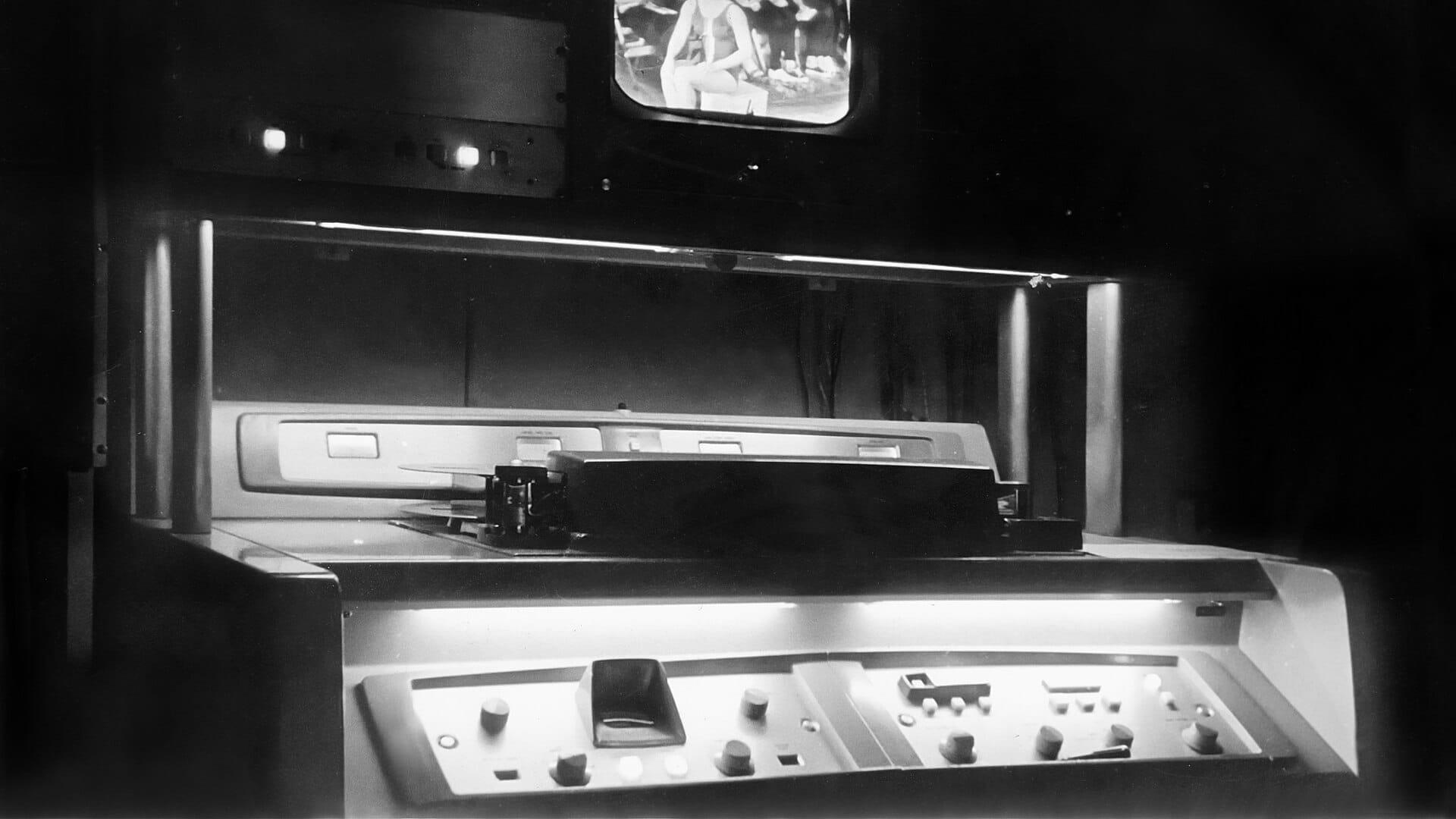
These aren't simply programmes you've failed to track down. They've become scripts, listings, reviews, production photographs, other people's memories of an evening that happened once.
XIV. A country selected by chemistry
The survival pattern matters enormously once you start looking at the strand's modern reputation. The current Play for Today canon leans hard towards work that looks cinematic — actual roads, hills, shorelines, factories, villages, 16mm grain, weather visibly entering the image. Penda's Fen, Red Shift, The Elephants' Graveyard, Just a Boys' Game, Nuts in May, Back of Beyond. They deserve their reputation. But the survival pattern favoured exactly these works too, quietly, for reasons that had nothing to do with quality.
Studio productions lived on expensive tape that was vulnerable to being wiped; film simply accumulated on shelves, more or less by default. The imbalance was practical long before anyone turned it into criticism.
David Rose later remembered the choice of film at Pebble Mill in remarkably practical terms. The half-hour Second City Firsts could stay in the video studios. If English Regions Drama wanted regional towns and their surrounding countryside to register properly, Rose wanted film cameras. The department consequently used more film for its Play for Today work than London did. Twenty-four of the thirty-eight plays it made for the strand were shot on film.
That complicates the accident slightly. The regional work we now remember for getting out into streets, fields and industrial towns was already being made on the format most likely to sit harmlessly on a shelf rather than be wiped for reuse. Nobody at Pebble Mill chose film because it would still be watchable fifty years later. They wanted Hull to look like Hull, Dorset to look like Dorset, Worcestershire to retain its weather. The consequence came afterwards.
The present-day idea of Play for Today as an extraordinary atlas of British landscape is true and slightly deceptive at the same time. We are studying a country whose surviving evidence was partly selected by recording technology rather than by anyone's editorial judgement.
The lost studio room has made the surviving field look more important than it might otherwise have been.
XV. The domestic copy
Some survivals are more fragile still. A handful of productions survive completely only through domestic video recordings: not the broadcast master, just somebody's own tape from home. Somewhere between disappearance and official preservation, a recording machine sitting in someone's front room becomes an archive, without anyone in that house necessarily knowing it.
Two of them can actually be named. Doran's Box, broadcast in January 1976, and Commitments, from 1982, survive complete only because somebody recorded them on domestic video. The institutional copy is not what got through.
There is an even odder halfway state. The pictures of Douglas Livingstone and Alan Clarke's I Can't See My Little Willie, broadcast in November 1970, are gone. A domestic audio recording survives. You can still hear the play, or part of what television once was, while having to supply the missing television yourself.
A programme made by one of the largest broadcasting organisations on earth can end up depending on an off-air copy kept in somebody's spare room, and on that person never once deciding to tape Coronation Street over it. In a few cases, that domestic recording is the only reason the programme is back in an archive at all.
XVI. Plays denied their day
Some losses had nothing to do with tape stock. Dennis Potter's Brimstone and Treacle was made in 1976 and withdrawn before transmission after senior management objected to its treatment of disability, sexual violence, and a possibly demonic visitor. It finally reached BBC television in 1987, by which point Potter's material had already escaped into a cinema adaptation.
Roy Minton and Alan Clarke's Scum, researched through borstal experience, was withheld the same way. Its cinema remake appeared in 1979; the original BBC production didn't get its first television transmission until 1991, a full fifteen years after it was made.
There's also Pillion, developed by Paul Copley from his own stage work, filmed in 1979 and never transmitted at all. A different kind of absence: nobody erased it. Somebody simply chose never to let it out.
XVII. Sixteen million people in Beverly's front room
The scale of viewing is hard to reconstruct psychologically now. When Abigail's Party was repeated on BBC1 in August 1979, an ITV strike and genuinely terrible weather combined to produce an audience of roughly sixteen million. A claustrophobic suburban evening, built through Mike Leigh's methods, became shared national furniture almost overnight.
It would be misleading to read that figure as evidence that sixteen million people actively wanted difficult single drama on a Tuesday night. They got it because the broadcasting environment put a limited number of choices in front of enormous audiences, and dislike was simply built into the arrangement. A viewer could be irritated, bored, offended, or quietly changed by something they would never have chosen from a menu — and often was all four at once.
XVIII. The picture was temporary
Analogue television brings its own nostalgia along with it now: the soft film image, studio video, BBC typography, continuity announcements, furniture whose colours seem to belong specifically to 1974, cigarette smoke everywhere, telephones bolted to walls, a television set visible inside the television programme, watching itself.
These surfaces can seduce you into nostalgia for an aesthetic that nobody living inside it experienced as an aesthetic at all. It was just what a room looked like. The stranger difference concerns time and availability. Many households had no way to record a programme. A transmission was an appointment you kept or didn't. Miss it, and the work could vanish from your personal life immediately, possibly for good. The BBC might repeat it, though repeats were far less automatic than a modern streaming library trains you to assume. Some programmes disappeared from institutional life too.
Robin Redbreast provides a small, almost absurd example. On 10 December 1970, power cuts meant that viewers in parts of Britain lost the end of the play. That was it: Norah's story simply stopped because the electricity did. The BBC eventually showed the whole thing again on 25 February 1971, the first Play for Today to receive a repeat.
I find that harder to reconstruct now than the wallpaper. The wallpaper is still there in the surviving image. The possibility that a programme might reach its final minutes and simply disappear from the television in front of you isn't.
It makes the word broadcast worth taking literally again. Something was sent out at a particular hour and had to reach you. Weather, electricity, geography, the transmitter, whether you happened to be home: all of them sat somewhere between the programme and the person watching it.
A work that now seems permanently available once had to survive Thursday night first.
XIX. Towards the end
The final years resist any tidy story of decline. They contain Stephen Poliakoff's Soft Targets, the Billy plays from Northern Ireland, Z for Zachariah, Rainy Day Women, and plenty of regional productions still finding new angles. The form stayed capable of surprise right up to the end. The institutional weather around it was changing anyway.
Channel 4 began broadcasting in 1982, with Film on Four offering another home for authored single work and nudging British television culture towards the television film as a category of its own. BBC successors like Screen Two would lean more explicitly towards film production later on. Scotland kept defending the authored single play into the later decade, but at a drastically reduced annual volume — defending the idea, mostly, more than the practice.
XX. What nostalgia is allowed to keep
There is plenty about 1970s British broadcasting that deserves no resurrection whatsoever: the gatekeeping, the narrow commissioning networks, too few writers of colour, too few women writers, London's stubborn structural dominance, queer representation capable of real cruelty, institutional censorship, an archival policy casual enough to destroy months of somebody's work without a second thought.
Any nostalgia worth having has to stay specific about all of it.
What's worth missing is narrower and, I think, more durable: the conviction that an ordinary person could carry a complete work of national drama on their own two shoulders. A cleaner. A miner. A textile worker. A widow on a hill farm. A watchmaker watching digital technology arrive to make his hands useless. A woman in a department store. A boy from Belfast. A trans woman trying to organise a life for herself. Two unemployed men walking beside an old aqueduct because there's nowhere else that will have them today. Someone who just wants to go on living in Hull.
XXI. The country between programmes
What remains now is an incomplete Britain, and I don't think that's a metaphor so much as a plain description.
George Mackay Brown's Orkney still moves between centuries, on tape that happens to have survived. Three miners still go fishing. Olwen remains on her Welsh farm. Bunny is supposedly at work and walks into the hills instead. A young man in Greenock still measures himself against a dying idea of toughness that he never quite chose for himself. The Watersons still sing over Hull. Women in Leeds still organise over their pay. A child still moves away from Belfast after a bomb. A Welsh valley still survives a nuclear war that never happened anywhere else. A classroom still invents vampires out of nothing. Worcestershire still refuses to stay pure enough for Stephen's idea of England.
Other places have simply been removed. A Jamaican drama about Black Power has become still photographs and newspaper cuttings and nothing else. A Belfast story survives only as evidence that a studio version once existed, once, briefly. A marriage built around family photographs has itself lost its own moving images, an irony nobody involved could have intended. Elsewhere, domestic recordings have had to stand in for masters that disappeared one afternoon, for no dramatic reason at all.
Taken together, Play for Today looks like an archive assembled partly on purpose and partly by accident: social history, national argument, theatrical laboratory, topographical record, full of gaps created by the same broadcasting system that produced the material in the first place. Nobody set out to build an archive. It became one anyway.
Watching the strand now can produce something larger than ordinary nostalgia because the physical places so often outlast the systems that made them. Shipyards become redevelopment sites with a plaque. Industrial structures get preserved as heritage, roped off, interpreted. Trades disappear entirely. Streets change use under new names. Working farmland gets recategorised as picturesque countryside for people who've never had to work it. The broadcasting conditions that made these plays possible have changed just as completely, and mostly nobody mourns that half of it.
The camera caught all of this without knowing in advance which details would matter later — a bus stop, a wallpaper pattern, a factory siren, the particular municipal green of a field, the inside of a pub, the distance a worker had to travel each morning, a word used only locally, somebody crossing a road that no longer exists in that shape. None of it was chosen for posterity. It happened to be standing there when the camera was pointed somewhere else.
Much of the history now visible in these programmes was happening at the edge of the plot. For fourteen years national television kept pointing cameras at places and people before anyone had decided the incidental details around them might one day become archival material worth anything at all. Some of those recordings were lost. Some survived on film, more or less by luck of format. Some came back through domestic copies nobody official ever asked for. Others remain inaccessible, sitting in a can somewhere, uncatalogued, unwatched.
What we have now is a damaged set of observations, not a faithful portrait of anything — more than three hundred attempts to describe a country from its rooms, streets, islands, workplaces and fields, followed by fifty years of physical survival, neglect, rediscovery, and the slow work of canon-making that always comes after, never during. The landscapes are easy to revisit because most of the location-shot films happened to survive. Several of the studio rooms are much harder to imagine now; there is, simply, no moving image left to watch. You have to take the script's word for it, and a script was never built to carry that kind of weight alone.
Last revised: August 2026