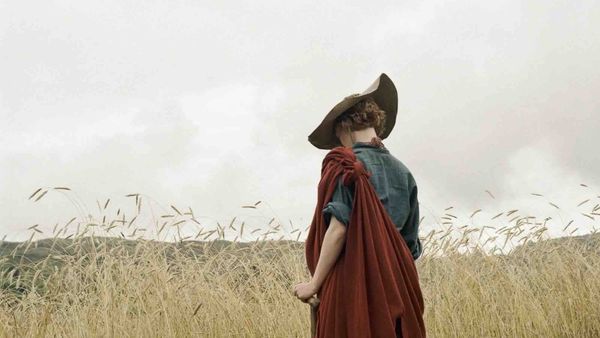
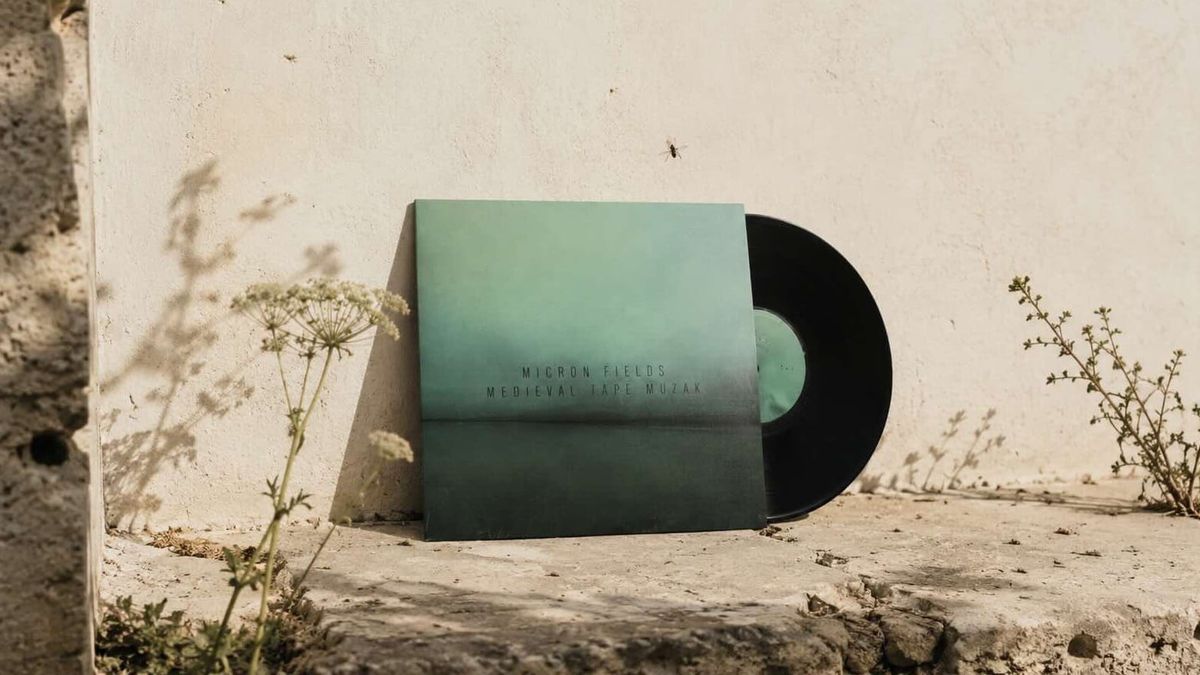
Micron Fields :: Medieval Tape Muzak
Hauntological ambient, field recordings, tape decay and edited rural memory

There is something suspicious about a record that calls its recordings raw after somebody has carefully removed the aeroplanes. That suspicion may be the best instrument on Medieval Tape Muzak.
Micron Fields recorded various locations around South West England during the summer of 2025. Those recordings came first: piano, loops and electronics arrived afterwards, with cars and aircraft filtered out when necessary. The piano was run through reel-to-reel tape; a Buchla 200e appears on “Analogue Ecologies” and “Ritualistic Drift”. Fine — but those missing cars matter.
An aeroplane over a Somerset field is no less true than an insect caught close to the microphone, and probably represents rural England in 2025 rather better.
Remove the engine and keep the leaves, and you have already stopped documenting: something quieter has begun, which consists of editing the century.
This is where Medieval Tape Muzak becomes interesting.
“Medieval Tape Muzak” is closer to an acoustic operation than a historical period: bells, water, wind, then the piano arrives, shifted slightly out of phase by the delay; something turns over, small reversed glitches return like insects badly caught in the tape, and the new Middle Ages appears exactly like this, divergent, electronic, under no obligation to resemble the real one. At that point I almost stop judging it, and for a few seconds I have the strange certainty that I have already been there, at the exact point where that sound came to rest, a place I could never find again on a map. And who am I, in there?
In “Askwith Bell” the piano drops towards the lower register, the delay grows shorter and more spectral. The notes slowly take on water, swell and unravel into black. Unease administered in small pills, except their half-life is far too long: by the time you decide you have had enough, they are still circulating.
“Mossy” stretches to almost twelve minutes. Field recording becomes dishonest very quickly when every captured minute is promoted to an event; here some of the time simply passes, attention loosens, catches on something, then loses it again. The animals ask for space too, but without that pastoral manner of fauna placed there to certify the existence of the woods. The moss is wet. It is cold.
The eight-minute title track keeps pressing on the same point. Tape has blunted the piano but has not cured its habit of falling onto the listener in a handful of notes, then disappearing and leaving a silence behind.
Medieval Tape Muzak carries some of the familiar signs of pre-installed antiquity — moss, rituals, ghosts, typography that looks recovered from damp cardboard. “Sounds of the Wood”, “DD_s Ghost Walk”, “Ritualistic Drift” almost carry their own candle. But the actual recording method is stranger, and more interesting, than the vocabulary around it.
In “Analogue Ecologies” and “Ritualistic Drift” the Buchla 200e enters a landscape that should have been cleared of the most obvious signs of modernity. A modular synthesizer does not make the field futuristic — it makes the reconstruction visible, so that two artifices can be heard at the same time: electronics added, history subtracted. I prefer these passages to the more picturesque ones, because this is where memory does its worst work, remembering and falsifying in the same gesture.
“Medieval Tape Muzak”
Bells, water, delayed piano and reversed glitches construct an antiquity that becomes stranger precisely because it is visibly electronic.
“Mossy”
Nearly twelve minutes in which field recording is allowed to contain dead time, wandering attention and animals that refuse to certify the landscape.
“Analogue Ecologies”
Buchla electronics enter a countryside already edited of modern noise and make the reconstruction audible at its seams.
Psychologically, it does something powerful that many records trafficking in nostalgia and hauntology would like to do and rarely really manage: some intimate sensations need a chain of differences, one after another, before things that should not belong together begin to feel like a single memory.
You cannot record an old England — tape does not travel backwards, and neither does a Buchla — so what Micron Fields has really captured is the desire to hear one, together with enough surviving friction to show where the work was done. The recording came back carrying more of 2025 than expected; some parts were removed afterwards. The aeroplane is gone; its absence remains on the tape.